Rumors Spread as Visa-Free Entry for Chinese Tour Groups Begins
Unfounded Fears Shared Indiscriminately Among Teenagers
Political Circles Join In, Fueling Anti-China Sentiment Debate
"South Korea is in real danger. The visa-free policy for China must be stopped. The country is at risk."
Since the introduction of visa-free entry for Chinese group tourists on September 29, a flood of claims has emerged suggesting that Chinese tourists will have a negative impact on Korean society. In particular, rumors such as "Chinese people are coming to Korea visa-free to engage in organ trafficking" have been spreading rapidly, especially on social networking services (SNS). Recent incidents involving Chinese nationals, such as the death in the line of duty of Korean Coast Guard officer Lee Jaeseok while rescuing a Chinese citizen, have further fueled anti-China sentiment. There are growing concerns that these rumors are being uncritically shared among teenagers, unnecessarily heightening public fear.
Chinese Engaged in Organ Harvesting? ... Rapid Spread on SNS
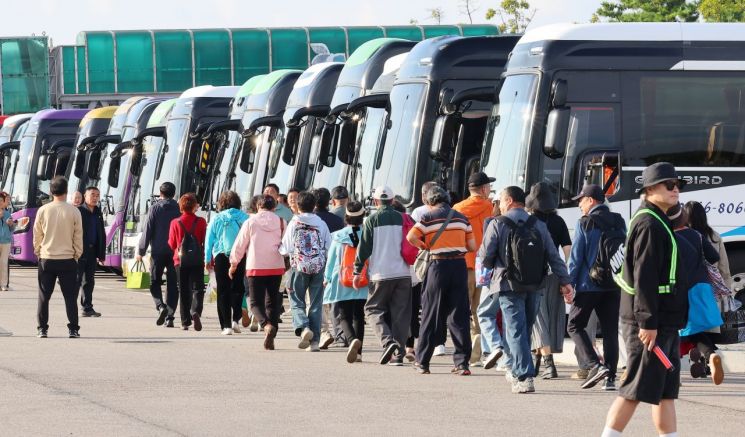 On the morning of the 29th of last month, the first day of visa-free entry for Chinese group tourists, Chinese group cruise tourists arriving at Incheon Port International Cruise Terminal in Yeonsu-gu, Incheon, are heading to buses. Photo by Yonhap News Agency
On October 1, a post on X (formerly Twitter) stated, "Currently, rumors are spreading rapidly among teenagers on Instagram." The post included a screenshot of an Instagram story, which contained unfounded claims that "with visa-free entry for Chinese nationals, kidnappings and organ harvesting are taking place regardless of gender or age."
The story's author shared warnings such as "Don't go out late at night" and "If a Chinese person follows you, report it immediately," along with the message, "South Korea is in real danger. The visa-free policy for China must be stopped. The country is at risk," and included a link to a Blue House petition. However, these are groundless rumors with no factual basis.
Rising Anti-China Sentiment Surrounding Visa-Free Policy
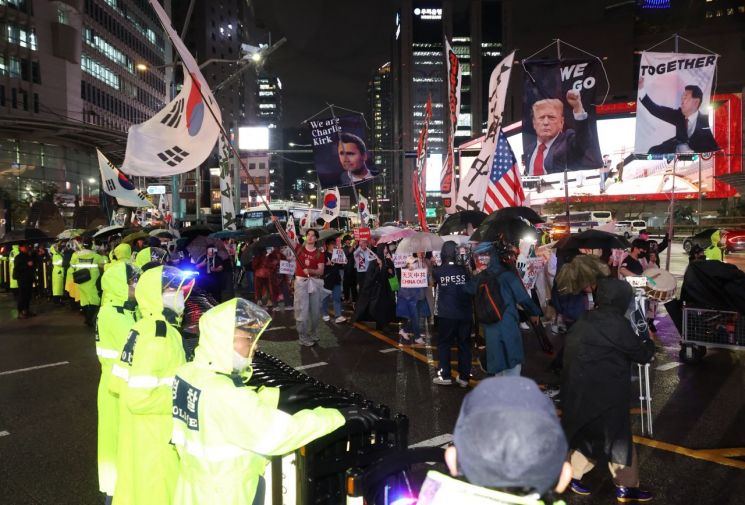 A far-right group supporting former President Yoon Sukyeol held an anti-China rally near the Chinese Embassy in Myeongdong on the afternoon of the 19th last month. As the march began, the police blocked the road leading to Myeongdong Street. Photo by Yonhap News Agency
Previously, the government began allowing "temporary visa-free entry" for Chinese group tourists starting September 29. Under this policy, Chinese group tourists of three or more, recruited by designated travel agencies domestically and abroad, can visit South Korea without a visa for up to 15 days. The policy will remain in effect until June 30 of next year.
The government expects this temporary visa-free policy to generate about 1 million additional tourist visits. Last year, 4.6 million Chinese tourists visited South Korea, which is about two-thirds of the pre-pandemic level in 2019 (6.03 million). With the policy coinciding with China's National Day holiday (October 1-8), the travel and retail industries are anticipating a surge in Chinese tourists and a potential business boom compared to previous years.
However, since the policy's implementation, opposition fueled by anti-China sentiment has been growing. On September 30, a rally near the National Assembly in Yeouido drew over 100 people demanding the repeal of the policy, chanting "Anti-China, eradicate communism." Online, claims such as "the visa-free policy will lead to a massive influx of criminals" have been spreading indiscriminately. There have even been threatening posts claiming that "Chinese visa-free tourists will commit knife attacks in front of schools," prompting police to launch investigations.
Political Circles Fueling the Spread of Rumors
Some statements from politicians are being criticized for adding fuel to the rumors. Kim Minsu, Supreme Council member of the People Power Party, said at a party meeting that "visa-free entry is expected to lead to illegal stays and illegal employment by Chinese nationals, and there is also the risk of criminal organizations exploiting the policy." He added, "If a car blocks your path in a secluded area, do not hesitate to run to a place where there are people." Such remarks reinforce the stereotype of 'Chinese equals criminal,'and are essentially in line with the unfounded rumors.
"Rising Anxiety Among Youth and Social Conflict Costs"
Experts warn that these rumors could escalate beyond a simple episode and deepen social conflict. They point out that if teenagers accept these rumors uncritically, the long-term social costs could be significant. Experts state, "Such rumors link specific groups to crime and amplify fear," and warn that "if prejudices and anxieties formed during adolescence persist into adulthood, the social costs of conflict will be much higher."
© The Asia Business Daily(www.asiae.co.kr). All rights reserved.
![Clutching a Stolen Dior Bag, Saying "I Hate Being Poor but Real"... The Grotesque Con of a "Human Knockoff" [Slate]](https://cwcontent.asiae.co.kr/asiaresize/183/2026021902243444107_1771435474.jpg)
















