Unification Awareness Survey: 41.1% Say "Unification Is Necessary"
50.7% of Respondents in Their 20s Say "Unification Is Unnecessary"... First Time Over Half
According to a recent survey, 4 out of 10 South Koreans still believe that unification is necessary. In contrast, for the first time ever, more than half of respondents in their 20s expressed a negative view toward unification.
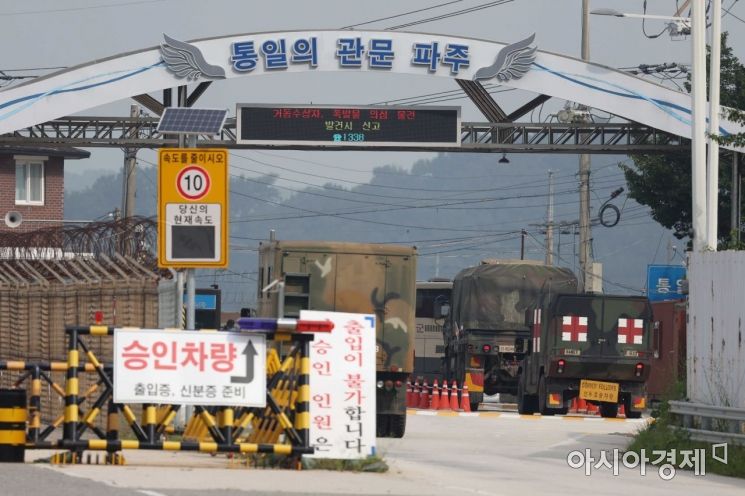
The Seoul National University Institute for Peace and Unification Studies released the results of its "2025 Unification Awareness Survey" on September 30, which was conducted by Gallup Korea from July 21 to August 17, targeting 1,200 adults aged 19 and older.
According to the survey, 41.1% of respondents said "unification is necessary," up 4.2 percentage points from last year (36.9%). Conversely, those who answered "it is not necessary" accounted for 30.4%, a decrease of 4.6 percentage points from last year (35.0%).
Overall, positive responses regarding the necessity of unification increased. However, among people in their 20s, 50.7% said "it is not necessary." This is the first time since the survey began in 2007 that negative responses among people in their 20s have exceeded half.
Regarding the method of unification, the most common response was "it is best to wait until conditions are mature and achieve gradual unification," at 47.4%. Another 30.6% said "the current situation is preferable." As for the possible timing of unification, 35.6% expressed a pessimistic view, saying "it is impossible," while 28.6% said "it will take more than 30 years."
In the survey on perceptions of North Korea, the sense of cooperation (34.0%) and hostility (18.9%) both declined, while the sense of support (17.8%) and wariness (22.9%) increased. Security anxiety due to the North Korean threat dropped to 56.5%, similar to the 2018 level (56.3%). However, critical views also remained strong, with 89.7% believing "North Korea will not give up its nuclear weapons," and 82.5% saying "the human rights situation is serious."
Regarding North Korea policy, 63.1% responded that "establishing peace should be the priority," and 52.0% expressed satisfaction with the North Korea policy of the Lee Jaemyung administration. The institute analyzed, "Future perceptions of unification will be influenced by how North Korea's policy of abandoning unification and the South Korean government's policy of dialogue and peaceful coexistence bring about change."
In the survey on affinity with neighboring countries, the United States ranked highest at 76.3%, although this figure has declined for two consecutive years. This was followed by Japan (11.4%), China (2.1%), and Russia (0.1%). Conversely, in terms of perceived threats, North Korea ranked highest at 42.1%, followed by China (31.0%), Russia (11.1%), Japan (10.3%), and the United States (5.5%).
This survey was conducted through one-on-one interviews, with a margin of error of ±2.8 percentage points at a 95% confidence level.
© The Asia Business Daily(www.asiae.co.kr). All rights reserved.
![Clutching a Stolen Dior Bag, Saying "I Hate Being Poor but Real"... The Grotesque Con of a "Human Knockoff" [Slate]](https://cwcontent.asiae.co.kr/asiaresize/183/2026021902243444107_1771435474.jpg)











