U.S. H-1B Fee Hike... China Introduces New K Visa
Targeting Young STEM Talent
Individual Applications Also Accepted
The administration of U.S. President Donald Trump has raised the professional employment visa (H-1B) fee by 100 times its previous amount, while China is set to introduce a new "K Visa" targeting young science and technology talent starting next month.
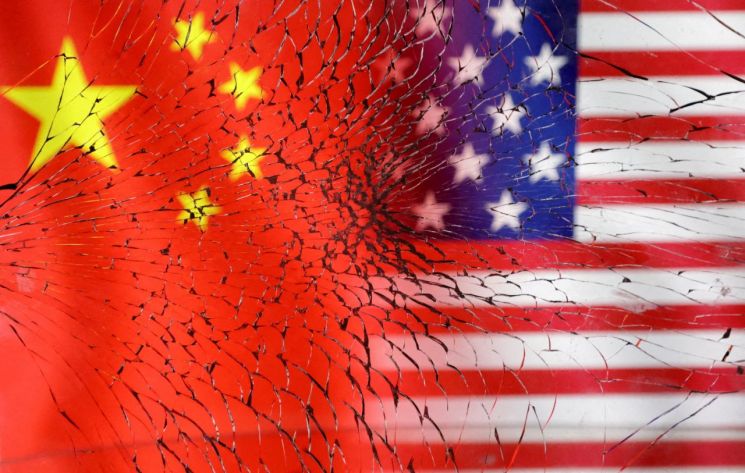
According to Reuters, The New York Times (NYT), and Global Times on September 29, the Chinese government will implement the K Visa (K字簽證) system from October 1. This visa targets young foreign talent who major in or work in the fields of science, technology, engineering, or mathematics (STEM) at renowned overseas universities or research institutions. Holders of the visa will be able to engage in exchanges, start businesses, and conduct business activities in the fields of education, science and technology, and culture within China. In addition, compared to the existing 12 types of visas, the K Visa offers greater convenience in terms of the number of entries, validity period, and length of stay.
Notably, unlike the existing R Visa, the K Visa allows applicants to apply on an individual basis without the need for an invitation letter from a Chinese employer, which sets it apart. However, the detailed eligibility requirements and procedures have not yet been disclosed. The Chinese Ministry of Foreign Affairs stated, "Specific details will soon be announced at overseas missions."
China's 'Reflex Benefit' Strategy Amid U.S. Fee Hike
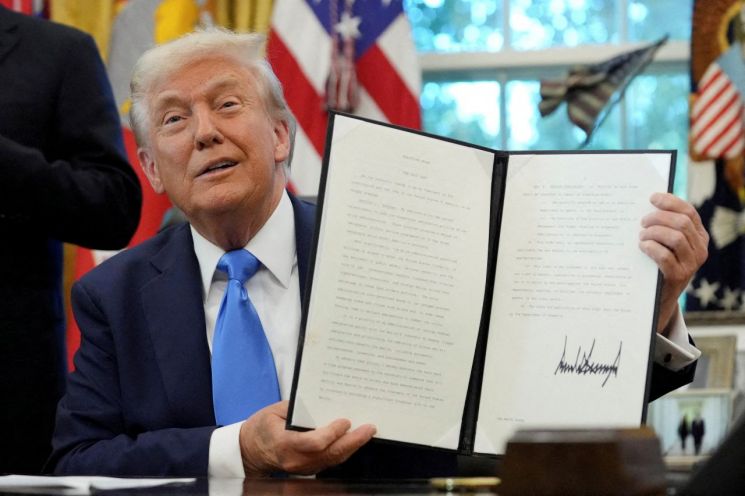 President Donald Trump holds up the signed document of the "Gold Card Visa" executive order in the White House Oval Office in Washington D.C. on the 19th. Photo by Reuters Yonhap News
This new system is drawing attention as it coincides with the recent surge in U.S. H-1B visa fees. On the 19th, President Trump signed a proclamation raising the H-1B fee from $1,000 (about 1.4 million won) to $100,000 (about 140 million won). Foreign media and experts have analyzed that the U.S. measure could backfire by discouraging the inflow of key talent, and that China is seeking to benefit from this situation through the K Visa.
Reuters described the timing of China's visa policy as "impeccable," noting that "as H-1B applicants look for alternatives, China could gain an advantage in the competition for talent." U.S. immigration lawyer Matt Mountel-Medici also commented, "The symbolism is significant: the U.S. is raising barriers while China is lowering them."
Language, Cultural, and Political Differences Remain Challenges
However, there are also limitations. The age, educational background, and career requirements for the K Visa remain vague, and there has been no mention of settlement support such as permanent residency benefits or family invitations. Language, cultural, and political differences are also cited as barriers to attracting foreign talent. In fact, China has previously focused on recruiting overseas Chinese talent when attracting foreign professionals.
There are also predictions that Indian professionals, who make up the majority of H-1B visa holders, are unlikely to choose China easily. India and China have maintained strained relations due to border disputes, and there is a detectable sentiment within China that "Indians are not welcome."
Indian lawyer Santosh Pai told the NYT, "Talent does not go to the United States just because they receive a visa, but because of the overall lifestyle. They want to work and live in the U.S. and aim to become U.S. citizens."
© The Asia Business Daily(www.asiae.co.kr). All rights reserved.
![Clutching a Stolen Dior Bag, Saying "I Hate Being Poor but Real"... The Grotesque Con of a "Human Knockoff" [Slate]](https://cwcontent.asiae.co.kr/asiaresize/183/2026021902243444107_1771435474.jpg)
















