Bloomberg Intelligence Forecasts
"Full-Scale Adoption of SMRs Expected After 2035"
While nuclear power investment in the United States is expected to surge by 2050, projections indicate that it will fall short of the targets set by the Donald Trump administration.
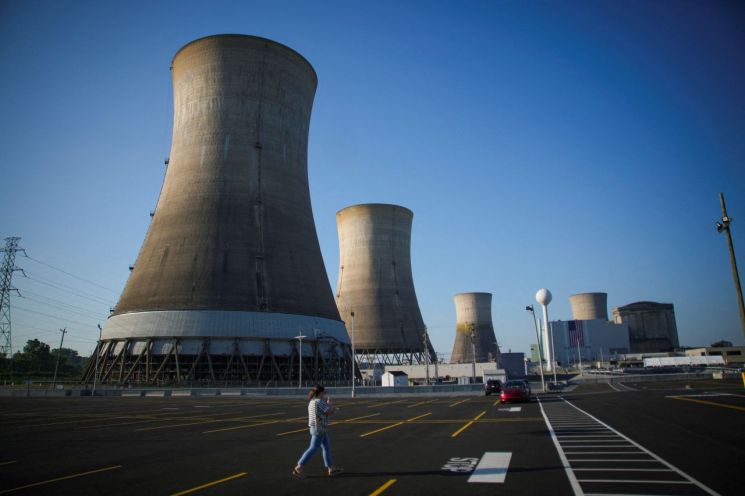
On September 29 (local time), Bloomberg Intelligence (BI) released a report forecasting that the United States' nuclear power capacity will increase by 63% by 2050.
According to Bloomberg News, the BI report anticipates a significant increase in nuclear power capacity, but it points out that this growth will fall far short of the targets recently set by the U.S. administration. The report specifically highlights that construction costs remain high and progress is slow due to shortages of skilled labor, domestic fuel supply, and regulatory frameworks. Only three conventional reactors have been completed in the United States in the 21st century, and there are currently no reactors under development.
Nevertheless, the report states that "the U.S. nuclear industry is preparing for a revival," predicting that small modular reactors (SMRs) will drive the future expansion of nuclear power capacity. SMRs are next-generation nuclear technologies expected to reduce construction costs and shorten installation times. Dozens of companies are currently developing SMR designs.
The report also projects that over the next decade, the total additional nuclear capacity-regardless of form-will be limited to 9 GW, with the widespread adoption of SMRs expected to begin after 2035.
The previous administration under Joe Biden set a goal to expand nuclear power capacity from the current approximately 100 GW to 300 GW by 2050. Subsequently, President Donald Trump signed four executive orders in May, aiming to increase capacity to 400 GW by 2050.
© The Asia Business Daily(www.asiae.co.kr). All rights reserved.
![Clutching a Stolen Dior Bag, Saying "I Hate Being Poor but Real"... The Grotesque Con of a "Human Knockoff" [Slate]](https://cwcontent.asiae.co.kr/asiaresize/183/2026021902243444107_1771435474.jpg)















