Rapid Rise as a Gaming Powerhouse Despite Poor Power and Infrastructure
Producing Professional Gamers in Fighting Game "Tekken"
Arcade Craze Fuels Youth Aspiring to Become Pro Gamers
 Pakistani professional gamer Aslan Ash waving the national flag after winning the 2023 Evolution Championship (EVO), a global fighting game tournament. Photo by Aslan Ash Instagram
Pakistan, once considered a barren land for gaming due to power and infrastructure issues, is now gaining attention as an emerging gaming market by producing professional gamers. With an average national age of 22 and a high proportion of young people, Pakistan is expanding the foundation of its gaming industry, centered around arcades. Investments from neighboring Middle Eastern countries such as Saudi Arabia are also increasing, fueling expectations that Pakistan could become a new e-sports powerhouse in Asia.
Pakistan Emerges as a Tekken Powerhouse Despite Poor Infrastructure
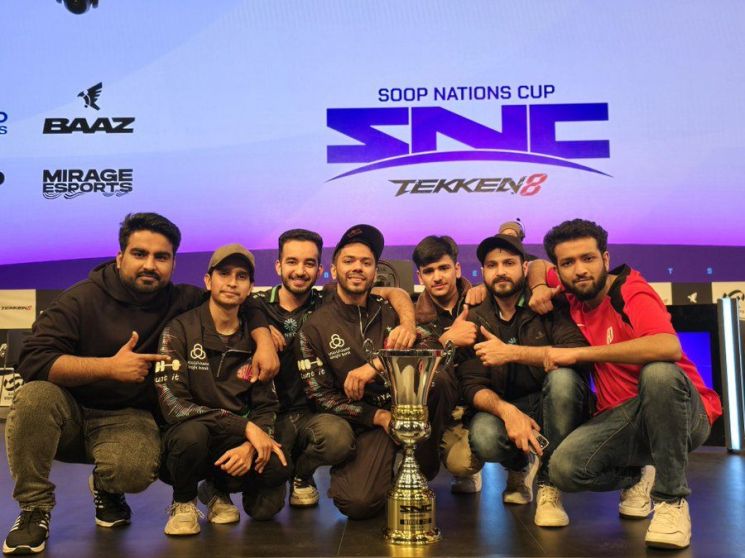 The Pakistani professional gamer team that won the Tekken 8 Nations Cup held in Seoul last March. Photo by Aslan Ash on Instagram
According to CNN on October 3, three of the top 10 players in the global rankings for the Japanese fighting game Tekken are from Pakistan. Globally renowned Tekken professional gamers, including Aslan Ash-who has won the Evolution Championship (EVO), an international fighting game tournament, six times-are making their mark. Last March, the Pakistani team defeated the Korean team to win the Tekken 8 Nations Cup held in South Korea.
Pakistan began to rise as a new powerhouse in Tekken after Aslan Ash debuted as a professional gamer in 2018. Until then, Pakistan had been considered a barren ground for the gaming industry due to weak economic power and poor power and infrastructure conditions. According to the World Bank, Pakistan's per capita GDP last year was $1,484 (about 2.08 million KRW). The average wage for urban workers is only around $300. This means that only the wealthy, who could afford console game devices costing over $700 on average, were able to play fighting games.
Despite these challenging conditions, the expansion of Pakistan's gaming base was triggered by the influx of arcade joystick machines popular in Korea, Japan, and China. After the COVID-19 pandemic, inexpensive joystick machines began to enter Pakistan and spread nationwide. As a result, arcades started hosting Tekken tournaments with prize money, and skilled players began to emerge. Subsequently, professional gamers who honed their skills with investment from Middle Eastern capital, including Saudi Arabia, began to appear on the international stage.
170 Million People Under 30... Expectations for Gaming Market Expansion
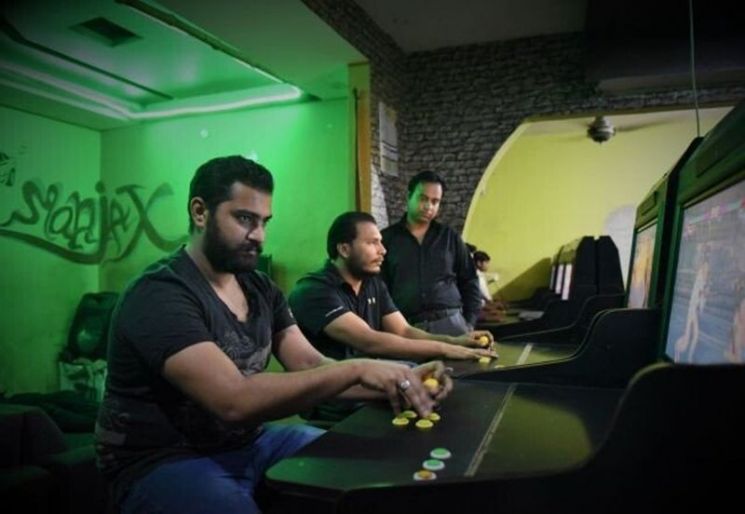
As the popularity of fighting games like Tekken spreads to mobile games and other genres, Pakistan's gaming market is experiencing rapid growth of over 30% annually. With a population of 250 million and an average national age of just 22, Pakistan has a very young demographic. More than 170 million people are under the age of 30, meaning there is a large youth population that forms the main consumer base for the gaming market.
The strong desire among Pakistani youth to become professional gamers in fighting games like Tekken is also cited as a key factor in the expansion of the gaming market. In 2022, Pakistan suffered a massive flood that submerged 75% of its land and left 30 million people displaced, severely impacting all industrial sectors, including agriculture and manufacturing. As a result, the unemployment rate has remained between 5% and 7% annually, much higher than South Korea's 2.6% recorded last month.
The Pakistani government has also begun considering the establishment of e-sports industry policies, raising expectations for rapid growth in the gaming industry. CNN reported, "The Pakistani government has started working on its first e-sports policy for the youth and is considering the creation of gaming arenas and shared workspaces. The challenge of professional gamers struggling to obtain visas for countries like the United States is an issue the government needs to address quickly."
© The Asia Business Daily(www.asiae.co.kr). All rights reserved.
![Clutching a Stolen Dior Bag, Saying "I Hate Being Poor but Real"... The Grotesque Con of a "Human Knockoff" [Slate]](https://cwcontent.asiae.co.kr/asiaresize/183/2026021902243444107_1771435474.jpg)

















