The U.S. government has raised the level of its technology sanctions against Chinese companies. It has blocked Chinese companies on the "blacklist"-those prohibited from importing sensitive U.S.-made technology-from circumventing these restrictions through their subsidiaries.
On September 29 (local time), the Bureau of Industry and Security (BIS) under the U.S. Department of Commerce announced a new regulation stipulating that export controls will automatically apply to any company in which a listed entity holds more than a 50% stake.
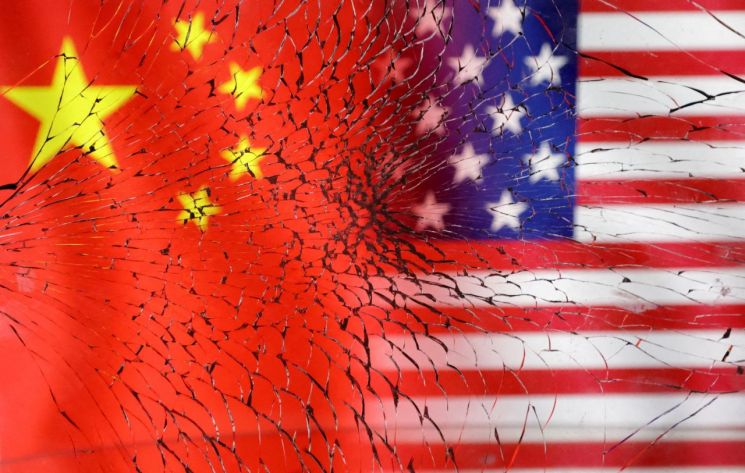
Previously, even if a subsidiary was owned by a company subject to export controls, the subsidiary itself was not subject to restrictions unless it was explicitly named on the export control list. As a result, Chinese companies like Huawei, which are subject to U.S. export controls, could establish subsidiaries and import technology through them to circumvent sanctions.
The new regulation also imposes a stricter duty of care on exporters to avoid violating export control rules when exporting sensitive technology to companies in which a listed entity holds a "significant minority interest" or maintains a "substantial relationship."
The U.S. Department of Commerce maintains lists of foreign companies and organizations that could pose a threat to national security. Companies on these lists must obtain government approval to export dual-use technologies that could be diverted for military purposes, or are effectively banned from receiving such exports. The new rule applies to affiliates of companies included in the "Entity List"-for those engaged in activities contrary to U.S. national security or foreign policy interests-and the "Military End-User List," which covers companies that may use technology for military purposes.
Jeffrey Kessler, Assistant Secretary for Industry and Security at the Department of Commerce, stated, "For too long, loopholes have enabled exports that undermine U.S. national security and foreign policy interests. Under this administration, the BIS is closing these loopholes and ensuring that export controls work as intended."
The new regulation will be officially published in the Federal Register on September 30 and will take effect 60 days after publication.
The Wall Street Journal (WSJ) reported that thousands of companies worldwide could potentially be affected by this measure, but many industry executives see Chinese technology firms as the main target. The U.S. has aggressively expanded export controls to prevent China from accessing advanced technologies that could be used for military purposes.
However, Chinese companies such as Huawei have numerous subsidiaries and global business partners, making it difficult to completely block the supply of U.S. technology. The WSJ noted that officials from the Trump administration, in particular, have expressed concerns that U.S. technology could benefit Chinese companies due to the ongoing U.S.-China competition in artificial intelligence (AI).
There is also a possibility that companies established through joint ventures between Chinese companies on the export control list and third-country firms, such as those from South Korea, could be affected. The WSJ pointed out that this could lead to supply chain disruptions and increased compliance costs.
Meanwhile, this measure could impact the ongoing U.S.-China trade negotiations. On the same day, China's Ministry of Commerce issued a statement expressing "strong opposition" to the U.S. action and announced that it would take necessary steps to protect the legitimate rights and interests of Chinese companies.
© The Asia Business Daily(www.asiae.co.kr). All rights reserved.
![Clutching a Stolen Dior Bag, Saying "I Hate Being Poor but Real"... The Grotesque Con of a "Human Knockoff" [Slate]](https://cwcontent.asiae.co.kr/asiaresize/183/2026021902243444107_1771435474.jpg)
















