After Last Week's Slump, AI-Related Stocks Rebound
U.S. Faces Government Shutdown Risk... Trump to Meet Democratic Leaders Today
September Jobs Report on the 3rd in Focus
The three major U.S. stock indexes showed mixed movements on September 29 (local time) in the New York Stock Exchange. After losing momentum last week due to doubts over the artificial intelligence (AI) rally, the market is attempting a rebound on the first trading day of this week.
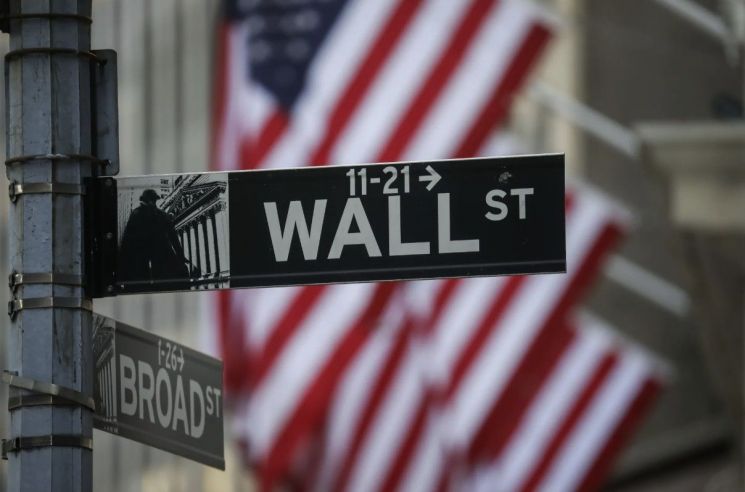
As of 11:41 a.m. on the same day in the New York stock market, the Dow Jones Industrial Average, which focuses on blue-chip stocks, was down 76.13 points (0.16%) from the previous trading day at 46,171.16. The S&P 500 Index, centered on large-cap stocks, was up 14.8 points (0.22%) at 6,658.5, while the tech-heavy Nasdaq Index was trading at 22,601.124, up 117.056 points (0.52%).
By stock, Electronic Arts, a U.S. video game company, jumped 4.79% on news that it would be acquired for $55 billion by an investment consortium led by Saudi Arabia's sovereign wealth fund and would become a private company. Technology stocks were also strong. Nvidia rose 2.22%, Microsoft was up 0.32%, and Tesla was climbing 0.38%.
Last week, all three major indexes declined on a weekly basis as expectations waned over how long the AI-driven rally could last. Wall Street remains divided, with some citing the possibility of an AI bubble and overvalued stock prices, while others expect the AI rally to continue.
Bhanu Krishna, Chief U.S. Equity Strategist at Barclays, analyzed, "There are no signs that AI capital expenditures are slowing down, and other industries are also benefiting from a surge in AI infrastructure spending. While concentrated investments should be approached with caution, the S&P 500 Index, which is composed of technology-focused sectors, is in a favorable position compared to other indexes as AI becomes the focal point of global growth."
This week, investors are focusing on the possibility of a federal government shutdown (temporary suspension of operations) and employment indicators. As the U.S. Congress failed to reach an agreement on a stopgap bill following the expiration of the fiscal year 2025 budget on September 30, some federal government agencies face the risk of being shut down starting October 1. To pass the stopgap bill proposed by the Republican Party, at least seven Democratic senators' support is needed in the Senate. In this context, President Donald Trump is scheduled to meet with the opposition Democratic leadership later today. In an interview with NBC the previous day, President Trump warned that if a shutdown occurs due to the Democrats' lack of cooperation, he would proceed with mass layoffs of federal employees.
The most important economic indicator this week is the September employment report from the U.S. Department of Labor, which will be released on October 3. The market expects nonfarm payrolls to increase by 51,000, an improvement from August's 22,000. The unemployment rate is projected to remain at 4.3%. As the Federal Reserve recently cut rates by 0.25 percentage points on September 17, citing a cooling labor market, this jobs report is expected to be a key clue for the future interest rate path. Analysts say that for Wall Street to maintain a bull market, the employment figures should be neither strong enough to prevent further rate cuts nor weak enough to raise concerns about a recession.
Emma Wall, Chief Investment Strategist at Hargreaves Lansdown, pointed out, "The market anticipated two more rate cuts this year, but Chair Powell indicated that this is not certain. A robust job market and stubborn inflation suggest that the Federal Reserve may keep rates at current levels and incorporate employment data into its decision-making process."
U.S. inflation remains elevated. The personal consumption expenditures (PCE) price index for August, released by the Department of Commerce on September 26, rose 2.7% year-on-year. While this matched market expectations, it was higher than July's 2.6% and marked the highest level in one year and four months since April last year (2.8%). As a result, the Federal Reserve faces the difficult task of achieving both price stability and full employment simultaneously.
U.S. Treasury yields are on the decline. The 10-year yield, the global bond benchmark, fell by 4 basis points (1bp = 0.01 percentage point) from the previous session to 4.13%. The 2-year yield, which is sensitive to monetary policy, was down 2 basis points from the previous day at 3.62%.
© The Asia Business Daily(www.asiae.co.kr). All rights reserved.

















