The possibility of a U.S. federal government shutdown (temporary suspension of government work) has increased, as the two parties have failed to find common ground and continue to remain at an impasse.
On September 28 (local time), President Donald Trump said in a phone interview with CBS regarding the partisan conflict over the budget bill, "I just don't know how to resolve this issue."
He criticized the opposition Democratic Party, saying, "They are not interested in fraud, waste, or abuse."
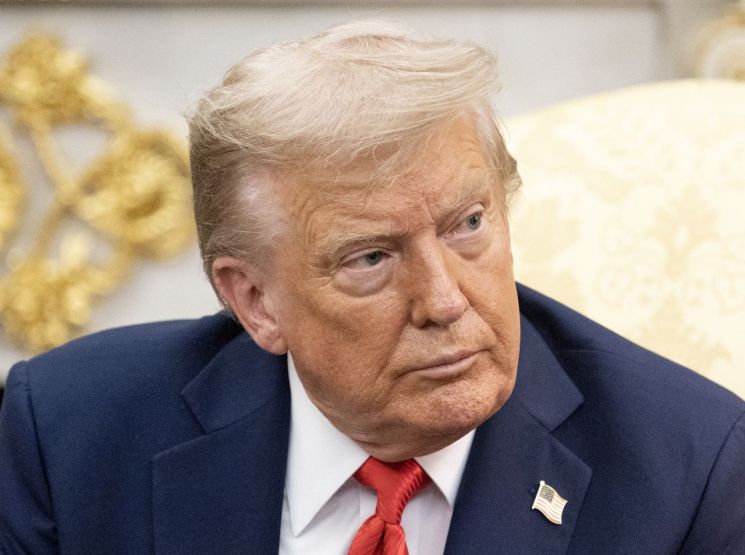
The U.S. federal government will enter a shutdown if the budget for the next fiscal year is not passed by midnight on September 30, the last day of the current fiscal year.
The legal authority for new spending will expire, and under the Antideficiency Act, non-essential work will be halted.
The House of Representatives passed a short-term spending bill (continuing resolution, CR) to avoid a shutdown, but Senate Democrats rejected it while urging Republicans to negotiate.
President Trump is scheduled to meet with bipartisan leaders from both the House and Senate at the White House on September 29 (local time) in the afternoon.
The attendees are reported to include House Speaker Mike Johnson (Republican), Senate Republican Leader John Thune, House Democratic Leader Hakeem Jeffries, and Senate Democratic Leader Chuck Schumer.
With the shutdown deadline just one day away, discussions are expected to focus on narrowing the gap between the two parties. However, it appears likely that only the Democratic Party will be asked to make concessions.
A source close to President Trump said that, amid the ongoing deadlock between the parties, President Trump actually welcomes the shutdown.
It is believed that, by taking advantage of the partial suspension of government work, the administration could more easily adjust the organization, systems, and personnel of government agencies in line with its efficiency drive.
CBS reported that the White House has already sent a directive to government agencies, instructing them to consider personnel reductions for discretionary spending or programs with no alternative funding that expire on October 1.
The directive reportedly also includes instructions to reduce staff involved in institutions and government projects that do not align with President Trump's priorities.
The main point of contention between the Republican Party, led by President Trump, and the Democratic Party in this continuing resolution to avert a shutdown is public health insurance.
The Democratic Party insists that the continuing resolution must include an extension of subsidies under the Affordable Care Act (ACA, also known as "Obamacare").
They have drawn a line in the sand because the insurance premium subsidies, which are part of policies aimed at universal healthcare, are set to expire at the end of this year.
Regarding this, President Trump stated, "The Democratic Party wants to stick to its existing open border policy, but we will not allow it," emphasizing that all health insurance negotiations must address immigration and border issues.
He pressured the Democratic Party, saying that if a shutdown occurs, the public will take his side and that Democrats will pay the price for not cooperating.
The Democratic Party counters that President Trump's claim of linking immigration and health insurance is illogical, as undocumented immigrants are not receiving Medicaid benefits, which are intended for low-income and vulnerable groups.
House Democratic Leader Hakeem Jeffries said, "Trump knows that using tax dollars for health insurance for undocumented immigrants is prohibited under current federal law."
Leader Jeffries added, "What we are trying to do is protect the health of everyday Americans from the crisis of devastation facing hospitals, nursing homes, and local healthcare facilities caused by the Republican Party."
There have been 21 federal government shutdowns in the past 50 years, ranging from a few hours to over a month in duration.
The longest shutdown lasted 35 days, from December 22, 2018, to January 25, 2019, during the first Trump administration, which was also the most recent shutdown.
At that time, the Trump administration faced a shutdown after exercising a veto, judging that the budget for building a border wall with Mexico was insufficient.
The Congressional Budget Office (CBO) estimated that the economic damage from the shutdown at that time amounted to $3 billion (about 4.2 trillion won), equivalent to 0.02% of the gross domestic product (GDP).
Prior to that, two other shutdowns during the first Trump administration in 2018 also occurred due to disputes over immigration issues.
In January 2018, the Democratic Party demanded the reinstatement of the Deferred Action for Childhood Arrivals (DACA) program, which protects undocumented young immigrants from deportation, and linked this to the budget bill, but President Trump rejected it, resulting in a three-day shutdown. In February, another shutdown occurred after a deadlock over immigration law reform, but it ended within a few hours when the budget bill was passed.
© The Asia Business Daily(www.asiae.co.kr). All rights reserved.
![Clutching a Stolen Dior Bag, Saying "I Hate Being Poor but Real"... The Grotesque Con of a "Human Knockoff" [Slate]](https://cwcontent.asiae.co.kr/asiaresize/183/2026021902243444107_1771435474.jpg)











