Aftermath of National Information Resources Service Fire Continues
Disruptions to Some Financial Services Expected to Persist
Financial Institutions Seek Ways to Minimize Customer Impact
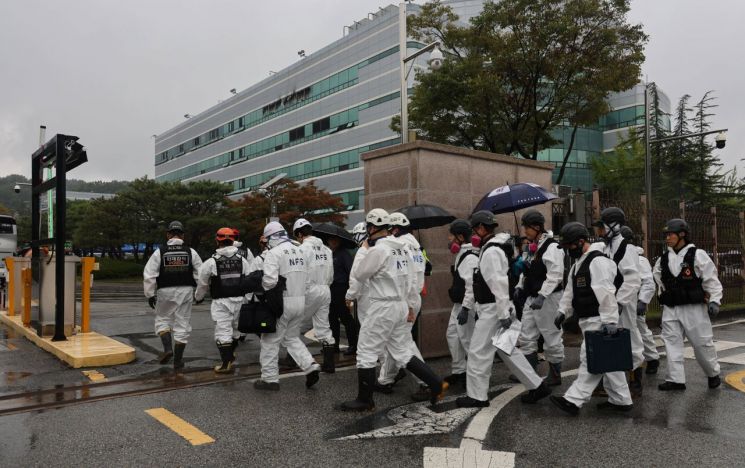 On the 28th, joint investigation team officials from Daejeon Police Agency, Fire Department, and National Forensic Service entered the interior of the Daejeon National Information Resources Service (NIRS). Photo by Yonhap News
The financial authorities announced that, as of September 28, some financial services have still not been restored following the fire that broke out in the computer room of the National Information Resources Service (NIRS) on September 26. They stated that they would make every effort to minimize public inconvenience. To strengthen their response, the existing Joint Crisis Response Headquarters has been elevated to the Central Accident Response Headquarters.
The Financial Services Commission and the Financial Supervisory Service held the second emergency response meeting regarding the NIRS fire with the financial sector at the Government Seoul Office Building in Sejong-ro, Seoul, on the afternoon of September 28. The meeting was chaired by Vice Chairman Kwon Daeyoung of the Financial Services Commission, and was attended by Lee Sehoon, Senior Deputy Governor of the Financial Supervisory Service, as well as representatives from the Korea Exchange, Korea Financial Telecommunications & Clearings Institute, Korea Securities Depository, and officials from banks, insurance companies, and securities firms.
The authorities explained that, due to the fire: ▲ it has become difficult to verify resident registration cards, which may require alternative identification such as a driver's license for procedures like opening new accounts; ▲ the automatic receipt of administrative information necessary for financial transactions (public MyData) is restricted, so additional documentation may be requested; and ▲ some financial services related to the post office, where a system failure occurred, such as automatic transfers, may experience disruptions.
It was reported that markets closely linked to administrative information-such as the emissions trading market (connected to the Greenhouse Gas Inventory and Research Center), Internet Giro, and online payment systems (linked to dBrain)-can operate normally as their respective systems are restored.
The Financial Services Commission explained that, in response to the incident, the response system has been elevated to the "Central Accident Response Headquarters (headed by the Chairman of the Financial Services Commission)."
Vice Chairman Kwon Daeyoung urged, "Especially in difficult times, financial companies must make minimizing consumer inconvenience their top priority and do their utmost to ensure there are no issues at the field level," and added, "From the perspective of business continuity planning, financial companies should respond quickly and flexibly to any unforeseen incidents."
He continued, "The Financial Services Commission and the Financial Supervisory Service will remain vigilant until the situation stabilizes and will thoroughly manage the stable provision of financial services," and emphasized, "We will also consider flexible application of non-action letters and similar measures to ensure that financial companies taking proactive steps to protect consumers do not suffer any disadvantages afterward."
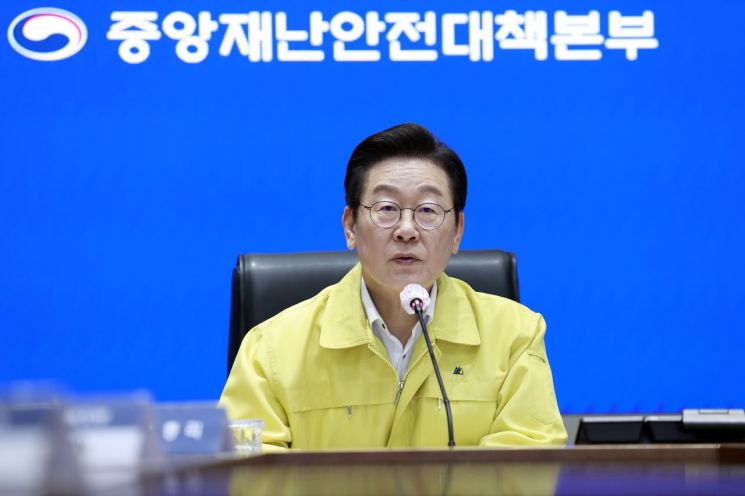 President Lee Jae-myung is speaking at the Central Disaster and Safety Countermeasures Headquarters meeting related to the fire at the National Intelligence Resources Management Agency held on the 28th at the Central Disaster Situation Room of the Government Seoul Office Building. Photo by Presidential Office Press Photographers Group, Yonhap News Agency
Meanwhile, although banks and other financial institutions operated emergency response systems over the weekend, they are now considering ways to minimize damage as some services-such as non-face-to-face account opening, loan screening, and identity verification-are expected to experience disruptions starting Monday.
This is because identity verification services using resident registration cards have been suspended, and only verification using physical driver's licenses and mobile identification cards (resident registration card, driver's license, or alien registration card) issued before September 26 is operating normally.
As the government's computer network is effectively paralyzed, if it is difficult to issue physical documents, even visiting a bank branch may not allow work to be processed. Some loan products have had applications suspended, so customers seeking funds for real estate transactions or living expenses are likely to face difficulties. With the suspension of public MyData services, applications for certain credit loans and mortgage products that rely on this data for screening have also reportedly been halted.
Customers who intended to use internet-only banks, which have no physical branches, are expected to be hit even harder. KakaoBank is conducting loan screenings for mortgages and jeonse loans by having customers upload images of the required physical documents instead of using public MyData. K Bank and Toss Bank announced that it is currently difficult to screen some loan products, such as mortgages.
© The Asia Business Daily(www.asiae.co.kr). All rights reserved.


















