Government Issues Guidelines for Preventing Telecom and Financial Scams During the Holiday Season
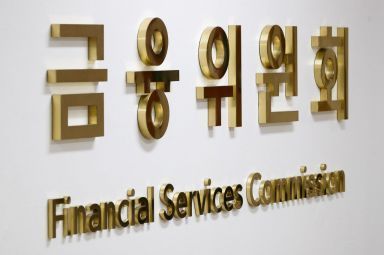
The Ministry of Science and ICT, the Korea Communications Commission, the Financial Services Commission, the National Police Agency, the Korea Internet & Security Agency, and the Financial Supervisory Service have urged the public to exercise caution to minimize damage from various cybercrimes ahead of the Chuseok holiday. These include smishing scams involving impersonation of public institutions-such as fake messages regarding traffic violation fines or illegal garbage disposal penalties-and scams targeting people purchasing holiday gifts through fraudulent online shopping sites.
On September 28, the authorities warned that, around the Chuseok holiday, there could be a surge in smishing messages impersonating government agencies or local governments. These messages may exploit increased traffic and food waste during the holiday by sending fake penalty or fine notifications. The public is urged to be especially vigilant. Additionally, since 2024, there has been a rise in account theft cases involving social media and e-commerce platforms, in addition to traditional schemes stealing personal information, so extra caution is needed when entering account information.
According to the government’s analysis of smishing cases detected by relevant agencies over the past three years, scams impersonating public institutions accounted for more than half-approximately 2.07 million cases, or 53.4% of the total.
The government believes that, during the Chuseok holiday period, there could be a large-scale distribution of smishing messages exploiting situations such as: ▲ imposition of fines for traffic violations, ▲ penalties for illegal garbage disposal, and ▲ fake parcel delivery notifications for holiday gifts. These scams are designed to take advantage of people excited about visiting their hometowns.
In addition to scam messages demanding financial payments, there is a growing trend of messenger-based financial fraud (phishing), where scammers disguise their messages as legitimate and then lure victims to phone calls or messenger apps to request money, gift cards, or financial transaction information.
In particular, if a malicious app capable of remote control is installed on a smartphone via a phishing message or call, it can lead to personal information leaks and financial losses. Therefore, you should never comply with requests to install apps before verifying the other party through a call or video call.
The Financial Services Commission and the Financial Supervisory Service have implemented and are operating secure blocking services for credit transactions and non-face-to-face account openings, so that financial consumers can conduct transactions safely. Anyone can sign up for these services at financial institution branches or through mobile apps, and promotional efforts will be strengthened in the financial sector before and after the Chuseok holiday period.
If you suspect your financial information has been compromised due to the installation of a malicious app, you should visit your financial institution’s branch or call its call center to request an immediate freeze on all transactions from your account to minimize losses.
In particular, if you have transferred money to a scammer’s account after being deceived by a fraudulent call, you are advised to report the incident to the National Police Agency and immediately request a payment freeze to prevent the criminal from moving the funds.
If you fall victim to smishing or other cybercrimes during the holiday period, you can report it to the National Police Agency or file a report online through the “ECRM (Electronic Crime Reporting Management)” system.
If you receive a suspicious smishing message or suspect your device is infected with a malicious app, you can contact the 118 Counseling Center (operated by the Korea Internet & Security Agency) at any time, 24 hours a day, for free consultation.
© The Asia Business Daily(www.asiae.co.kr). All rights reserved.

















