Tariffs Announced on Branded and Patented Pharmaceuticals
Korean CDMO and Biosimilar Exports to U.S. Face Uncertainty
"Details Still Unclear... The Entire Supply Chain May Not Be Targeted"
With U.S. President Donald Trump announcing that a 100% tariff will be imposed on branded and patented pharmaceuticals from companies without manufacturing plants in the United States starting next month, the domestic pharmaceutical and biotech industries are on high alert. Companies are mobilizing their overseas public affairs teams to understand the background and detailed implementation plans behind this statement, while also quickly analyzing and forecasting the potential impact on future production and sales.
The industry believes that the impact on each company could vary greatly depending on the scope of tariffs applied to finished pharmaceuticals, active pharmaceutical ingredients (APIs), and biosimilars. Some expect that, since the Trump administration previously imposed tariffs on European branded pharmaceuticals, this new measure may not target the entire pharmaceutical supply chain.
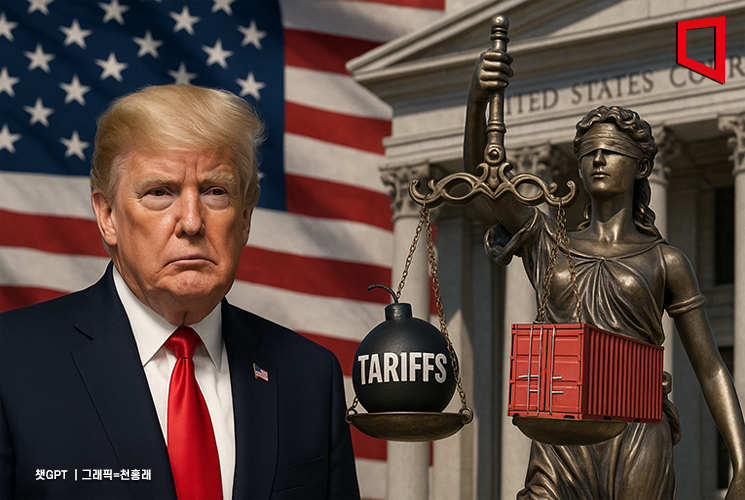
On the 25th (local time), President Trump stated on his social media platform, Truth Social, "If foreign companies do not build pharmaceutical factories in the United States, a 100% tariff will be imposed on all branded or patented pharmaceuticals starting from the 1st of next month," adding, "Construction refers to either groundbreaking or ongoing construction." This means companies that have established or are currently building production infrastructure in the United States will be exempt from the tariffs. This measure is seen as part of the ongoing "tariff war" and as a means to pressure the pharmaceutical industry toward "onshoring" (reshoring manufacturing).
Within the domestic pharmaceutical and biotech sectors, companies are taking different approaches depending on whether they have local bases in the United States. Those that have already established production bases in the U.S. believe the impact of the tariffs will be limited, while those without factories are closely monitoring the situation until detailed plans are released.
Celltrion responded swiftly by acquiring Eli Lilly's biopharmaceutical plant in Branchburg, New Jersey, for approximately 460 billion won on the 23rd. The company explained, "We have already secured two years' worth of inventory, and after validation at the acquired plant, we plan to begin local production, so there is virtually no tariff risk." Seo Jungjin, Chairman of Celltrion Group, stated during an online press conference on the 23rd, "This acquisition has completely eliminated tariff uncertainties," adding, "We are also planning to expand production in line with rising local demand."
Lotte Biologics is also expected to avoid major impact, as it owns a plant in Syracuse, New York, acquired from Bristol Myers Squibb in 2022. The company stated, "Since we already have a factory in the United States, the risk is limited," and added, "We are monitoring detailed trends in response to policy changes."
SK Biopharmaceuticals has also established a local production base approved by the U.S. Food and Drug Administration (FDA) and has secured inventory in the United States, so it does not anticipate any short-term shock. GC Green Cross explained, "The blood product Alglilo is produced using 100% U.S.-sourced plasma," and added, "According to an executive order, if more than 20% of the finished product's raw materials are U.S.-made, that portion is exempt from tariffs, so the impact is not significant."
Samsung Biologics has not yet established a production base in the United States and is currently reviewing its response while confirming detailed guidelines. In particular, if major global pharmaceutical clients of Samsung Biologics expand local production in the U.S., the company's contract development and manufacturing (CDMO) business structure could face changes in the mid- to long-term.
President Trump is demanding a strategic overhaul from global pharmaceutical and biotech companies that are highly dependent on the U.S. market. Last year, Korea's pharmaceutical exports to the U.S. reached $3.97 billion (approximately 5.61 trillion won), doubling in size over four years. The industry believes that while short-term defense is possible through inventory stockpiling or local contract manufacturing organization (CMO) agreements, in the long run, "U.S.-based production" will become a key competitive advantage.
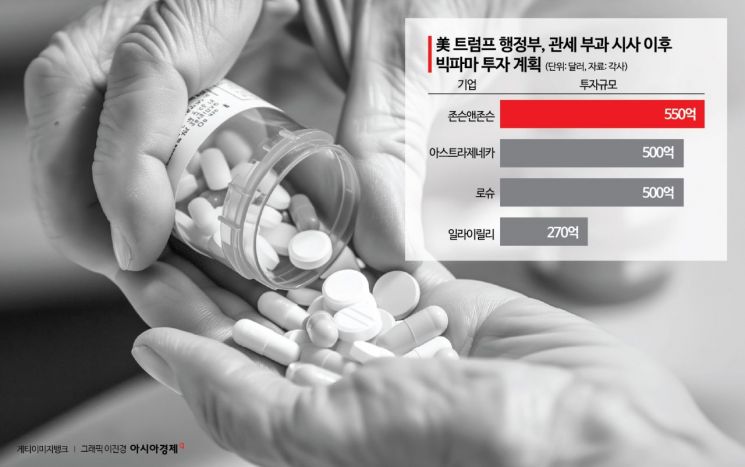
Global pharmaceutical giants are also increasing their investments in the United States. GSK announced it would invest $30 billion (approximately 42.393 trillion won) over five years, while AstraZeneca plans to invest $50 billion (approximately 70.655 trillion won) by 2030. Eli Lilly and Johnson & Johnson (J&J) have also announced plans to build manufacturing facilities worth several tens of billions of dollars.
Whether this measure will also cover generic drugs, APIs, and biosimilars remains a key issue. Based on the previous day's case of tariffs on European branded pharmaceuticals, the industry believes the U.S. government is more likely to target strategic items such as advanced pharmaceuticals or high-priced branded drugs, rather than the entire supply chain.
An official from a pharmaceutical company commented, "Imposing tariffs on branded and patented pharmaceuticals is a policy that combines drug price controls with incentives for local production in the U.S., and can be seen as a symbolic move to strengthen manufacturing sovereignty, going beyond simple protectionism. However, if the measure is expanded to include APIs and generics, it will inevitably cause shocks to the pharmaceutical supply chain."
© The Asia Business Daily(www.asiae.co.kr). All rights reserved.


















