10th National Tourism Strategy Meeting Held
Goal Set for 30 Million Inbound Tourists by 2030
Key innovative tourism policies being pursued by the government to increase the number of inbound tourists from the expected 20 million this year to 30 million by 2030 include: creating regional inbound tourism zones comparable to those in the Seoul metropolitan area, fostering three major high value-added tourism industries (medical tourism, wellness tourism, and MICE tourism), establishing a new large-scale performance arena in the metropolitan area, supporting 'half-price vacations' for workers, institutionalizing domestic shared accommodation, and amending the Tourism Promotion Act.
On September 25, the government held the 10th National Tourism Strategy Meeting at the Hiker Ground of the Korea Tourism Organization in Jung-gu, Seoul, presided over by Prime Minister Kim Minseok. During the meeting, the government announced the “Beyond 30 Million Arrivals: Becoming a Global Tourism Powerhouse, Three Major Tourism Innovation Strategies.”
The government stated that, buoyed by the global popularity of K-culture, including "K-Pop Demon Hunters," the number of inbound tourists this year will reach a record high of 20 million, marking a new turning point for the tourism industry. However, the government emphasized that innovative policies are needed to address ongoing issues such as the concentration of inbound tourists in the metropolitan area and the decrease in the average length of stay. To that end, the government announced plans to pursue innovation in inbound tourism, domestic tourism, and policy and industrial infrastructure.
The National Tourism Strategy Meeting is a body chaired by the Prime Minister and composed of the ministers of 13 government agencies. About 70 participants attended the meeting, including vice ministers from central government agencies, representatives from tourism industry associations and organizations, experts, and private sector leaders. They discussed policy measures for the tourism industry to promote economic growth and provide practical solutions to regional decline.
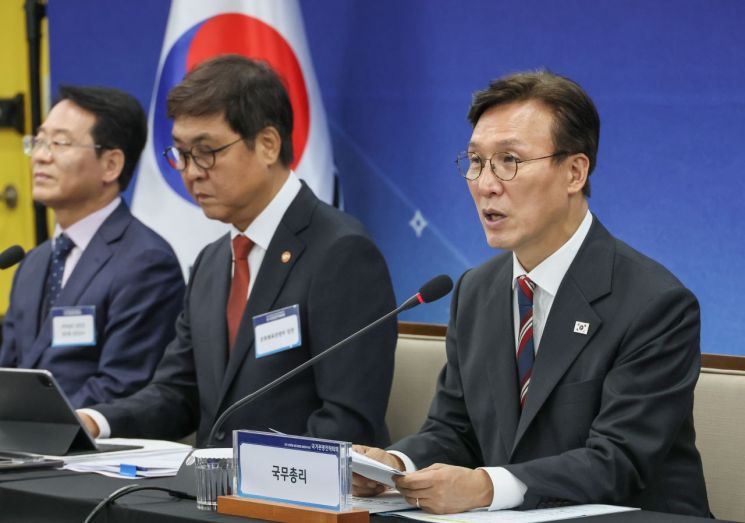 Prime Minister Kim Minseok is speaking at the 10th National Tourism Strategy Meeting held on the 25th at the High Ground of the Korea Tourism Organization in Jung-gu, Seoul.
 Photo by Yonhap News
To revitalize the tourism industry, the government identified the activation of regional tourism for inbound tourists as an urgent task. This is due to the stark disparity, with over 80% of inbound tourists visiting the metropolitan area, while only about 30% visit regional areas.
On an inter-ministerial level, the government will create “second and third inbound tourism zones” in regional areas with global tourism competitiveness to encourage more inbound tourists to visit regions outside the metropolitan area.
Minister of Culture, Sports and Tourism Choi Hwiyeong stated, “Within this year, we plan to select two to three regional areas as candidates for inbound tourism zones. After working closely with the respective local governments for a year to implement policies, we will select the most promising one or two areas for intensive development.”
To increase per capita spending by inbound tourists, the government will focus on fostering the three major high-value markets: medical tourism, wellness tourism, and MICE tourism.
To promote medical tourism, the government will develop customized local marketing strategies and expand overseas events such as the Korea Medical Tourism Expo and roadshows. The application criteria for “excellent medical tourism attraction agencies,” which provide visa facilitation for inbound tourists, will also be relaxed. To establish the K-wellness brand, the government will select outstanding wellness tourism destinations, provide marketing support, run professional training programs, and support the creation of representative wellness tourism hubs in Korea. For the development of MICE tourism, the government will identify and nurture international conferences representing each region in stages. In addition, the threshold for the simplified immigration screening system, previously piloted for major international conference participants, will be lowered from 500 to 300 participants, with official implementation starting in October.
The government will also foster a tourism ecosystem linked to K-culture so that the global popularity of K-culture translates into success for the inbound tourism market. By the first half of 2030, a new large-scale performance arena will be built in the metropolitan area, and comprehensive pop music experience facilities and regional Hallyu experience centers will be established as hubs for K-content.
To improve the readiness to accommodate inbound tourists, the temporary exemption from the Korea Electronic Travel Authorization (K-ETA), which was set to expire this year, will be extended for one more year until December next year. The government will also develop a dedicated tourism pass for inbound tourists that integrates transportation and attraction admissions. Furthermore, the government will expand the QR-based easy payment system, allowing foreigners to pay easily using their home country’s payment systems, and diversify authentication methods for inbound tourists, such as passport verification. Efforts will also be made to strengthen quality control of tourism services, including addressing the issue of price gouging.
To innovate domestic tourism, the government will support domestic travel expenses to stimulate demand for regional travel among Korean citizens. The “half-price travel” program, which reimburses 50% of travel expenses to depopulated rural and fishing areas in the form of local gift certificates, will be expanded. The existing accommodation discount voucher program will be improved to introduce new vouchers for consecutive-night stays and island accommodations. The government also announced plans to create a “tentatively named Hotspot Guide,” a Michelin Guide-style resource to make both domestic and international travelers want to visit destinations in Korea. In addition, the “Travel Month” campaign, previously led by the Ministry of Culture, Sports and Tourism, will be expanded into a “National Campaign to Revitalize Regions Through Travel” in cooperation with other ministries and economic organizations, to further boost the atmosphere for regional travel.
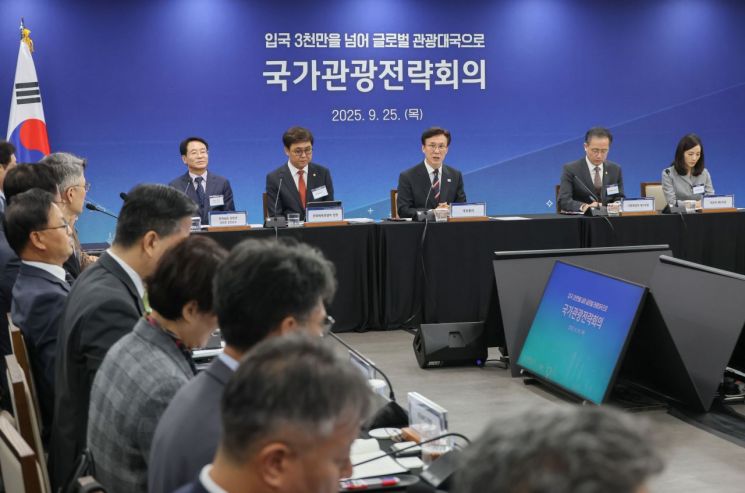 Prime Minister Kim Minseok is speaking at the 10th National Tourism Strategy Meeting held on the 25th at the Hiker Ground of the Korea Tourism Organization in Jung-gu, Seoul.
 Photo by Yonhap News
The government announced plans to boldly reform outdated tourism laws and systems, originally enacted in the 1970s and 1980s, to establish a policy foundation that can respond to changing conditions. To foster the tourism industry in the AI era and to develop and promote regional tourism resources, the government will fully revise the “Framework Act on Tourism,” and fundamentally restructure the tourism law system by splitting the current “Tourism Promotion Act” into the tentatively named “Tourism Industry Act” and “Regional Tourism Development Act.” The government will also closely review the need to reform the current business classification system under the “Tourism Promotion Act,” which has remained unchanged since 1999, to reflect the expansion of the industry and the emergence of technology-integrated companies.
The government will establish a new tourism-focused artificial intelligence fund with a scale of 10 billion won next year to foster star companies in the tourism sector. In addition, the government will promote the institutionalization of domestic shared accommodation, extend the VAT refund period for accommodation, expand new types of camping facilities, and increase real estate acquisition tax reductions when developing tourism complexes in depopulated areas, as part of rationalizing regulations in the tourism industry.
Prime Minister Kim Minseok stated, “This year, with the Asia-Pacific Economic Cooperation (APEC) Summit being held in Gyeongju, we have a golden opportunity to showcase Korea’s culture, arts, and content to the world. The Lee Jaemyung administration will foster the K-content cultural tourism industry as a core strategic industry for the future and will promote government-wide discussions and public-private cooperation to ensure that these efforts lead to tangible results.”
© The Asia Business Daily(www.asiae.co.kr). All rights reserved.


















