U.S. Commerce Department Launches Investigation Under Trade Expansion Act
Tariffs Already Applied to Automobiles, Steel, and Copper
Move Seen as Safeguard Amid Uncertainty Over Supreme Court Ruling on Reciprocal Tariffs
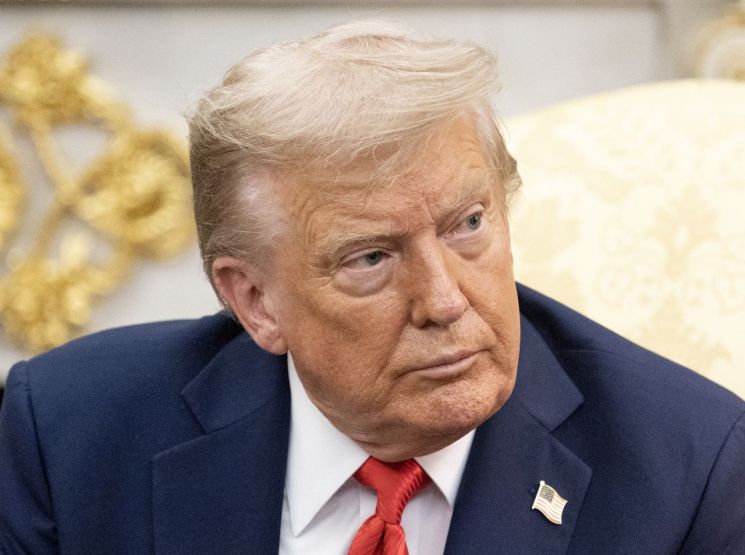
The U.S. Department of Commerce has launched an investigation to assess the impact of imports of robots, industrial machinery, and medical supplies and devices on national security. Amid a pending Supreme Court ruling on the legality of reciprocal tariffs, some analysts suggest that the Donald Trump administration is seeking to use item-specific tariffs under Section 232 of the Trade Expansion Act as a "safety mechanism."
The Department of Commerce announced in the Federal Register on the 24th (local time) that it began the investigation on the 2nd of this month and is now collecting opinions from stakeholders regarding the investigation.
The investigation targets robots and computer-controlled machine systems. This includes industrial stamping and pressing equipment, workpiece cutting and welding machines, and specialized equipment for metal processing. According to Reuters, medical supplies such as masks, syringes, and infusion pumps are also included, along with medical devices like pacemakers and insulin pumps.
This investigation is being conducted under Section 232 of the Trade Expansion Act. Section 232 grants the president the authority to restrict imports of items that negatively affect national security. Under this law, the Department of Commerce must submit policy recommendations within 270 days. President Trump previously imposed item-specific tariffs on automobiles, steel, aluminum, and copper imported into the United States based on this provision.
Bloomberg News pointed out that such measures serve as a form of insurance. The outlet analyzed, "With tariffs imposed on dozens of countries having been invalidated by a federal court and the Supreme Court now set to review the case, tariffs under Section 232 could serve as a supplementary tool."
Previously, the Trump administration appealed to the Supreme Court on the 3rd after the U.S. Court of Appeals for the District of Columbia Circuit ruled against its reciprocal tariff policy. The court determined that while the International Emergency Economic Powers Act (IEEPA) grants the president the authority to regulate imports, it does not extend to imposing tariffs through executive orders.
The Supreme Court accepted the Trump administration's request for an expedited ruling and scheduled the first oral arguments for the first week of November. The Wall Street Journal (WSJ) reported that a decision could be reached within the year.
© The Asia Business Daily(www.asiae.co.kr). All rights reserved.
![Clutching a Stolen Dior Bag, Saying "I Hate Being Poor but Real"... The Grotesque Con of a "Human Knockoff" [Slate]](https://cwcontent.asiae.co.kr/asiaresize/183/2026021902243444107_1771435474.jpg)















