"K-Pop Demon Hunters" Boosts Global Interest in Korean Art
English Books on Korean Art Remain Scarce
Often Introduced Only as Part of East Asian Art
Yoo Hongjun Publishes "A History of Korean Art for Foreigners"
"Aiming for Global Readers Through Renowned International Publishers"
MMCA Promotes Residency for International Art Scholars
Supporting Research and Writing on Korean Art During Extended Stays
The success of the Netflix animation "K-Pop Demon Hunters" has sparked growing international interest in traditional Korean art. Online communities are abuzz with comments such as, "I want to learn more about tigers and magpies as motifs in folk paintings," and "I looked up 'Hojakdo' (tiger and magpie painting)." There is also a rising demand for related exhibitions and books. However, critics point out that there is still a lack of specialized literature on Korean art to support this interest.

According to industry sources on September 25, even in globally respected art book series, Korea remains on the periphery. The "World Art History" series features over 300 volumes, but only a handful cover Korea. Similarly, in the "Pelican History of Art" series, Korea is included only in a few volumes on East Asia out of about 40 books. The gap is significant compared to China and Japan, which have accumulated academic resources over decades through globalization strategies.
Efforts to address these limitations have recently gained momentum. The National Museum of Korea and the National Museum of Modern and Contemporary Art are leading initiatives to introduce Korean art to the world through new publications.
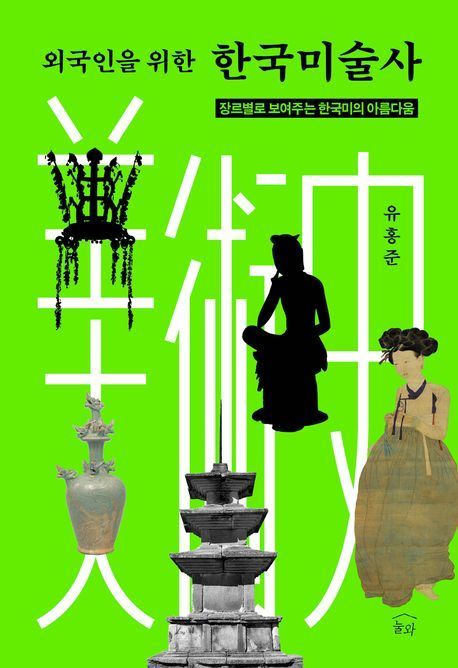
Yoo Hongjun, Director of the National Museum of Korea, recently published "A History of Korean Art for Foreigners." He condensed the content of his previous popular works, such as "My Cultural Heritage Exploration" and "Lectures on Korean Art History," into a single volume. This new book, aimed at international readers, takes a genre-based approach-covering ceramics, painting, Buddhist art, and more-instead of a chronological one. The publisher stated, "The use of formal language lends weight to the translation," emphasizing their attention to detail. Discussions are currently underway with overseas publishers regarding translation and publication.
The National Museum of Modern and Contemporary Art operates the "MMCA Research Fellowship," which supports leading international scholars to stay in Korea for direct research and writing. At the end of this year, Alexander Alberro, a professor at Columbia University in the United States, will visit Korea, and in 2027, Hal Foster, a renowned art historian from Princeton University, will participate. A museum representative commented, "The global spotlight on Korean Dansaekhwa was also due to Joan Kee's 2013 English-language book 'Dansaekhwa.' If scholars like Professor Foster interpret Korea, the international art world will pay even more attention."
Indeed, through her book, Joan Kee interpreted the philosophy of Korean Dansaekhwa artists from the 1960s and 1970s as "Korean-style minimalism," which made a significant impact overseas. This led to large-scale exhibitions and academic research at venues such as the Guggenheim in New York and Blum & Poe in Los Angeles, elevating the status of Korean contemporary art.
The National Museum of Modern and Contemporary Art and the National Museum of Korea aim to recreate the "Dansaekhwa effect" through these new initiatives. Director Yoo Hongjun stated, "We are going beyond simply publishing books; we are engaging with capable overseas publishers who can handle everything from translation to distribution to promote Korean art worldwide. Our goal is to firmly imprint 'Korea' in the history of world art."
© The Asia Business Daily(www.asiae.co.kr). All rights reserved.


















