Sharp Increase in Electricity, Gas, and Steam Supply Businesses
"Popular Among the Elderly as a Retirement Venture"
Last year, the number of employees in the accommodation and food service industry decreased for the first time since related statistics began being compiled in 2020. Analysts attribute this to the fact that this sector is most sensitive to economic fluctuations, making it particularly vulnerable during downturns.
According to the "2024 National Business Survey Results (Preliminary)" released by Statistics Korea on September 23, the total number of businesses last year was 6,353,673, an increase of 107,184 (1.7%) compared to the previous year. By industry, wholesale and retail trade accounted for the largest share (1,613,000 businesses, 25.4%), followed by accommodation and food service (858,000 businesses, 13.5%), and transportation (673,000 businesses, 10.6%).
Looking at changes in the number of businesses, sectors such as manufacturing (-33,000 businesses, -6.1%) and real estate (-11,000 businesses, -3.9%) saw declines due to the economic downturn. In contrast, electricity, gas, and steam supply (37,000 businesses, 33.7%) and wholesale and retail trade (36,000 businesses, 2.3%) saw increases. The growth in electricity, gas, and steam supply businesses was the largest since related statistics began in 2020.
A representative from Statistics Korea explained, "If we look at the details of the electricity, gas, and steam supply sector, the overall increase was largely driven by a significant rise in solar power generation businesses." The official added, "There is a growing perception that solar power generation is an industry that can generate stable income with relatively low costs, leading many older adults to start such businesses as an investment for retirement."
Last year, the total number of employees across all businesses was 25,731,105, an increase of 285,208 (1.1%). By sector, manufacturing accounted for the largest share (4,146,000 employees, 16.1%), followed by wholesale and retail trade (3,600,000 employees, 14.0%), and health and social welfare (2,764,000 employees, 10.7%).
In terms of changes in the number of employees, there were decreases in construction (-122,000 employees, -6.4%) and accommodation and food service (-58,000 employees, -2.5%). However, there were increases in health and social welfare (196,000 employees, 7.6%) and business facilities and support services (65,000 employees, 4.9%). The decline in accommodation and food service employees marks the first decrease since related statistics began being compiled in 2020.
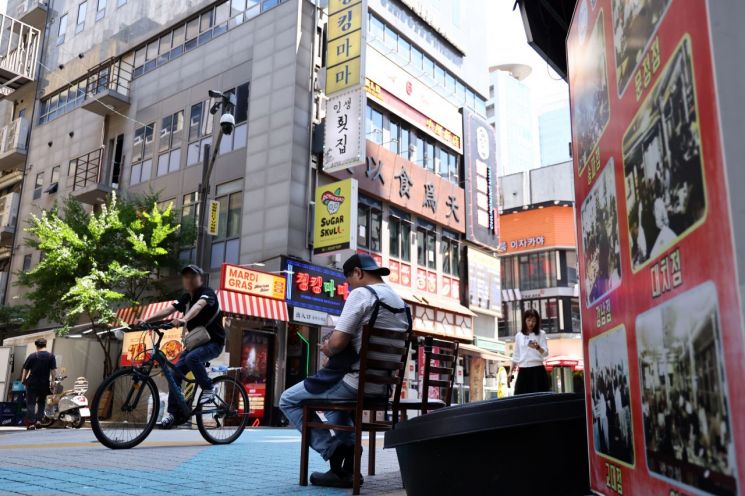
A representative from Statistics Korea commented on the decrease in accommodation and food service employees, stating, "The accommodation and food service industry is the most heavily impacted by economic conditions." The official continued, "In particular, restaurants and bars have been directly affected," adding, "There are significant challenges, such as rising rent and labor costs, as well as a substantial increase in vacancies."

By business size, the number of businesses with 5 to 99 employees decreased by 46,000 (-5.5%), while those with 1 to 4 employees increased by 152,000 (2.8%). In terms of employee numbers, businesses with 5 to 99 employees (-157,000, -1.4%) and those with 1 to 4 employees (-68,000, -0.9%) saw declines, but businesses with 300 or more employees increased by 347,000 (8.9%).
© The Asia Business Daily(www.asiae.co.kr). All rights reserved.


















