Paju City, Faster, Closer, and Safer Transportation Innovation
A Transportation Revolution Toward "1 Million Paju": The Name Is 30·30·30 Plus
The GTX Era Brings a Major Shift: Accelerating "30·30·30 Plus" in Paju
30 Minutes to Seoul, 30 Minutes Within Paju, 30% Fewer Accidents... Paju's Transportation Innovation Roadmap
22-Minute Commutes, 1,000-Won School Rides... Paju's Experiment as a Transportation Innovation City
Paju, a leading growth city in northern Gyeonggi Province, is envisioning its future as a "city of one million" by leveraging transportation innovation as a driving force.
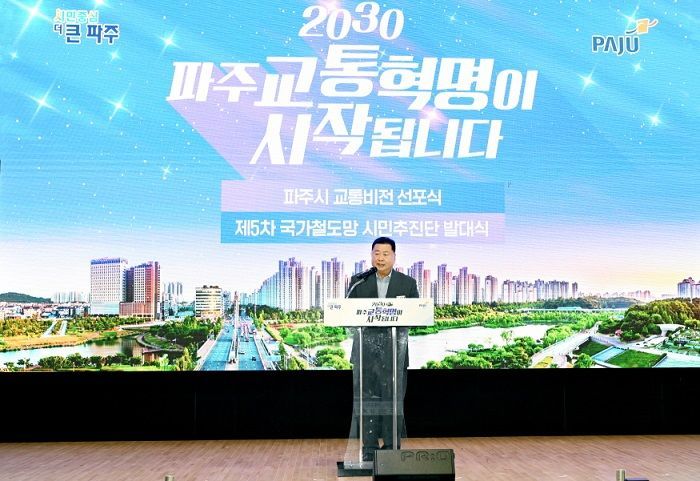 Kim Kyungil, mayor of Paju City, is seen hosting the "Paju Transportation Vision Proclamation Ceremony," marking the start of the 2030 Paju Transportation Revolution, held on July 1 last year. Photo by Paju City
According to Paju City on September 23, the city's population surpassed 500,000 in 2022 and has continued to grow steadily, exceeding 540,000 as of September 2025. Notably, the influx of young people in their 30s and 40s is driving this population growth, making the changing residential conditions in Paju particularly noteworthy.
Well-developed transportation infrastructure has a positive impact on population inflow and regional development. In a survey conducted last year by the Korea Chamber of Commerce and Industry, transportation (51%) was found to be the top priority for young people in 2030 when considering residential conditions, ranking much higher than housing environment (47%), medical services (34%), cultural and shopping convenience (33%), or education (24%). Paju City appears to be a prime example that aligns precisely with these survey results.
Paju City sees the trend of younger generations driving population growth as an unparalleled opportunity to lay the foundation for sustainable urban growth and development. In July last year, the city unveiled its blueprint, "A Closer Paju, Leap to 1 Million Paju," and introduced the mid- to long-term initiative "Paju Transportation Vision 30·30·30" to dramatically improve Paju's transportation environment.
The city aims to achieve a 30-minute commute from Paju to Seoul, 30-minute travel within Paju, and a 30% reduction in traffic accidents, thereby making Paju's transportation environment faster, closer, and safer, and creating an advanced transportation city where all citizens can benefit and be satisfied.
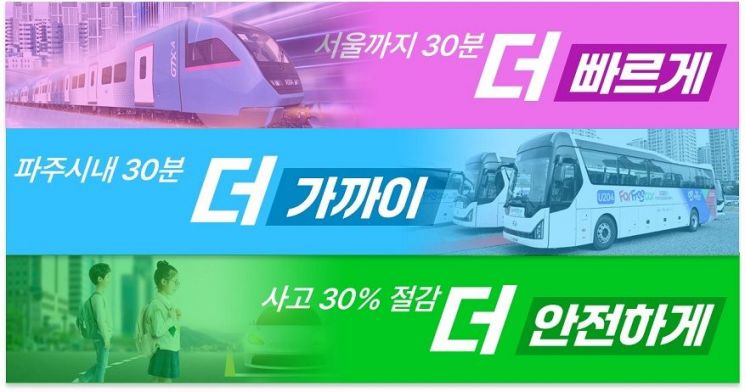
It has been just over a year since the "Transportation Vision 30·30·30," set for completion by 2030, was announced. Let's take a look at how Paju's transportation environment has changed so far and what further changes are expected in the future.
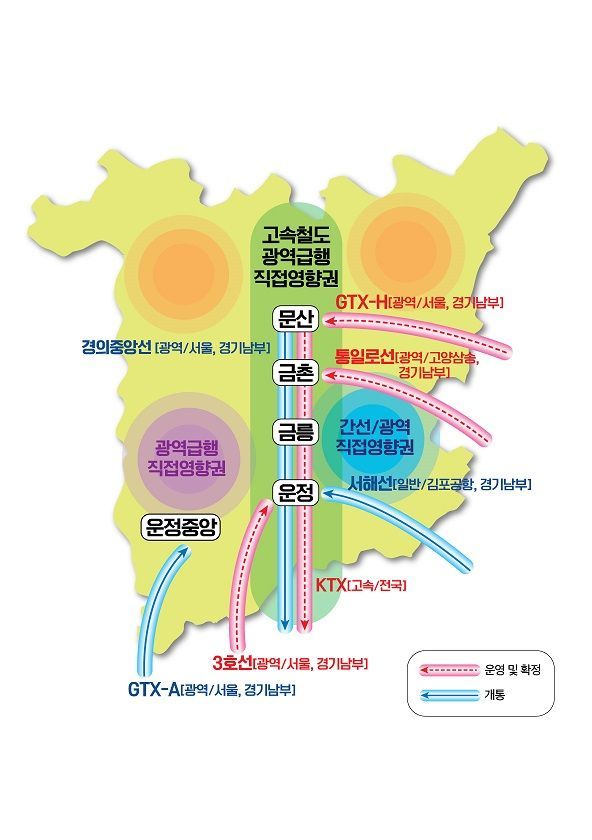
Commuting between Paju and Seoul was once synonymous with long travel times and inconvenience. To address this, Paju City has focused on shifting its public transportation system from a road-centered to a rail-centered network, aiming to usher in an era where travel from Paju to Seoul can be completed within 30 minutes through metropolitan railway projects.
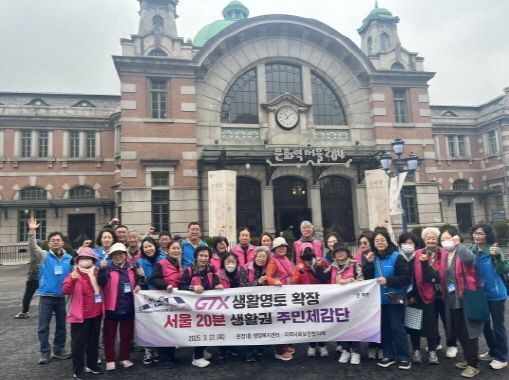
With the opening of the GTX-A line last year, it now takes just 22 minutes from Unjeongjungang Station to Seoul Station. Paju has quickly emerged as a key living area within the Seoul metropolitan region.
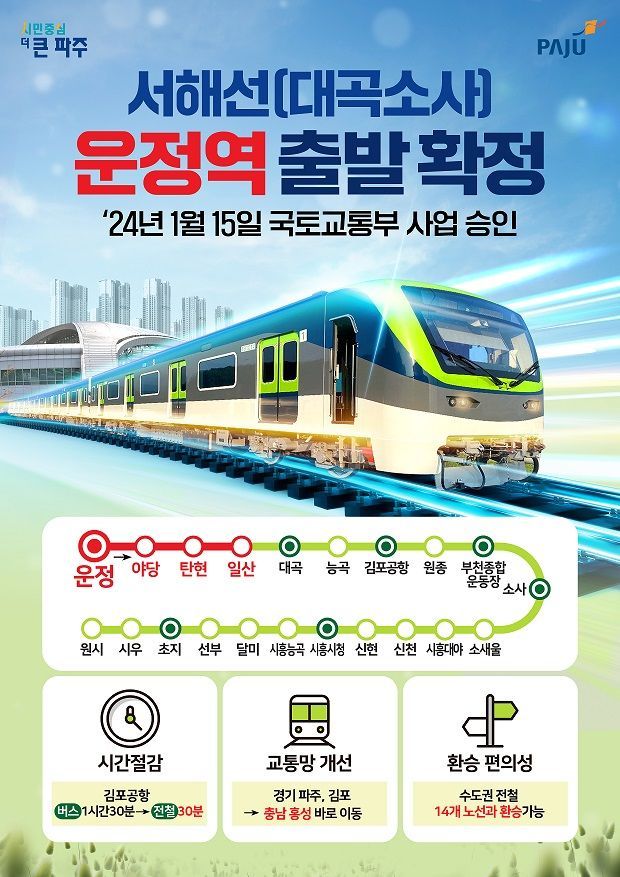
In addition, as of January last year, the extension of the West Sea Line (Daegok~Sosa) to Unjeong, which connects to Ilsan Station, was confirmed, dramatically improving accessibility from Paju to the southwestern Gyeonggi regions such as Gimpo, Bucheon, Siheung, and Ansan.
The city is also making every effort to have the following reflected in the Fifth National Railway Network Plan: the extension of KTX to Paju, the extension of Subway Line 3, the GTX-H line, and the Tongil-ro Line railway.
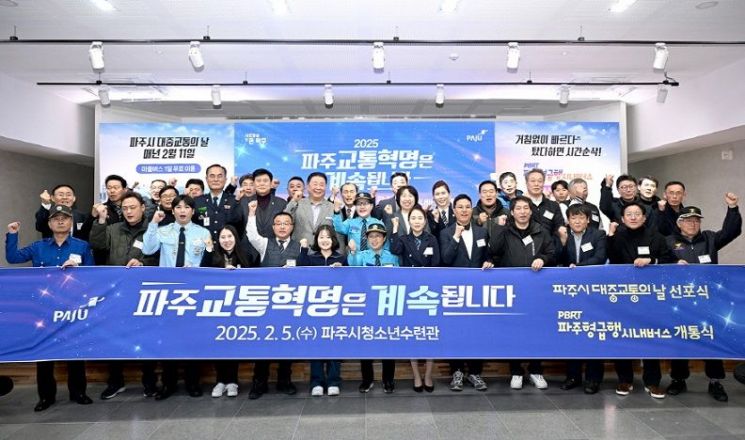
The Paju Bus Rapid Transit (PBRT), a Paju-style rapid transit city bus, began operation in February this year. The PBRT operates two routes: one connecting the Jeokseong/Munsan area and the other connecting the Beobwon/Gwangtan area to the new city’s GTX Unjeongjungang Station. By stopping at only 3 to 5 stations, travel time has been reduced to within 30 minutes. The Jeokseong/Munsan route also stops at three Gyeongui-Jungang Line stations (Munsan, Wollong, Geumchon), improving accessibility not only to the GTX but also to the Gyeongui-Jungang Line.
By connecting only major hubs, the PBRT links the new and old downtowns within 30 minutes, spreading the benefits of the GTX throughout Paju.
Additionally, the "Paprika" student-only school shuttle bus, which began service in March last year, ensures safe and convenient commutes for students for just 1,000 won, earning strong support from parents.
Paju City's efforts to improve public transportation do not stop there. To create a pleasant urban environment by increasing public transportation usage and to establish an integrated transfer network, the city has designated February 11 each year as "Public Transportation Day." On this day, events are held to honor transportation workers, and everyone is offered free rides on village buses.
Fifteen road construction projects are also underway without delay to make Paju "closer."
These include the expansion and paving of the Paju-Bugok road, improvements to chronic congestion at the Geumchon Interchange (IC), completion of the expansion and paving of City Road No. 33, and the ongoing construction of the Camp Howze access road, which will serve as a bypass during congestion on nearby roads such as Tongil-ro.
With the rapid advancement of transportation modes such as autonomous driving and personal mobility (PM), public interest is also rising.
Since March this year, Paju City has been working on a "Mobility Improvement Plan" to develop response strategies for the diversification of transportation modes and is also striving to be selected as a pilot zone for autonomous vehicle operation.
Paju once carried the stigma of being a "city vulnerable to traffic safety," but in just three years, it has achieved a 48% reduction in traffic accident fatalities.
The key was evolving from a "Traffic Safety Council" to a "Zero Traffic Accident Task Force" that includes experts. In particular, the "100-Day Traffic Safety Project," which combines enforcement and guidance, has brought about a shift in citizen awareness. As a result, Paju is the only local government in Gyeonggi Province to receive an A grade in the Traffic Culture Index.
With just over three months left until 2025, Paju City's transportation policies are accelerating. In the second year of the Transportation Vision, 2026, the city plans to develop a customized integrated transportation system that considers citizens' life cycles through "30·30·30+ (Plus)," and is conducting studies to significantly reduce travel times within areas such as Unjeong, Geumchon, and Munsan, as well as to establish detailed plans.
Paju City's "Transportation Vision 30·30·30" is laying the cornerstone for the "1 Million Paju" initiative. The city hopes to continue establishing itself as a desirable place to live through "faster," "closer," "safer," and "more universal" transportation policies that meet the expectations of its 540,000 citizens.
Kim Kyungil, mayor of Paju City, stated, "Transportation Vision 30·30·30 is a promise to citizens to guarantee universal mobility rights. With the opening of the GTX, public interest in transportation has soared, and we will once again write a new chapter in Paju's transportation history by establishing a solid plan without trial and error."
© The Asia Business Daily(www.asiae.co.kr). All rights reserved.
![Clutching a Stolen Dior Bag, Saying "I Hate Being Poor but Real"... The Grotesque Con of a "Human Knockoff" [Slate]](https://cwcontent.asiae.co.kr/asiaresize/183/2026021902243444107_1771435474.jpg)

















