Indian IT Talent Blocked from Entering the U.S.
"Now Is the Time to Attract Them to Korea"
"Trump's Unpredictable Policies Work in Korea's Favor"
Lee Junseok, the leader of the Reform New Party, highlighted the shortage of talent in the artificial intelligence (AI) sector and announced his intention to promote a "Special Act for Attracting Global AI Research Institutes" to bring in outstanding international professionals. He particularly emphasized that the recent tightening of visa regulations in the United States could present an opportunity for South Korea.
On September 21, through Facebook, Lee stated, "Now is the golden time, as sudden policies by Trump are restricting entry into the United States," stressing the need for institutional reforms to attract talent.
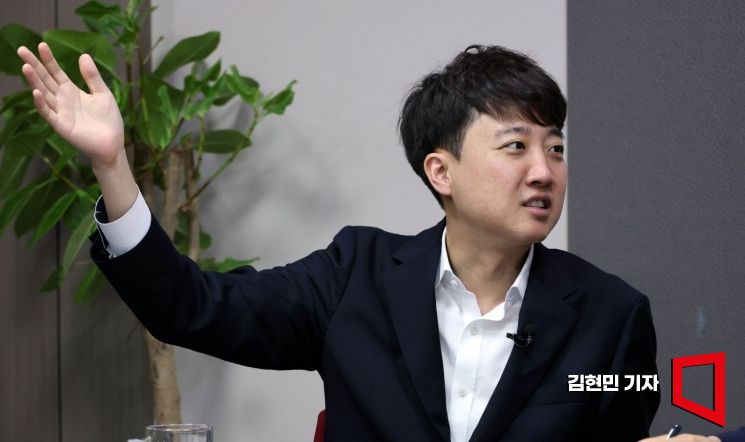 Lee Junseok, the leader of the Reform New Party, recently argued that the tightening of visa regulations in the United States could present an opportunity for South Korea.
He also pointed out that the former Trump administration recently raised the H-1B visa fee to as much as 100,000 dollars, and as a result, Indian IT professionals, who accounted for about 70% of all such visas, are now turning to countries other than the United States. He assessed that "it is time to turn this crisis into an opportunity."
Regarding the domestic situation, Lee diagnosed that the shortage of talent in the AI and semiconductor sectors is severe. Currently, South Korea has fewer than 20,000 AI researchers, a significant gap compared to China (about 410,000) and the United States (about 200,000). Lee also mentioned projections that by 2031, there will be a shortage of 56,000 semiconductor engineers in South Korea.
He further pointed out that the rate of students giving up enrollment in semiconductor-related departments at major domestic universities far exceeds 100%, diagnosing that "it will be difficult to close the supply gap by fostering domestic talent alone."
Regarding government budget allocations, Lee positively evaluated the expansion of the AI budget but emphasized, "I hope more of the budget will be spent on securing talent rather than on acquiring GPUs."
Lee also mentioned the currently implemented "K-Tech Pass" system and proposed that support should be expanded from the individual level to a research institute package model. He also argued that income tax reduction benefits should be further strengthened from the current 50% over 10 years.
In addition, he presented several institutional improvement measures, including ▲ the removal of restrictions on the ratio of foreign researchers, ▲ special tax benefits for global AI research institutes, and ▲ the establishment of scholarship tracks for children of foreign researchers.
He stressed the need for measures to prevent the outflow of domestic talent overseas. "While graduates of the Indian Institutes of Technology (IIT) can be attracted with an annual salary of 100 million won, it is equally important to ensure that domestic talent does not leave," he said, proposing the introduction of tax benefits based on years of research experience.
Finally, Lee stated, "A single top-tier science and engineering talent can support hundreds of people," expressing his determination to persuade the public and implement such policies as a key role of his party.
© The Asia Business Daily(www.asiae.co.kr). All rights reserved.
![Clutching a Stolen Dior Bag, Saying "I Hate Being Poor but Real"... The Grotesque Con of a "Human Knockoff" [Slate]](https://cwcontent.asiae.co.kr/asiaresize/183/2026021902243444107_1771435474.jpg)
















