Average Monthly Increase of 196 Won per Household
Addressing Energy Supply Gaps
"Strengthening Safety and Minimizing Public Burden"
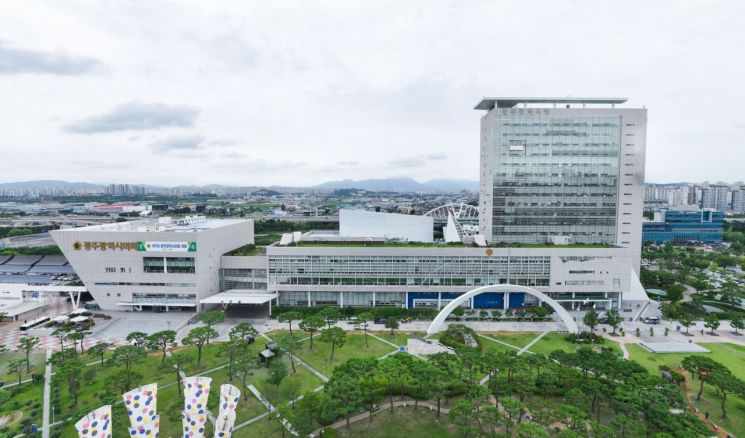
On September 21, Gwangju City announced that it will increase the final consumer price of city gas by 0.34%, ending a seven-year freeze.
The city explained that this was an unavoidable measure to secure investment resources for resolving areas without gas supply and strengthening safety management. In particular, the city emphasized that the adjustment was made with careful consideration to minimize the burden on the local economy.
This is the first increase in city gas rates in seven years, since a 1.76% rise in retail prices in 2017. During this period, Haeyang Energy Corporation, the city gas supplier, has faced continuous cost pressures, with labor costs and inflation rates reaching up to 20%. Nevertheless, the city has prioritized the stability of citizens' lives and maintained the price freeze until now.
However, as the need to guarantee citizens' basic energy rights and to establish a safe and stable gas supply network has grown, discussions on a rate increase have accelerated. The city determined that securing funds was urgent to address the long-standing demands of residents in areas still without city gas and to expand proactive safety investments in aging facilities.
City gas rates consist of a "wholesale price" determined by the Ministry of Trade, Industry and Energy, and a "retail supply cost" set by the metropolitan government. The adjustment this time applies to the "retail supply cost," which accounts for about 9% of the total rate. While the retail supply cost itself has increased by 3.73%, its impact on the total consumer price is only 0.34%, leading Gwangju City to project that the burden felt by citizens will be minimal.
Specifically, the retail supply cost per megajoule (MJ) will rise from 1.9591 won to 2.0322 won, an increase of 0.0731 won. For a typical four-person household, this translates to an average monthly increase of approximately 196 won.
A Gwangju City official stated, "Compared to other local governments that have raised rates due to labor and inflation cost increases, Gwangju has maintained a freeze for seven years, bearing the burden on businesses. Considering the prolonged accumulation of cost pressures and essential investment needs, this increase is at the minimum necessary level."
The funds secured through this rate increase will be focused on resolving areas without city gas supply and strengthening safety management. Haeyang Energy Corporation will actively participate in Gwangju City's "City Gas Supply Facility Support Project," aiming to provide new gas supply to one village in each district, totaling five villages within the year. As a result, the city gas supply rate in Gwangju is expected to approach 98%, significantly improving the residential environment for energy-vulnerable groups.
In addition, large-scale investments will be made to expand city gas safety management infrastructure, including replacing old pipelines, introducing state-of-the-art gas leak detection systems, and strengthening emergency response training. This is expected to create an environment where citizens can use city gas with greater peace of mind.
Choi Taejo, Director of the Artificial Intelligence Industry Bureau of Gwangju City, stated, "This increase in the retail supply cost was an unavoidable choice to achieve two goals: expanding energy welfare and ensuring safety, while adhering to the principles of stabilizing livelihoods and curbing public price increases. Moving forward, we will continue to encourage management efficiency and active investment by city gas companies to minimize citizens' rate burdens and ensure a stable energy supply."
© The Asia Business Daily(www.asiae.co.kr). All rights reserved.
![Clutching a Stolen Dior Bag, Saying "I Hate Being Poor but Real"... The Grotesque Con of a "Human Knockoff" [Slate]](https://cwcontent.asiae.co.kr/asiaresize/183/2026021902243444107_1771435474.jpg)















