Mayor Park Kangsoo Attends to Offer Comfort to Displaced Residents
Bamseom, a small island located in the middle of the Han River at the heart of Seoul, is known as a sanctuary for migratory birds and a symbol of ecological preservation. At the same time, it is a place filled with the pain of displaced residents who lost their hometown.
 Park Kangsoo, mayor of Mapo District, consoling displaced persons at the Bamseom Displaced Persons Homecoming Ceremony. Provided by Mapo District Office.
On the morning of September 20, 2025, the “2025 Bamseom Displaced Residents Homecoming Festival” was held at Mangwon Hangang Park in Mapo District, serving as an occasion to remember and reflect on those memories and their significance. Park Kangsoo, mayor of Mapo District, who attended the event, stated, “I extend my deepest respect and gratitude to all displaced residents who have overcome the sorrow of losing their hometown and have continued their lives with resilience. I hope this event brings you warmth and comfort, and serves as an opportunity to remember the history and meaning of Bamseom.”
Bamseom is a small island of 0.25 square kilometers located between Hapjeong-dong in Mapo District and Yeouido. In 1968, the island was demolished for the development of Yeouido and flood control, forcing 62 households and 443 residents to relocate. However, over time, sand and soil accumulated, and willows and reeds took root, leading to an unexpected transformation.
Today, Bamseom is designated as Natural Monument No. 262 and has become a haven for dozens of species of migratory birds, including tufted ducks, mallards, and swans. It stands as a symbolic example of nature’s self-restoration within the city.
The Bamseom Displaced Residents Homecoming Festival has been held every year before Chuseok since 2001 to comfort the pain of displaced residents and continue local traditions. This year, approximately 70 people, including Mayor Park, displaced residents, and local community members, attended the event. Alongside the homecoming ceremony, which included incense burning and ritual offerings, the “Bamseom Dodanggut,” designated as Seoul Intangible Cultural Heritage No. 35, was performed, providing a meaningful time to heal the wounds of the displaced and continue traditional culture.
Today, Bamseom is a strictly protected natural monument area, closed to the general public. However, it can be viewed from Yanghwa Bridge, Mapo Bridge, and Yeouido Hangang Park, and during winter, these spots are crowded with citizens and photographers hoping to observe the flocks of thousands of migratory birds.
For the displaced residents, Bamseom is not just an ecological island but the foundation of their lives and their lost hometown. While the island has been reborn as a paradise for migratory birds, it also remains an “island of history” that preserves the memories and traditions of its former residents.
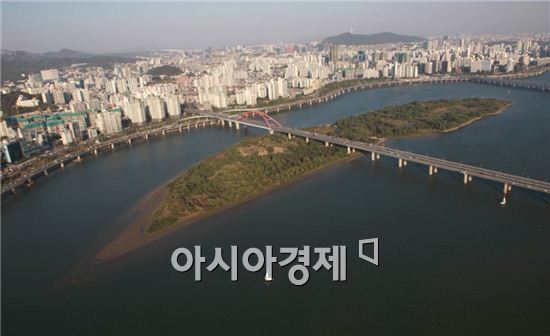 Bamseom, a 'paradise for migratory birds' spanning tens of millions of ri (Photo by Asia Economy DB)
© The Asia Business Daily(www.asiae.co.kr). All rights reserved.
![Clutching a Stolen Dior Bag, Saying "I Hate Being Poor but Real"... The Grotesque Con of a "Human Knockoff" [Slate]](https://cwcontent.asiae.co.kr/asiaresize/183/2026021902243444107_1771435474.jpg)















