Foreign Affairs Committee Discusses Effectiveness of E4 Visa
Relevant Bill Reintroduced in March This Year
"Practical Solution for Diplomacy, Trade, and Economy"
"Also Aligns with Trump Administration's Policy"
"Recently, a Korean chemical company considered establishing a manufacturing facility worth about $1.8 billion (approximately 2.5 trillion won) in Michigan, United States, but ultimately chose Canada. This decision was made because Canada has institutional flexibility regarding the influx of key technical personnel. If the United States does not want to lose substantial employment opportunities, institutional measures are necessary."
On the 19th, lawyer Jung Manseok of Daeyang Immigration Law Firm in the United States conveyed this message at the "Policy Discussion for the Development of the Korea-U.S. Economic Alliance: Discussion on the Need and Effectiveness of Establishing the E4 Visa," organized by the National Assembly's Foreign Affairs and Unification Committee. This indicates that companies' investment perceptions have changed following the recent detention of Koreans in Georgia. In this context, discussions on improving the visa system between Korea and the United States are gaining momentum. The introduction of a professional visa (E4) is being considered as an alternative. Experts advise that, since passing related legislation in the U.S. Congress is necessary, it is important to persuade stakeholders that this is a strategic tool essential for securing local industrial competitiveness.
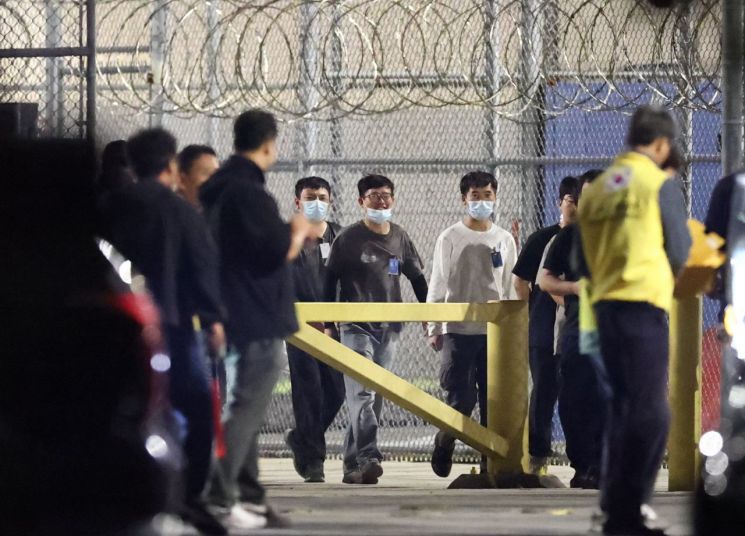
Currently, for domestic companies to legally work in the United States, they must obtain a professional employment visa (H-1B), an intra-company transferee visa (L1), or an essential employee visa (E2). However, these visas take several months to be issued, and the number of recipients is limited. As a result, many companies have resorted to using business visas (B1) for meetings or contracts, or the visa waiver Electronic System for Travel Authorization (ESTA), to conduct business trips to the United States indirectly.
In this situation, the establishment of the E4 visa is drawing attention as an alternative. The E4 visa would have an annual cap of 15,000 issuances, target professionals, and be for non-immigrant temporary employment. Notably, it includes a provision prohibiting the replacement of U.S. workers, requiring employers to prove that E4 personnel do not displace American employees. The related bill, the Korea Partner Act, was introduced in the U.S. Congress in 2013 but did not pass; it was reintroduced in the federal legislature in March of this year. Lawyer Jung explained, "The E4 visa is recognized as a practical solution across diplomacy, trade, economy, and immigration, and is receiving bipartisan support," adding, "It also aligns with the Trump administration's emphasis on deals that benefit the United States."
Experts unanimously stressed the need to emphasize that the E4 visa is a tool for securing industrial competitiveness without infringing on American workers' jobs. With Korea having pledged $350 billion (about 488 trillion won) in investments in the United States through tariff negotiations, the E4 visa is viewed as an institutional mechanism that can help Korean companies' investment projects take root early and accelerate job creation in the U.S. Jung stated, "The E4 visa is a strategic tool that can enhance the productivity of American industry."
Kim Seokki, chairman of the Foreign Affairs and Unification Committee and a member of the People Power Party, pointed out, "The situation in Georgia is a problem caused by a rigid visa issuance system that has remained unchanged for decades despite the increasing scale of investments in the United States." Peter Weichlein, CEO of the Former Members of Congress Association, said, "I will share the contents of today's discussion with the U.S. political community."
© The Asia Business Daily(www.asiae.co.kr). All rights reserved.
![Clutching a Stolen Dior Bag, Saying "I Hate Being Poor but Real"... The Grotesque Con of a "Human Knockoff" [Slate]](https://cwcontent.asiae.co.kr/asiaresize/183/2026021902243444107_1771435474.jpg)















