Steel Industry Restructuring Plan to Be Announced This Month
Industry Expects Stabilization of Domestic Prices
In an effort to support the struggling steel industry, the government is considering expanding on-site inspections of high-risk imported steel products, such as low-priced imports from China, from twice a year to four times a year. This move comes from concerns that a large influx of dumped, low-priced products from countries like China could undermine domestic steelmakers' willingness to voluntarily cut production. The government plans to include this measure in its steel industry restructuring plan, which is expected to be announced as early as this month.
According to industry sources on September 19, the Ministry of Trade, Industry and Energy is planning to announce a restructuring plan at the end of this month, based on the market research and discussions conducted by the "Steel Industry Competitiveness Enhancement Task Force," a public-private joint body established earlier this year.
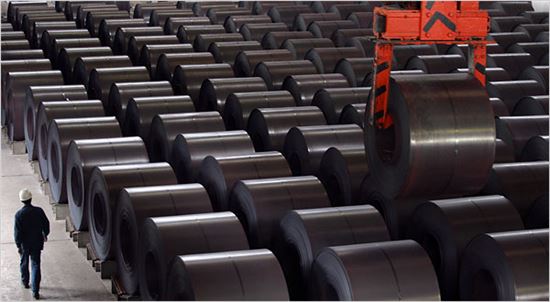 Chinese steel products, a representative item of global oversupply. Asia Economy Database
The core of this measure is to restrict the inflow of imported steel products in order to encourage voluntary restructuring within the domestic industry. As part of this, expanding on-site inspections of high-risk imported steel products from the current twice a year to four times a year is being strongly considered. An industry official stated, "Expanding inspections will make it harder to attempt indirect imports or dumping, and we can also expect a stabilizing effect on domestic prices."
This measure is likely to be pursued in conjunction with the "Special Act on the Steel Industry (K-Steel Act)" currently submitted to the National Assembly. The bill includes provisions to strengthen country-of-origin regulations, suppress the import and distribution of non-compliant steel products, and support responses to unfair trade practices. If linked to this bill, the government would be able to immediately deploy substantial trade regulation tools such as anti-dumping (AD) measures, with a legal basis, rather than merely requesting post-facto corrections.
In addition to strengthening import regulations, the government also reportedly plans to pursue facility adjustments and expand the production of high value-added products as part of this restructuring. However, since the industry has already been voluntarily reducing its facilities, there is a stronger emphasis on measures to enhance long-term competitiveness.
The domestic steel industry is accelerating the development of high value-added products, such as ultra-high-strength steel sheets for electric vehicles, steel for hydrogen pipelines, and heavy plates for offshore wind power structures. This is a strategy to shift from "price competition" to "quality competition." The government is also actively considering providing various incentives, such as tax benefits, to support efforts to strengthen quality.
However, some in the industry point out that there is a gap between these measures and the urgent issues they are facing. Many expect that the current plan will not directly address trade risks in major export markets like the United States or the burden of energy costs such as industrial electricity rates. An industry official commented, "Although we have communicated with the government several times, most of the discussions have remained at a theoretical level."
© The Asia Business Daily(www.asiae.co.kr). All rights reserved.
















