Concerns Over the Spread of Scrub Typhus and SFTS During Chuseok Holiday
"Long Sleeves Recommended and Avoid Contact With Wild Animals During Grass Cutting and Grave Visits"
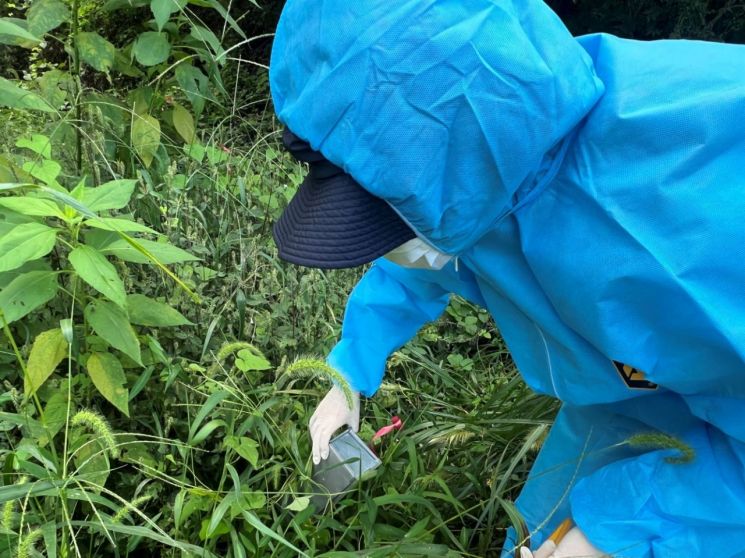
The Gwangju Institute of Health and Environment has urged the public to exercise particular caution against tick bites and rodent-borne infectious diseases, as outdoor activities such as grass cutting and visiting ancestral graves are expected to increase ahead of the Chuseok holiday.
According to a survey conducted by the Gwangju Institute of Health and Environment on September 19, the activity of larval chigger mites, which transmit scrub typhus, becomes more active every September, and the density of larval hard ticks, which transmit Severe Fever with Thrombocytopenia Syndrome (SFTS), also increases during this period.
Larval chigger mites are 0.15 to 0.3 mm in size, making them impossible to identify with the naked eye. Infection can lead to symptoms such as headache, fever, and chills within an incubation period of 10 days, and a black scab measuring 5 to 20 mm may form at the bite site.
If bitten by a hard tick that transmits SFTS, the tick may be firmly attached to the skin, and forcibly removing it can leave parts embedded in the skin. Therefore, it is recommended to seek professional removal and treatment at a medical institution.
The institute confirmed the presence of the hantavirus in wild rodents collected in the region in October last year, and explained that leptospirosis is mainly detected from summer until between October and November. It also noted that the risk of infection increases when coming into contact with standing water during recent flood recovery and agricultural work.
Personal hygiene management is essential to prevent tick- and rodent-borne infectious diseases. Key precautions include: ▲ wearing protective clothing such as long sleeves, long pants, hats, socks, and gloves ▲ refraining from lying down or relieving oneself on grass ▲ avoiding unmarked mountain paths off hiking trails ▲ not touching wild animals ▲ washing clothes and showering after outdoor activities ▲ and visiting a medical institution immediately if symptoms such as fever occur.
Jung Hyuncheol, Director of the Gwangju Institute of Health and Environment, stated, "With the Chuseok holiday approaching and the weather turning cooler, we anticipate an increase in outdoor activities among citizens. We urge everyone to follow personal hygiene guidelines and avoid contact with ticks and rodents to ensure a safe holiday."
© The Asia Business Daily(www.asiae.co.kr). All rights reserved.
![Clutching a Stolen Dior Bag, Saying "I Hate Being Poor but Real"... The Grotesque Con of a "Human Knockoff" [Slate]](https://cwcontent.asiae.co.kr/asiaresize/183/2026021902243444107_1771435474.jpg)















