Interview with Ha Junkyung, Senior Secretary for Economic Growth at the Presidential Office
"All Measures Already Prepared for Areas Like the 'Hangang Belt' That Stimulate Seoul Housing Prices"
Strengthening Oversight of Market-Disrupting Activities
The Lee Jaemyung administration is making thorough preparations to achieve results in its battle against real estate speculation. As President Lee has repeatedly emphasized the need to "relentlessly control speculative demand," the Presidential Office announced that it has already prepared measures targeting areas such as the so-called "Hangang Belt" in Seoul, which have been driving up housing prices. In particular, the administration stated that it would implement airtight measures, including the establishment of an interagency real estate market monitoring body to oversee activities that disrupt the real estate market, vowing not to repeat the failures of previous administrations.
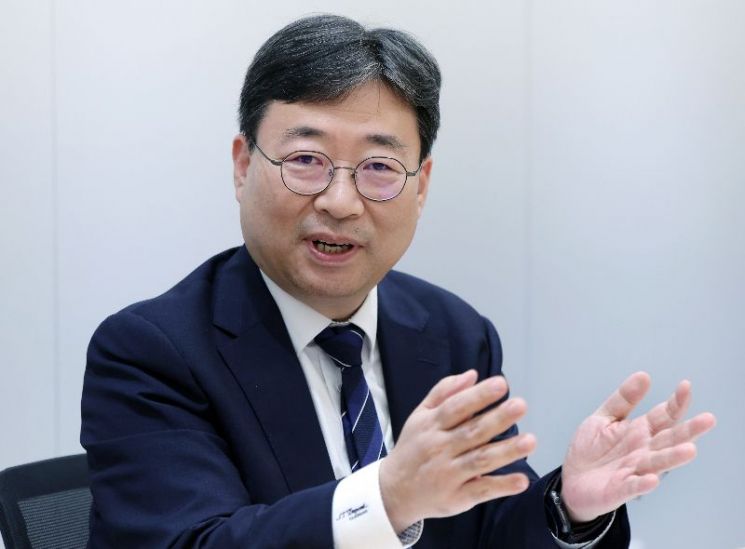 Ha Junkyung, Senior Secretary for Economic Growth at the Presidential Office, is giving an interview at the Presidential Office in Yongsan, Seoul, on the 18th. Photo by Presidential Office Press Corps
Ha Junkyung, Senior Secretary for Economic Growth at the Presidential Office, stressed in an interview with Asia Economy on the 18th that "we will be airtight" when asked how the current administration's real estate policies differ from those of the past. Senior Secretary Ha explained, "In the past, real estate policies were often approached from a financial perspective, but there were many loopholes. This time, we will identify all potential problem areas and implement comprehensive measures."
Although each previous administration has introduced its own real estate policies, none have succeeded in achieving a soft landing for housing prices. The Yoon Sukyeol administration declared a major supply expansion policy, but was criticized by end-users for its lack of tangible impact. The Moon Jaein administration failed to control apartment prices in Seoul due to unsuccessful regulations on multiple-home owners that aimed to curb demand. To avoid repeating these failures, Senior Secretary Ha explained that the current administration intends to meticulously block all loopholes and evasive tactics in the real estate market.
Senior Secretary Ha indicated that the administration is confident it can control housing prices in the Hangang Belt, which have shown instability since the new government took office. According to the Korea Real Estate Board, housing prices in Seoul have risen for two consecutive weeks following the announcement of the September 7th measures, which included plans to expand housing supply. The strength of the Hangang Belt-particularly in non-regulated districts such as Seongdong, Mapo, and Gwangjin-is especially notable. Ha analyzed, "It appears to be a phase of fluctuation within a relatively stable situation. There are some signs of price increases in certain areas, such as the Hangang Belt in Seoul." He added, "If any necessary measures are required, we are fully prepared. Fundamentally, since the real estate market has become highly financialized, we are paying close attention to the financial sector, unlike previous administrations."
"Focusing on Demand Suppression in the Short Term"... Multi-Faceted Monitoring of Market Disruptions Using Real Estate Finance
Senior Secretary Ha stated that, in the short term, the administration will inevitably focus more on suppressing demand rather than expanding supply, which takes a long time. When asked whether there is room to use the tax system to stabilize housing prices, he replied, "Nothing has been excluded from the discussion table," leaving the possibility open. At the same time, the administration plans to closely monitor market disruptions using real estate finance. He said, "We are preparing a real estate market monitoring organization," adding, "Relevant agencies such as the police, National Tax Service, and Ministry of Land, Infrastructure and Transport will participate to monitor unfair practices and thoroughly address market distortions." Currently, the relevant ministries are in the final stages of coordination, and the organization is expected to be launched soon.
In the long term, the administration also plans to seek fundamental solutions such as dispersing housing demand in the Seoul metropolitan area within the broader framework of decentralization, alongside increasing supply. Ha stated, "If housing demand in the metropolitan area continues to rise, there are limits to what we can do about prices. We are working to disperse this demand." He continued, "We are preparing a package of policies to provide preferential treatment to local areas, aiming to create more opportunities in the provinces and thereby reduce demand in the metropolitan area."
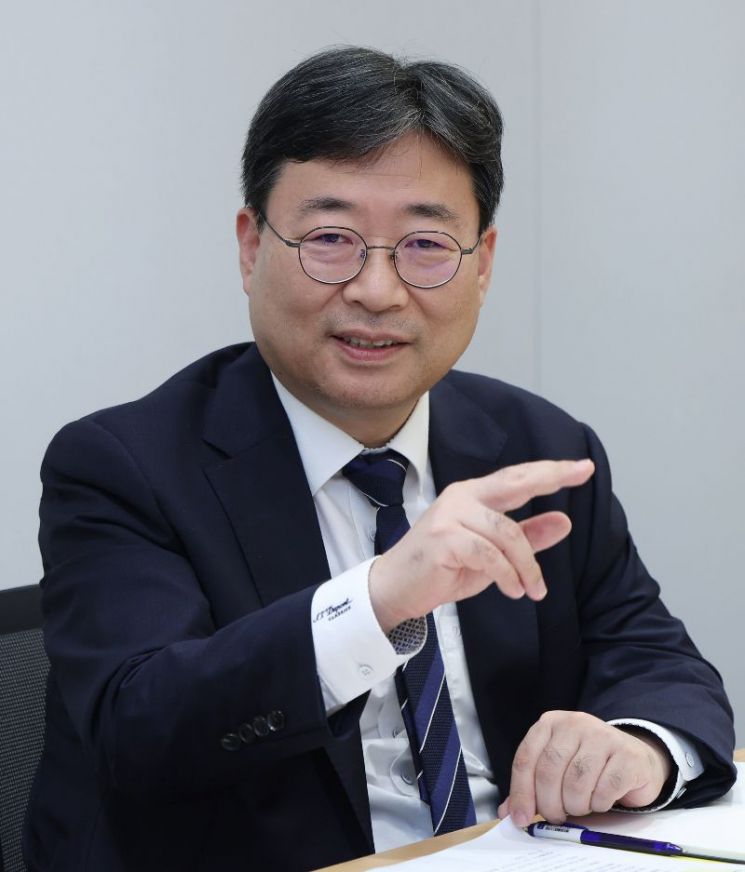 Ha Junkyung, Senior Secretary for Economic Growth at the Presidential Office, is giving an interview at the Presidential Office in Yongsan, Seoul, on the 18th. Photo by Presidential Office Press Corps
Structural Reform: Redirecting Capital Concentrated in Real Estate Toward 'Productive Finance'
Senior Secretary Ha also plans to continue introducing policies that guide real estate investment capital, which is drawn by land rent, toward more productive sectors that can generate greater added value. Since real estate capital is a key driver of household debt issues, the administration aims to redirect this flow toward new growth industries and job creation.
He said, "The government should play a role in channeling funds concentrated in one area into more productive sectors. It would have been better if the market had done this on its own, but that has not worked out smoothly, resulting in significant asset imbalances. We need to resolve this. In a way, it is our biggest challenge." He added, "By working to resolve the imbalance in debt and other issues, we hope to create many jobs in productive sectors and revitalize the economy, which could help alleviate polarization. We also believe that we can address some of the fundamental causes of these imbalances."
He repeatedly emphasized the need for "productive finance" to achieve this. Ha explained, "A significant portion of the profits from real estate comes from land value, and land is an asset that cannot be newly produced. While rising land prices make owners happy, those who use the expensive land face higher costs. This does not make the majority of people better off." Regarding "productive finance," he elaborated, "If money concentrated in real estate is used to create new jobs, it will enhance the added value of the economy. This could be a factor that enables everyone to prosper together. The idea is to channel funds in this direction and increase the added value of the economy."
© The Asia Business Daily(www.asiae.co.kr). All rights reserved.


















