Exploring Seoul and Jeju to Infuse Korean Culture into Animation
Ideas Sparked at BTS Concerts and Bukchon Hanok Village
"Let the Characters Become Guides to Korea's Brilliant Culture"
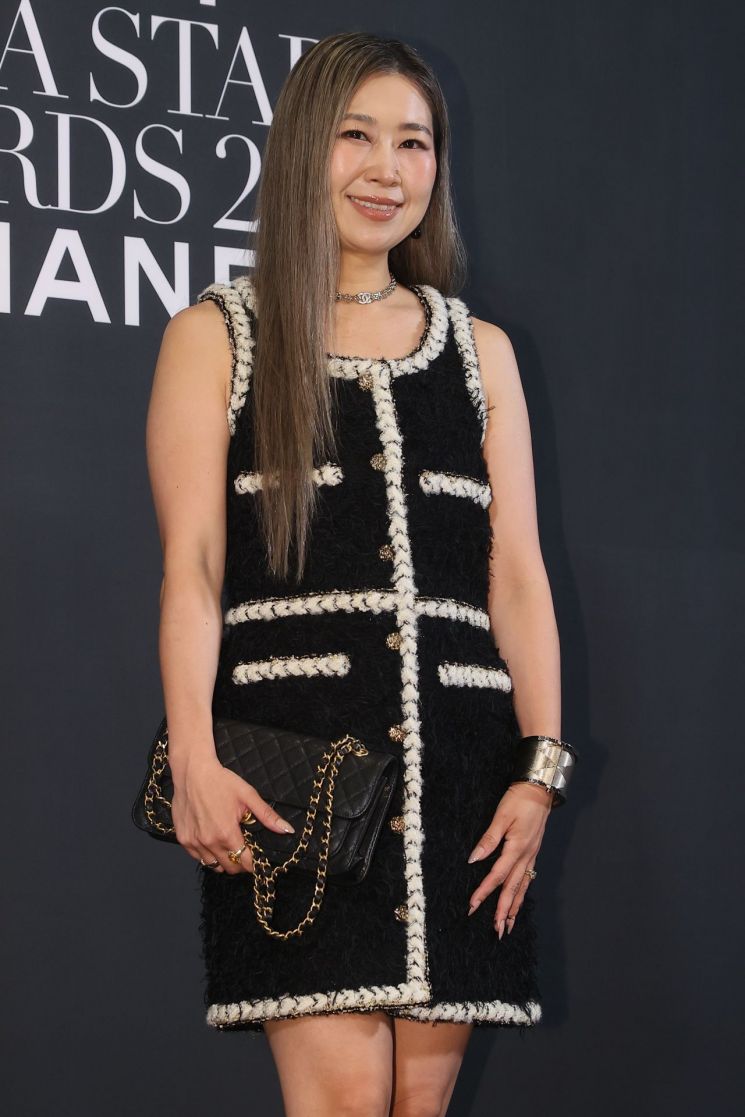
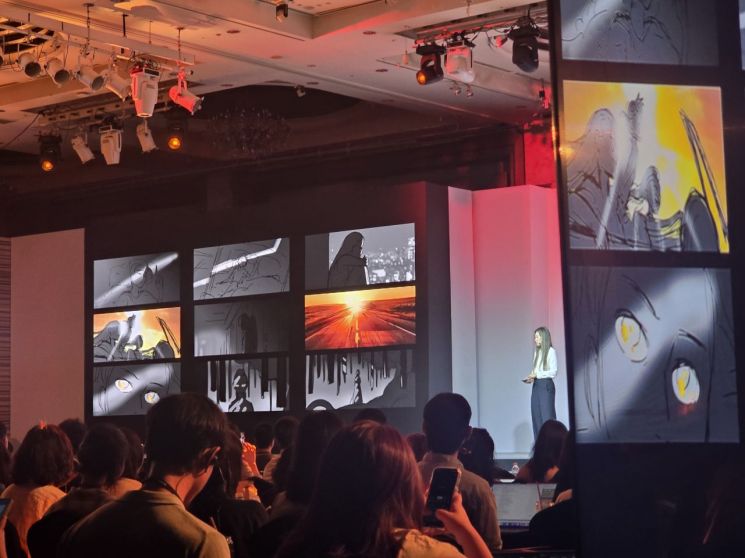
The imagination in animation becomes more vivid when it is grounded in experiences that are seen, heard, and felt firsthand. Director Maggie Kang made this process the starting point of her creative journey while directing the Netflix film "K-Pop Demon Hunters." At a global media conference held at Lotte Hotel in Jung-gu, Seoul, on September 18, she said, "I wanted to create an animation that embodies Korean culture, so I focused on Korean elements from the planning stage," adding, "I brought ideas to life through a variety of experiences."
To enhance the authenticity of the settings and characters in her work, she explored Seoul and Jeju in 2022 with key staff members. They visited various locations including Myeong-dong, Bukchon Hanok Village, a folk village, and Namsan, observing both traditional and modern aspects simultaneously.
At the folk village, they closely examined traditional architecture and lifestyles, reflecting these details in character design and scene composition. Bukchon Hanok Village was chosen as the place where Lumi and Jinwoo first meet. Director Kang explained, "It wasn't chosen simply for its beauty, but for its narrative significance and connection," adding, "By capturing modern Seoul and old hanok houses in a single frame, I wanted to naturally portray the generational gap between the two characters."
Jeju Island was also a crucial source of inspiration. In a garden filled with dokkaebi statues and sculptures, she found hints for the design and movement of evil spirits. At Namsan, she experienced weapon demonstrations, paying close attention to the tension in gestures and movements, which she then incorporated into the characters' actions.
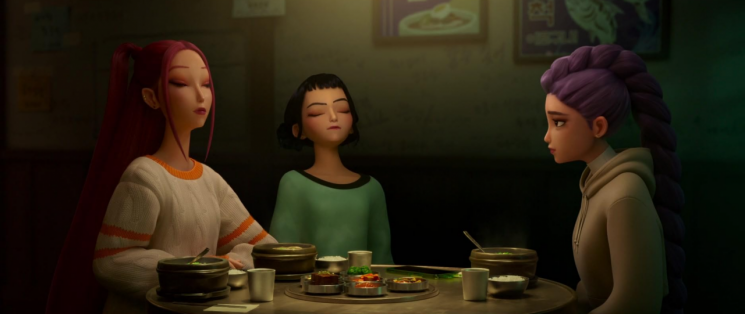
She also infused the film with the food and dining culture of Koreans. In particular, she paid attention to small details such as the round table, metal chopsticks and spoons, and the way napkins are handled in scenes where members comfort each other and build relationships. Director Kang said, "Through team dinners, street explorations, and small-scale filming, I was able to reinforce the characters' psychology and cultural context."
Observing a Taekwondo demonstration at Kukkiwon was also part of this process. She identified the potential to combine Taekwondo movements with modern dance and applied this to the actual choreography. She noted, "If I hadn't seen and felt these experiences firsthand, it would have been difficult to naturally connect the characters' movements and choreography."
These experiences also proved invaluable in collaboration with the computer graphics (CG) team. They recreated Seoul's spaces as 3D images without physical sets, authentically capturing the atmosphere and feeling of the locations she had personally experienced.
The core of this film, K-pop, was also inspired by experience. Director Kang said, "At a BTS concert, I witnessed 50,000 fans singing along to lyrics they didn't even know, which made me realize how important the connection with the audience is." She directly confirmed that immersion is maximized when the audience, story, and characters interact with each other.
Ultimately, Director Kang's work was a creative process focused on "authentic representation" based on real experiences. By connecting places and culture, people and emotions, she designed the story so that the audience could naturally immerse themselves in it. Her goal was to capture the essence of Korean culture while creating characters and narratives that global audiences could relate to.
She had one more goal: to serve as a guide to Korea. "Many people travel without a guide. I thought it would be great if the characters could become guides themselves. I really wanted to showcase Korea's brilliant culture."
© The Asia Business Daily(www.asiae.co.kr). All rights reserved.



















