Super-Aging Korea Faces Risk of Hitting the Effective Lower Bound
Structural Vulnerabilities Are the Cause; Non-Reserve Currency QE Brings Major Side Effects
The Alternative: Lending Support Programs
"Targeted Support Through BILS During Ma
"In the face of structural vulnerabilities such as population aging and low birth rates, when Korea's interest rate reaches the effective lower bound, the alternative is the Funding for Lending (FFL) program."
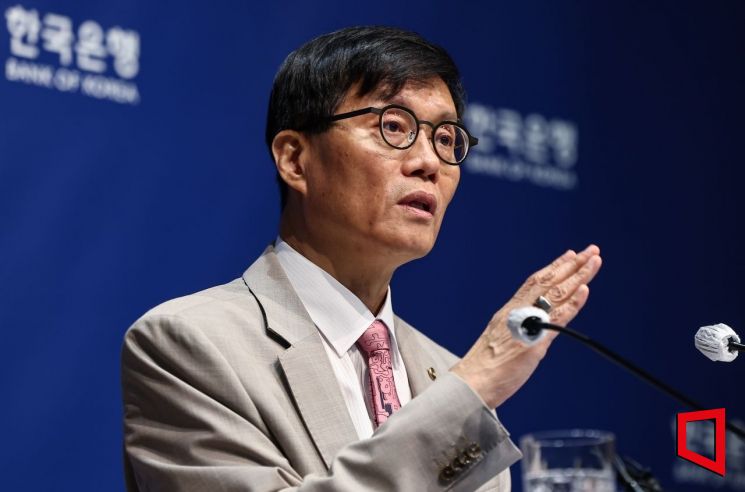
On September 18, 2025 (local time) in Washington, D.C., United States, Lee Changyong, Governor of the Bank of Korea, took the stage at the International Monetary Fund (IMF)'s "Michel Camdessus Central Banking Lecture." He recalled the situation during the first Monetary Policy Board meeting after the declaration of martial law at the end of last year, when the policy rate was kept unchanged and the Bank of Korea introduced the Bank Intermediated Lending Support Facility (BILS). This was to support his argument that lending support programs like BILS can serve as supplementary tools for monetary policy in the era of the effective lower bound (ELB). The effective lower bound refers to the point at which a central bank can no longer lower interest rates to stimulate the economy.
Deploying the BILS Facility Amid Martial Law and a Rate Freeze... FFL as an Alternative in the ELB Era
Governor Lee said, "In December last year, the unexpected declaration of martial law led to a rapid downturn in the Korean economy. Consumer sentiment weakened, and domestic demand, especially sales among the self-employed, plummeted. From a purely economic perspective, a rate cut was needed, but as the value of the won fell to its lowest level since the global financial crisis, the Bank of Korea decided to freeze the policy rate at the Monetary Policy Board meeting in January this year." Instead of cutting rates until political uncertainty subsided, the Bank of Korea deployed the BILS facility, selectively providing funds to the self-employed and small and medium-sized enterprises. Governor Lee emphasized, "This shows how targeted policy tools can complement the limitations of interest rate policy, which is often a 'large but blunt instrument.'"
Lending support programs are policy measures in which central banks provide low-interest funds to private financial institutions, which then channel credit to specific sectors. Such programs are widely used by central banks around the world. Governor Lee noted, "Of course, to use lending support programs, it is essential to design them carefully, including reasonable limits and usage restrictions, as well as pre-established exit strategies, to minimize the risk of fiscal dominance or loss of independence. I hope the IMF will consider whether this approach should be added to its policy toolkit."
"In Times of Crisis, Central Banks Can Purchase Senior Bonds Issued by Government-Funded SPVs"
On this day, Governor Lee delivered the Camdessus Lecture on the theme "Korea's Integrated Policy Framework (IPF) Journey: Challenges and Responses in the ELB Era." The Integrated Policy Framework refers to a policy mix that pursues internal and external stability by integrating not only monetary policy but also foreign exchange intervention (FXI), capital flow management measures (CFM), macroprudential policy, and fiscal policy.
Governor Lee expressed great interest in whether unconventional monetary policy (UMP), which addresses policy responses at the effective lower bound, could be used as a new tool within Korea's integrated policy framework. He believes that Korea could also employ UMP in the event of a global crisis. Referring to the Indonesian central bank's direct purchase of government bonds in the primary market during the COVID-19 pandemic through an agreement with the government, he explained that there are ways to mitigate concerns about fiscal monetization. Governor Lee stated, "With strict management systems and a transparent exit strategy, the government could establish a special purpose vehicle (SPV), and the central bank could purchase senior bonds issued by the SPV to supply funds to needed sectors." In this case, the risk of default on the lending assets would be covered first by government capital, thereby upholding the central bank's principle of minimizing losses, while avoiding an increase in government bond issuance and thus reducing the risk of a downgrade in the country's credit rating.
When Structural Vulnerabilities Like Super-Aging Are the Cause: Risks of FX Intervention and Quantitative Easing
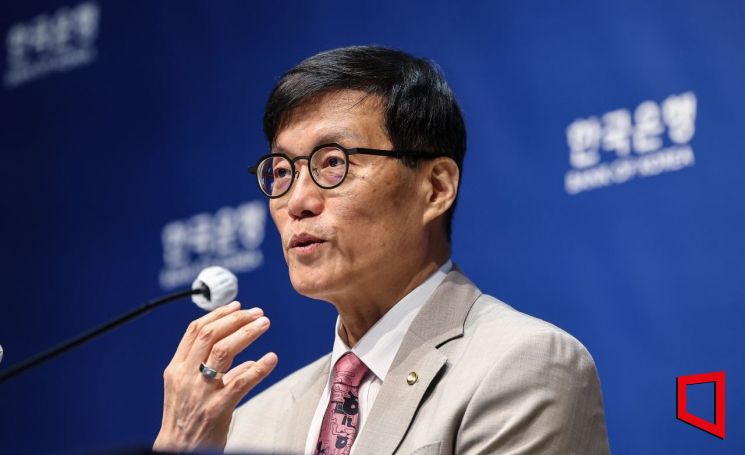
Governor Lee argued that when an emerging country falls into a structural, long-term recession due to its own issues and interest rates reach the effective lower bound, the possibility of using UMP is low due to a lack of policy credibility. He noted that Korea, where inflation expectations are well anchored, can look to advanced small open economies like Switzerland and Sweden for reference. However, he assessed that the large-scale foreign exchange intervention, negative interest rates, and quantitative easing (QE) these countries used in ELB situations would not be suitable for Korea. He explained, "Unlike these countries, the Korean won is not a reserve currency, so there is a risk of unintended consequences. If global investors expect continued depreciation, there could be a sudden capital outflow, and despite Korea's status as a net external creditor, the country could face a 'surplus bankruptcy' due to a shortage of foreign currency liquidity." Large-scale foreign exchange intervention could also be perceived as a policy to boost export competitiveness, potentially triggering trade disputes.
He also warned that QE would absorb high-liquidity assets from the market, causing collateral shortages. Governor Lee said, "Non-bank financial institutions that do not have central bank reserve accounts could face real liquidity constraints," adding, "large-scale QE is more likely to fuel increases in real estate prices than to stimulate the real economy, thereby exacerbating Korea's already severe low birth rate problem."
Meanwhile, this lecture is the IMF's highest-level annual event, held since 2014 to strengthen cooperation with member central banks and discuss monetary policy and global economic and financial issues. The lecture is named after Michel Camdessus, the longest-serving IMF Managing Director in history (January 1987 to February 2000). By taking the stage at the Camdessus Lecture, Governor Lee became one of the few central bank governors to have participated in all three of the world's top central banking events: the Federal Reserve's Jackson Hole meeting, the European Central Bank's Sintra Forum, and the IMF's Camdessus Lecture. Only four central bank governors in history, including former European Central Bank President Mario Draghi and former Bank of England Governor and Canadian Prime Minister Mark Carney, have appeared at all three events.
© The Asia Business Daily(www.asiae.co.kr). All rights reserved.


















