A new synthesis method utilizing light and electricity has been developed in Korea.
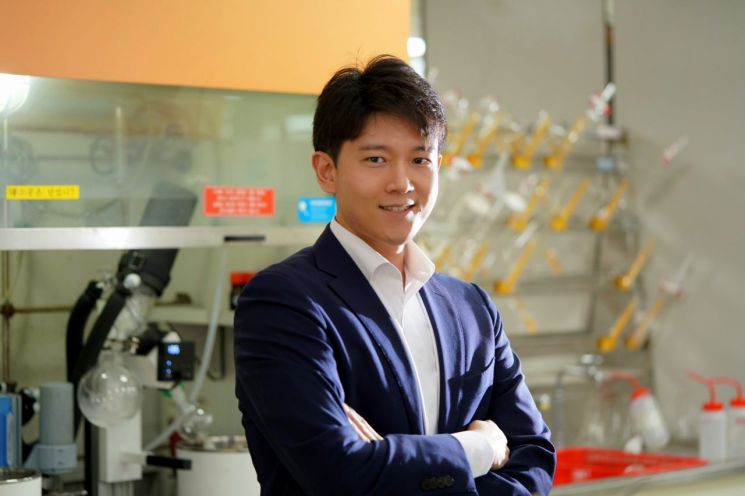
The National Research Foundation of Korea announced on September 18 that a research team led by Professor Kim Hyunwoo at Pohang University of Science and Technology has successfully synthesized various heterocycles using a new synthesis paradigm called "photon-primed electrosynthesis."
Heterocycles are a general term for cyclic compounds containing two or more different elements.
Heterocyclic compounds, known for their structural diversity and stability, are widely used as key frameworks in drug discovery. Their ability to be substituted and functionalized in various ways has led to their broad application not only in pharmaceuticals but also in advanced materials, driving up demand for synthesis methods utilizing heterocyclic compounds.
However, traditional synthesis methods have struggled to efficiently produce complex, substituted cyclic compounds, highlighting the need for new conceptual approaches to synthesis.
Recently, there has been active development of synthetic routes that use physical energy sources such as light and electricity, either independently or simultaneously. Most of these studies, however, have required the use of transition metal catalysts. Transition metal catalysts, which are d-block elements on the periodic table, lower the activation energy of reaction pathways.
Unlike previous research, Professor Kim's team succeeded in synthesizing a variety of heterocyclic compounds without using transition metal catalysts. Instead, they utilized light and electricity as physical energy sources to establish a distinctive synthesis paradigm-photon-primed electrosynthesis.
The core of photon-primed electrosynthesis is to first generate intermediates through a preceding photoreaction, then convert these into highly reactive species via electrochemical oxidation, enabling them to interact even with less reactive substances.
According to the research team, this process does not require transition metal catalysts, and the synergy between the photoreaction and electrochemistry alone can achieve high electron efficiency.
Professor Kim stated, "We will continue follow-up research to ensure that the results of this study do not remain confined to a single fixed system, but continue to expand and develop through integration with other technologies."
This research was supported by the Excellent Young Researcher Program and the Samsung Future Technology Development Program, both promoted by the Ministry of Science and ICT and the National Research Foundation of Korea. The results were published in the chemistry journal 'Journal of the American Chemical Society' on August 13.
© The Asia Business Daily(www.asiae.co.kr). All rights reserved.
![Clutching a Stolen Dior Bag, Saying "I Hate Being Poor but Real"... The Grotesque Con of a "Human Knockoff" [Slate]](https://cwcontent.asiae.co.kr/asiaresize/183/2026021902243444107_1771435474.jpg)















