Concerns Over Consumer Backlash
Full Implementation Expected to Take Time
The government is preparing to establish a new tax system for low-value goods purchased through overseas direct purchase platforms such as Aliexpress and Temu. However, due to significant challenges such as potential consumer backlash and the need for negotiations with foreign companies, it is expected to take some time before the plan can be fully implemented.
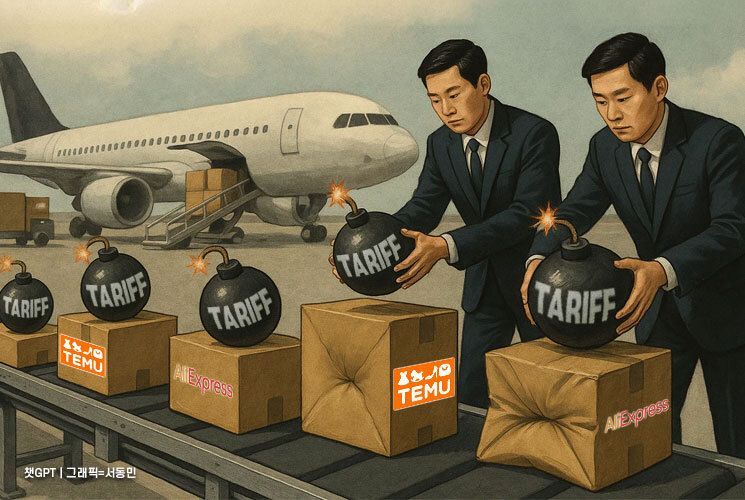
According to relevant ministries on September 19, the Ministry of Economy and Finance is preparing to reform the duty-free system for low-value imported goods. An official from the ministry stated, "In order to make it possible to tax platforms like Aliexpress and Temu, we need to obtain data from these companies and register the necessary information, so we are gradually working on these tasks." The official added, "Given that the issue of overseas direct purchases became a major topic last year, we are proceeding cautiously, and nothing concrete has been decided yet."
Currently, South Korea operates a low-value exemption system that waives customs duties and value-added tax (VAT) on imported goods valued at $150 or less (or $200 or less for goods from the United States). Although this system was introduced to reduce administrative costs, the surge in low-priced direct imports from China has led to ongoing concerns about reverse discrimination against small domestic businesses. Last year, the government, led by the Office for Government Policy Coordination, hinted at a reform of the duty-free system, including a ban on direct purchases of products without KC certification. However, the plan was effectively scrapped due to public opposition.
While the government acknowledges that it will take time to fully implement the new tax system, officials believe it is necessary to lay the groundwork in advance. They are working to establish regulations and systems that would require overseas platforms like Aliexpress and Temu to collect VAT from sellers and remit it to the Korea Customs Service. Since these companies are foreign businesses, relevant systems must be established to ensure that their designated domestic agents pay the required taxes for their operations in Korea. On a practical level, there is also a need to build a system that allows the Korea Customs Service to receive and share data for tax purposes from platforms such as Aliexpress and Temu regarding foreign sellers.
A government official explained, "We need a legal basis to connect systems that allow the exchange of information with companies selling goods overseas." For example, the European Union (EU), which collects VAT on direct purchases of goods valued at 150 euros or less, requires foreign intermediary platforms to designate an agent within the EU and pay VAT on their behalf. To facilitate this, overseas sellers who sell to EU consumers must obtain an Import One Stop Shop (IOSS) number, which allows VAT to be automatically collected from consumers at the point of sale.
US Government Abolishes Low-Value Package Exemption System
The reason the government has resumed these preparations is due to a global trend toward taxing low-value goods. Since August, the administration of former US President Donald Trump decided to abolish the "low-value package exemption system," which previously exempted goods valued at $800 (about 1,109,000 won) or less from customs duties. The policy was first applied to goods from China and Hong Kong in May and has since been expanded to all countries.
Since 2021, the EU has implemented the Import One Stop Shop (IOSS) system, which requires platforms to automatically collect VAT at the point of sale and electronically submit it to customs authorities. Through foreign company registration, the designation of domestic agents, and automated data linkage with customs, the EU has established an effective taxation system. Since July 2021, the EU has imposed VAT on all e-commerce imports, abolishing the previous exemption for goods valued at less than 22 euros (about 35,000 won). This year, the EU also decided to abolish the exemption from customs duties for low-value packages under 150 euros (about 240,000 won).
Within the government, there is a prevailing view that the focus should be on adjusting the duty-free threshold and imposing VAT even on ultra-low-priced goods. While customs duties require different rates for various goods and are administratively more complex, VAT can be uniformly applied at a 10% rate regardless of product type, making it more convenient from an administrative standpoint. However, strong consumer backlash is inevitable, making it difficult to accelerate the process. An official from the Ministry of Economy and Finance stated, "The main issues will be whether to tax low-value goods at all, and if so, how to implement such taxation."
© The Asia Business Daily(www.asiae.co.kr). All rights reserved.

















