If Negotiations Drag On Between South Korea and the U.S.,
Management Plans and Investment Schedules at Risk
Automotive Industry: "15% Tariff Reduction Is Desperately Needed"
Shipbuilding Sector Also Burdened by the 'Marska Project'
Trade Experts Call for "Cautious Approach"
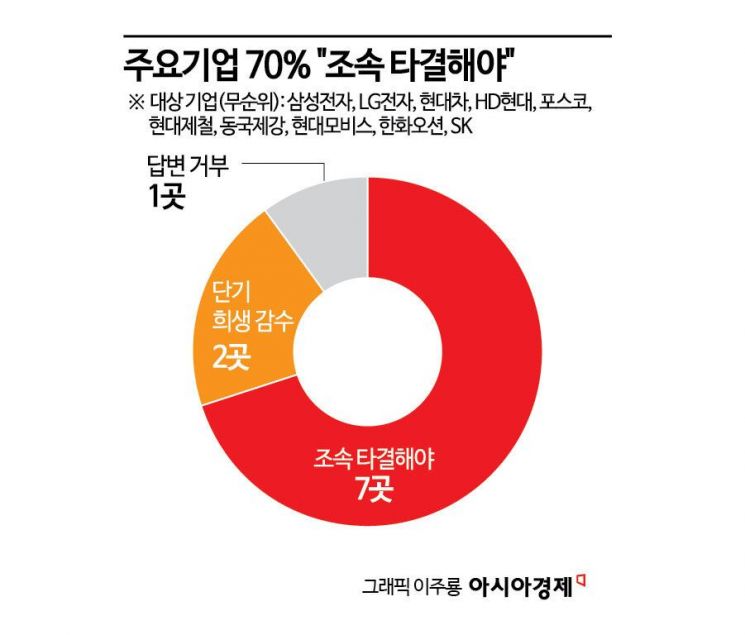
As the final agreement on tariff negotiations between South Korea and the United States continues to be delayed, seven out of the ten leading domestic companies have expressed the view that a swift resolution is necessary. Some companies have responded that, given the unfavorable conditions, it would be better not to rush and instead secure more negotiating room. However, all companies have consistently voiced concerns that the longer the negotiations drag on, the greater the uncertainty will become.
On September 18, Asia Economy asked ten major domestic companies, including Samsung Electronics, LG Electronics, and Hyundai Motor Company, about their views on the timing of the tariff agreement. Seven companies responded that a prolonged delay in the negotiations would inevitably disrupt the establishment of management plans and overall investment schedules. While companies are quietly observing the tariff negotiations rather than making public statements, they have implicitly revealed their desire for a quick resolution. A company representative emphasized, "It is difficult for companies directly bearing the losses to endure tariffs for a long period without compensation," adding, "We need to expedite the agreement to reduce uncertainty."
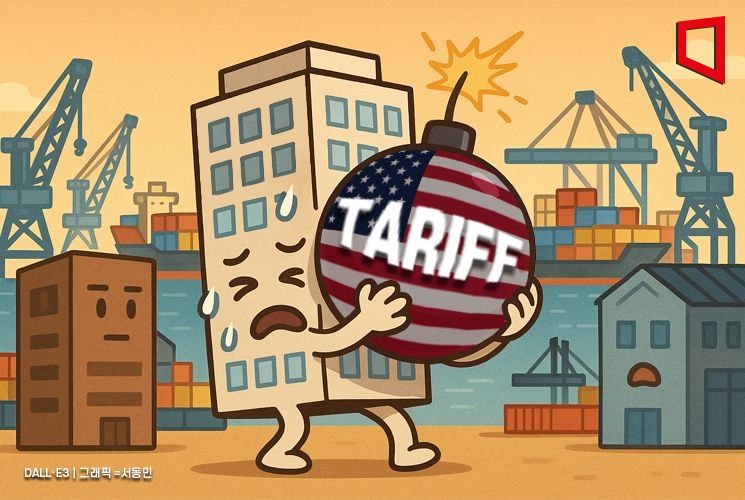
The automotive industry, which is at a disadvantage in terms of tariffs compared to Japanese vehicles, is particularly sensitive. An industry representative stated, "We are quietly observing the government's negotiations, but a 15% tariff is desperately needed." A representative from the parts industry commented, "If the tariff issue drags on, it will inevitably disrupt global supply chains and local investment plans." They added that if Korean-made parts supplied to U.S. automobile factories and electric vehicle production lines are not delivered on time, the production schedules of finished vehicle manufacturers could also be affected.
The shipbuilding industry, which is responsible for the "Marska Project," a key initiative in the revival of U.S. manufacturing, is also concerned about the burdens caused by delays in the negotiations. An industry representative said, "If negotiations are delayed, disruptions to investment and production plans at the Philly shipyard are inevitable," stressing that the negotiations must be concluded in the national interest. Another representative emphasized the need for a swift agreement, stating, "From the perspective of exporting not only ships but also construction machinery, transformers, and various other items, the longer uncertainty persists, the greater the risks become."
The steel industry, which is already subject to a high tariff rate of 50%, is also closely monitoring the negotiations, as it is indirectly affected by the developments in downstream industries such as automobiles and shipbuilding.
The electronics industry is concerned about direct disruptions to global supply chains and investment plans. A related company representative said, "Although there are still issues regarding investment funds and profit distribution, prolonged negotiations will only increase uncertainty," adding, "It is important to reach a conclusion quickly." They also pointed out that, although a significant portion of exports go to regions outside the United States, prolonged delays in negotiations could become a significant burden in the current environment of heightened market uncertainty.
In contrast to the industrial sector's desire for a swift resolution, trade experts are urging a cautious approach. Cho Yeonseong, a professor of international trade at Duksung Women's University, stated, "If we focus solely on easing the 15% automobile tariff, it could come at the expense of other industries' interests," adding, "Even if it takes time, we must reach a rational agreement from a national perspective." He further noted, "President Trump, being a businessman, approaches every statement with calculation, so South Korea must respond even more meticulously." Jang Sangshik, head of the International Trade and Commerce Research Institute at the Korea International Trade Association, said, "While automobile tariffs are a key issue, they are manageable in the short term," and advised, "The government must ensure that negotiations do not disadvantage South Korea in product categories where we compete with Japan." He also recommended, "Companies should prepare for uncertainty by diversifying exports and reducing costs."
Some in the business community view the current negotiations as a test of both the survival of Korean industry and the government's trade diplomacy capabilities. A business representative emphasized, "The government must approach the negotiations with a clear red line, but also produce results that minimize damage to each industry."
© The Asia Business Daily(www.asiae.co.kr). All rights reserved.
![Clutching a Stolen Dior Bag, Saying "I Hate Being Poor but Real"... The Grotesque Con of a "Human Knockoff" [Slate]](https://cwcontent.asiae.co.kr/asiaresize/183/2026021902243444107_1771435474.jpg)
















