iPhone 17 Standard Model in Short Supply Online
Performance Upgrades and Value for Money Drive Demand
Lagging AI Features Remain a Weakness Compared to Competitors
As the official release of the iPhone 17 series approaches on September 19, the lineup is facing criticism for a "lack of innovation." In a surprising turn, the standard model has proven to be more popular than the premium Pro version. The iPhone 17 series is perceived as lagging behind competitors in terms of artificial intelligence (AI) features, resulting in reduced demand for the Pro model and a higher preference for the standard model, which saw only a minimal price increase.
According to the IT and telecommunications industry on September 18, the standard model has been selling out rapidly at online retailers during the domestic pre-order period for the iPhone 17 series, which began on September 12. This contrasts with previous iPhone launches, where the Pro models were typically more popular during pre-orders. Since the iPhone 11 series in 2019, Apple has launched its smartphones in both standard and Pro lineups. This year, an ultra-slim model called Air has also been newly added to the lineup.
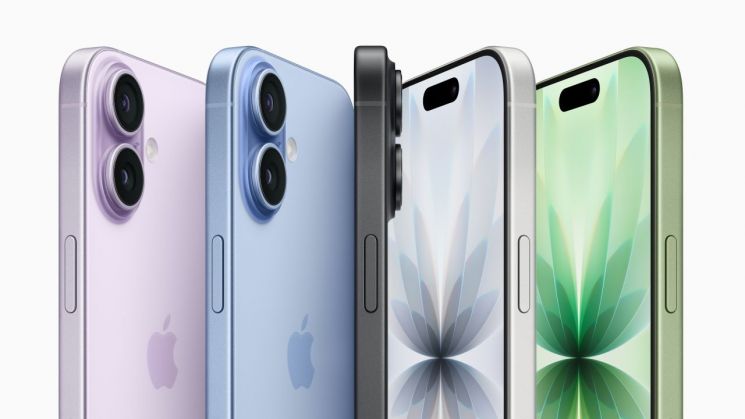
In fact, as of this day, the standard model of the iPhone 17 series is completely sold out in all storage capacities and colors during the pre-order sales for unlocked phones on major e-commerce platforms such as Coupang and 11st. It is reported that for some colors, demand surged immediately after pre-orders began at 9 p.m. on September 12, leading to a complete sellout within one minute.
The situation is similar for customers purchasing through mobile carriers. At SK Telecom, the standard model for the iPhone 17 series is also sold out and unavailable for pre-order. Other carriers are still accepting pre-orders for the iPhone 17 standard model, but it is reported that there will be a delay before customers can actually receive their devices. In contrast, the iPhone 17 Pro, Pro Max, and Air models are still available for order in most variants and colors, both as unlocked phones and through carrier reservations.
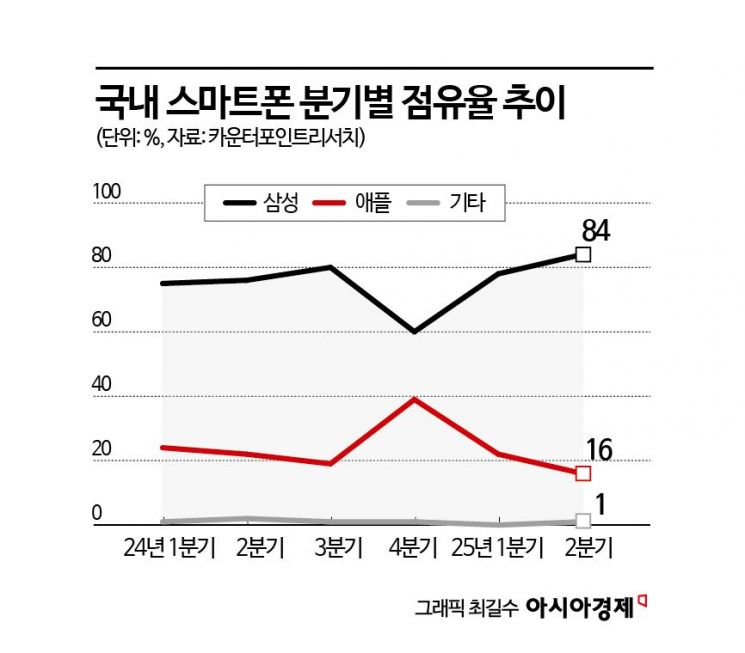
This trend is interpreted as a shift in demand from the Pro model to the standard model, as the new iPhone is seen as falling behind competitors in AI features. Samsung Electronics, a major competitor, has already integrated AI features such as Google Gemini and its own Samsung Gauss into the operating system (OS) of its latest Galaxy smartphones. In fact, Galaxy devices equipped with AI features have seen steadily increasing sales in Korea. The Galaxy S25 series, released in February this year, reached 3 million units sold domestically by early last month-a record achieved in just six months, making it the fastest-selling 5G Galaxy S series in Korea. The foldable Galaxy Z Fold 7 and Flip 7 also set a new record for the Galaxy foldable lineup with 1.04 million units sold during domestic pre-sales.
At the Worldwide Developers Conference (WWDC) held in June, Apple announced iOS 26, which will be installed on the iPhone 17 series, but the focus was primarily on changes to the user interface (UI) design. There were no major updates to Apple’s AI service, Apple Intelligence, nor the introduction of the agentic AI service, Personalized Siri. These features are expected to be launched next year.
The strong popularity of the iPhone 17 standard model this year is attributed not only to performance improvements over last year’s iPhone 16 but also to its outstanding value for money, as the price increase was kept to a minimum. The iPhone 17 features display upgrades such as ProMotion with a 120Hz refresh rate and an always-on display (AOD), compared to its predecessor. The base storage has also increased from 128GB in the iPhone 16 to 256GB, while the price only rose by 40,000 won (from 1,250,000 won to 1,290,000 won). In fact, when comparing models with the same storage capacity, the price has effectively been reduced.
On the other hand, the iPhone 17 Pro saw the elimination of the 128GB model, and the price of the 256GB model increased to 1,790,000 won, making it less affordable. Additionally, the polarizing design and limited color options are believed to have contributed to its decreased popularity compared to previous models. The new Air lineup, designed for lightness, comes with only one camera and one speaker, and supports only eSIM instead of a physical SIM card, which is expected to cause inconvenience for users switching phones. Customers who currently use a physical SIM will need to go through the process of switching to eSIM.
An industry insider in telecommunications commented, "While the prices of the iPhone 17 Pro and Pro Max models have increased, the AI features have not met expectations, resulting in less popularity for the Pro models than before and a shift in demand toward the standard model."
© The Asia Business Daily(www.asiae.co.kr). All rights reserved.


















