Industry Opinions Solicited Through Federal Register
Decision on Expanding Tariff Targets Within 60 Days
Automotive Parts Comments Accepted Starting in October
The administration of former U.S. President Donald Trump has begun procedures to expand the scope of steel, aluminum, and automobile tariffs, which were previously notified as itemized tariff targets. If the scope of tariffs on both steel and automobiles is expanded, South Korea is expected to face greater pressure to increase production within the United States, in addition to experiencing disruptions in exports.
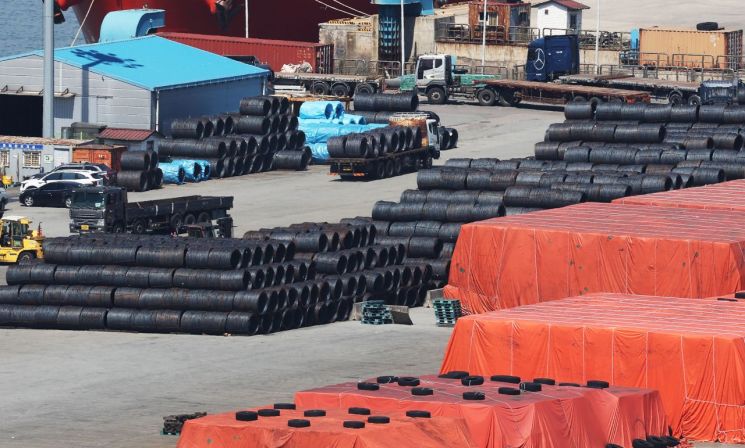
According to the U.S. Federal Register on September 16 (local time), the U.S. Department of Commerce has started collecting industry opinions through the Federal Register regarding additional items to be included in the list of steel and aluminum derivative products subject to tariffs. The Department of Commerce will collect opinions until the 29th and plans to decide within 60 days whether to expand the list of tariffed items.
The United States currently imposes a 50% tariff on steel, aluminum, and their derivative products based on Section 232 of the Trade Expansion Act, which grants the president the authority to restrict imports for national security reasons. Additionally, a procedure has been established allowing U.S. manufacturers and associations to request the government to designate new items for tariffs, with opinions to be collected every May, September, and January.
Based on opinions received in May of this year, the Department of Commerce decided in June to impose a 50% tariff on steel used in home appliances such as refrigerators, dryers, washing machines, and dishwashers.
On the same day, the Department of Commerce also announced procedures in the Federal Register allowing requests to add automobile parts to the list of items subject to a 25% tariff. Since May 3, a 25% tariff has been applied to certain automobile parts, and this process aims to determine whether there are additional items that should be protected by tariff barriers for national security reasons, beyond those already designated.
The Department of Commerce explained that, given the rapid development of various technologies such as alternative propulsion systems and autonomous driving capabilities in the automotive industry, it is important to identify new automobile products critical to national defense and review the possibility of imposing tariffs on them.
Manufacturers producing automobiles and automobile parts in the United States, as well as associations representing them, may submit their opinions. The Department of Commerce will accept these submissions every January, April, July, and October.
As a result, the number of automobile parts subject to the 25% tariff is expected to increase, which will likely raise the burden on South Korean automobile parts exporters to the United States. According to the Korea International Trade Association, South Korea's automobile exports to the United States amounted to 34.7 billion dollars last year, with automobile parts exports totaling 8.2 billion dollars.
Meanwhile, U.S. automobile industry and trade organizations have expressed concerns about the Department of Commerce's plans to review additional tariff targets. According to Reuters, these organizations stated in a letter to the Department of Commerce, "The recent tariff expansion was implemented without sufficient prior notice. (President Trump's tariffs) have resulted in significant unintended costs, complexity, and uncertainty for American companies," urging, "Do not take any further unpredictable expansion measures."
© The Asia Business Daily(www.asiae.co.kr). All rights reserved.
![Clutching a Stolen Dior Bag, Saying "I Hate Being Poor but Real"... The Grotesque Con of a "Human Knockoff" [Slate]](https://cwcontent.asiae.co.kr/asiaresize/183/2026021902243444107_1771435474.jpg)















