Tariffs Lowered for Japan Ahead of Korea... Hyundai Faces Competitive Pressure
Trade Officials Make Successive U.S. Visits to Push for Negotiations
Will Lee and Trump Narrow Differences Before Meeting at the UN General Assembly?
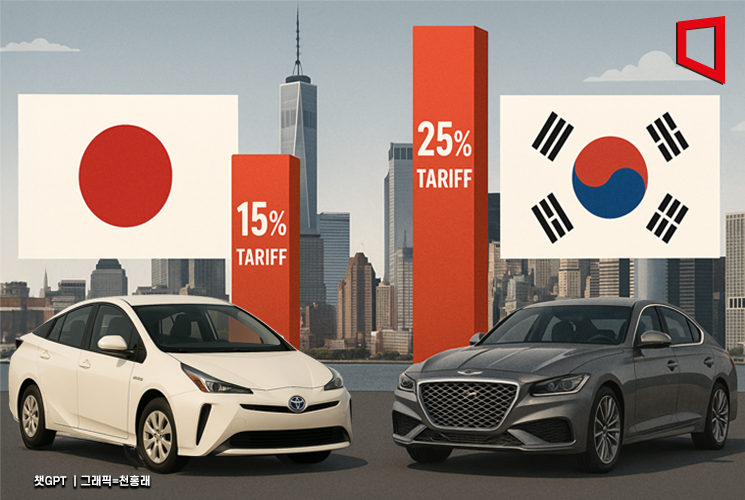
The Donald Trump administration in the United States will lower tariffs on Japanese automobiles to 15% starting September 16 (local time), in accordance with the trade agreement with Japan. In contrast, South Korea continues to face a high 25% tariff due to unresolved differences in follow-up negotiations with the United States, which is expected to weaken the price competitiveness of Korean vehicles in the U.S. market until a final agreement is reached.
According to the U.S. Federal Register on September 15, the Trump administration will implement a measure to reduce tariffs on Japanese automobiles from the current 27.5% to 15%, effective September 16.
President Trump imposed a 25% item-specific tariff on foreign automobiles and auto parts in April, based on Section 232 of the Trade Expansion Act. As a result, Japan had been subject to a total tariff of 27.5%, which included the existing 2.5% tariff.
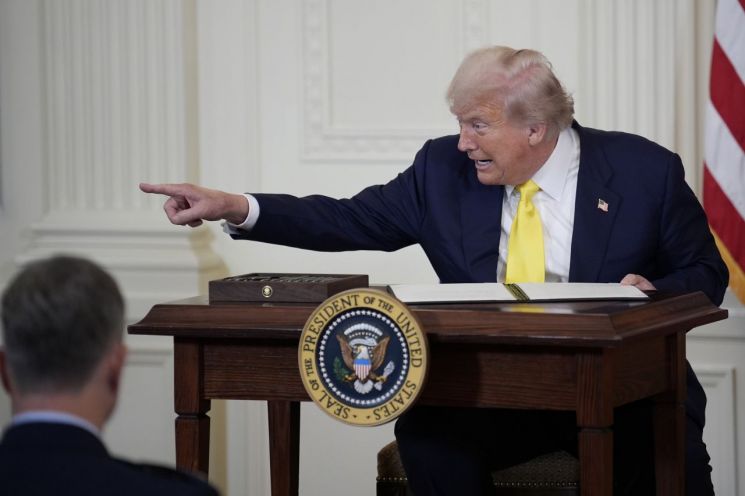
However, following the U.S.-Japan trade agreement in July and the conclusion of detailed negotiations earlier this month, President Trump signed an executive order on September 4 to implement the agreement, reducing tariffs on Japanese automobiles to 15%. This move has significantly strengthened Japan's price competitiveness in the U.S. automobile market compared to its competitors.
In contrast, while South Korea reached a broad trade agreement with the United States at the end of July, it has not been able to narrow differences over the details of a $350 billion investment plan in the United States, so Korean automobiles are still subject to a 25% tariff. The United States is demanding increased direct investment, and maintains that the tariff on Korean automobiles will only be reduced to 15% once an agreement is reached. As a result, domestic companies such as Hyundai Motor Group, which compete with Japanese firms, are at a disadvantage in the U.S. market.
Against this backdrop, senior trade officials have been making consecutive visits to the United States in an effort to break the deadlock in the tariff negotiations. Minister of Trade, Industry and Energy Kim Jeonggwan met with U.S. Secretary of Commerce Howard Lutnick in New York on September 12 and returned to Korea on September 14. Immediately afterward, Trade Negotiation Head Yeo Hangoo traveled to Washington, D.C. on September 15 to continue negotiations. Speaking with reporters that day, Yeo stated that, regarding the timing of the 15% tariff reduction on Korean automobile exports to the U.S., "We are doing our best to ensure it is applied as soon as possible," and added, "Since this is part of the negotiation process, we will not be swayed by every development." He further emphasized, "We will do our utmost to reflect our national interests by meeting with representatives of the U.S. Trade Representative (USTR) and through all possible channels."
The recent series of high-level visits to the U.S. by trade officials appears to underscore the urgency of implementing the tariff reduction for Korean automobiles, and also coincides with President Lee Jaemyung's attendance at the United Nations (UN) General Assembly next week. With both President Lee and President Trump scheduled to attend the UN General Assembly, attention is focused on whether South Korea and the United States can narrow their differences on trade issues and move toward a second summit meeting. The schedule for a summit meeting during the UN General Assembly has not yet been finalized. If there is progress in the tariff negotiations before the UN General Assembly, it could provide an opportunity for the two leaders to finalize the negotiations directly. However, if differences persist, the meeting may be postponed. Since the government has stated that it will prioritize national interests and is open to the possibility of prolonged negotiations, there is speculation that the second South Korea-U.S. summit could be held at the Asia-Pacific Economic Cooperation (APEC) summit in Gyeongju at the end of October.
© The Asia Business Daily(www.asiae.co.kr). All rights reserved.


















