Nineteen Drones Cross Into Polish Airspace
Russia Claims "Maximum Range Too Short to Reach"
Jamming-Resistant Radar and Additional Fuel Tanks Found
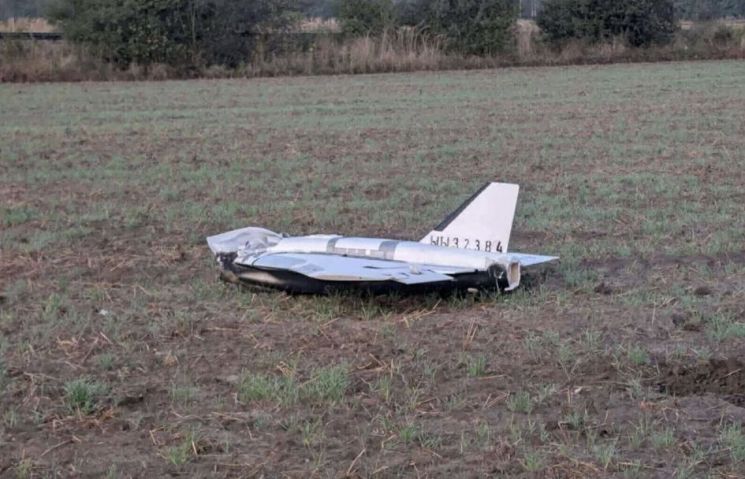 On the 10th (local time), debris of a Russian unmanned aerial vehicle (drone) that crashed in the eastern border area of Poland. Photo by Reuters Yonhap News
Controversy is growing over Russian unmanned aerial vehicles (drones) repeatedly intruding into the airspace of Poland and Romania, both member states of the North Atlantic Treaty Organization (NATO), heightening military tensions across Europe. The Russian government claims that these drones do not have the range to reach the border areas. In contrast, the governments of Poland and Romania have protested, stating that there is evidence of deliberate military provocation by Russia. Amid these developments, calls are rising among European NATO member states to declare Ukrainian airspace a complete no-fly zone, which is expected to make the Trump administration's ceasefire mediation efforts even more difficult.
Poland and Romania: "Illegal Russian Drone Intrusions"... Russia: "Insufficient Range to Reach"
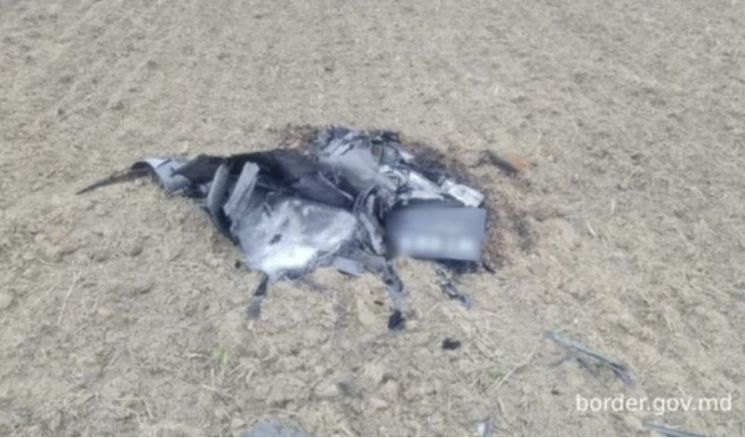 On the 13th (local time), a Russian unmanned aerial vehicle (drone) that violated Romanian airspace crashed near the neighboring Moldova border area. Moldova Border Guard
According to CNN, the Polish government announced on the 14th (local time) that it had approved additional deployment and stationing of NATO troops within Poland. Previously, on the 10th, 19 Russian drones violated Polish airspace, and the Polish military responded by deploying fighter jets and air defense systems, shooting down four of the drones. Subsequently, NATO declared that it would provide additional forces to strengthen the defense capabilities of Poland's eastern border area.
NATO Secretary General Mark Rutte stated, "France will provide three Rafale fighter jets, Germany will support with four Eurofighter jets, and Denmark will send two F-16 fighter jets and one anti-air frigate. The Netherlands is accelerating the deployment of the Patriot air defense system to Poland, and the Czech Republic has dispatched a helicopter unit."
Following Poland, the Romanian military also entered emergency response mode. On the 13th, a Russian drone illegally entered Romanian airspace before flying toward Ukraine. The Romanian Ministry of Defense stated that it scrambled F-16 fighter jets and received support from two German Eurofighter Typhoons to monitor the drone, but did not shoot it down. On the 14th, the Russian drone crashed near the Moldova border, and the Moldova Border Guard discovered the debris.
The Russian government maintains that there is no evidence the drones accused of violating Polish and Romanian airspace actually belong to Russia, and asserts that Russian drones have such limited range that they could not enter the airspace of either country.
Vasily Nebenzya, Russia's Permanent Representative to the United Nations, said in a media interview, "The maximum range of the drone found in Poland does not exceed 700 kilometers, so it could not have reached the border area," and criticized, "European countries are fabricating airspace violation incidents in order to expand support for Ukraine and receive new weapons supplies." The shortest distance between the Russian mainland and the Polish border area is known to be about 800 kilometers.
Jamming-Resistant Radar and Extended-Range Fuel Tanks Found: "Deliberate Provocation"
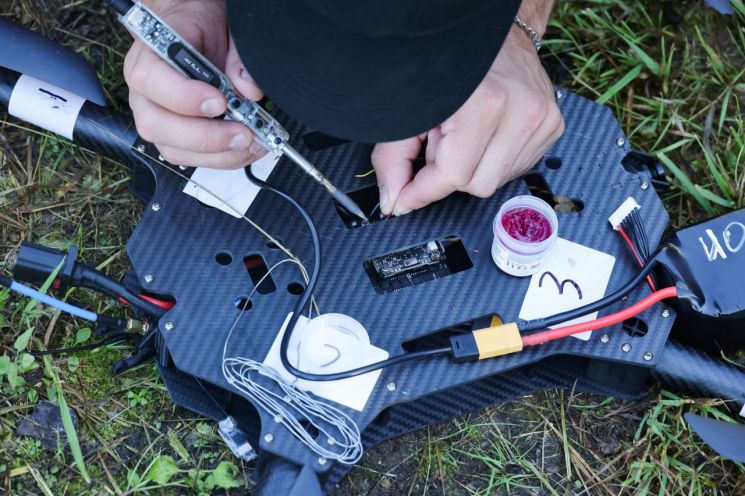
However, experts have analyzed that Russia may have sent drones for the purpose of military provocation and reconnaissance. Contrary to Russia's claim that the drones could not reach the area due to limited range, analyses indicate that additional fuel tanks were installed and electronic warfare countermeasures were in place, making it fully possible for the drones to reach those regions.
The U.S. think tank Institute for the Study of War (ISW) stated, "The Russian drone found in Poland was equipped with an antenna to block jamming signals that interfere with flight, and also had a fuel tank that could extend its maximum range to 900 kilometers. It is difficult to explain how 19 drones-three times the total number of missiles and drones that accidentally or technically malfunctioned and fell into Polish airspace since 2022-violated Polish airspace in the middle of the night."
The Romanian Ministry of Defense also issued a statement, saying, "The Russian drone airspace violation incident shows that Russia does not respect international law and endangers not only the safety of Romanian citizens but also NATO's collective security. We strongly condemn Russia's irresponsible actions, and this incident poses a new challenge to security and stability in the Black Sea region."
The Issue of Declaring Ukrainian Airspace a No-Fly Zone Resurfaces... Trump Faces Difficulties

Some NATO countries, including Poland, are calling for Ukrainian airspace to be designated as a complete no-fly zone (NFZ), which is expected to make the Trump administration's mediation for a ceasefire in the Ukraine war increasingly difficult.
Poland has proposed considering the closure of Ukrainian airspace as a measure to block Russian drone and other aerial threats at the source. In an interview with the German media outlet Frankfurter Allgemeine Zeitung (FAZ), Polish Foreign Minister Radoslaw Sikorski said, "The airspace over eastern Poland has been declared a no-fly zone until December 9," adding, "However, the issue of closing Ukrainian airspace is something that can only be decided at the NATO and European Union (EU) level going forward; Poland cannot decide this unilaterally, and allied countries must act together."
Designating Ukrainian airspace as a no-fly zone has been one of Ukraine's requests to the United States and NATO since 2022. If declared a no-fly zone, not only Ukrainian forces but also NATO forces would be able to shoot down any Russian fighter jets or drones appearing in the area. However, if a no-fly zone is actually declared, there is a risk of localized air combat between NATO and Russia. This is why the United States and NATO allies, concerned about escalation, have so far taken a negative stance toward designating a no-fly zone.
President Trump stated at a press conference, "(The drone airspace violation) may have been a mistake," adding, "In any case, I am not satisfied with anything related to that situation. I hope all of this is resolved well," refraining from aggressive rhetoric. U.S. Army Europe Commander and NATO Supreme Allied Commander Europe (SACEUR) Alexis Grinkevich also cautioned against overinterpretation, stating, "It is still unknown whether this was a deliberate act by Russia or an unintentional one."
© The Asia Business Daily(www.asiae.co.kr). All rights reserved.



















