Semiconductor Sanctions and Fentanyl Disputes Cloud Prospects for Agreement
Uncertainty Looms Over the Possibility of a U.S.-China Summit
The United States and China began the fourth round of high-level trade talks on September 14 (local time) in Madrid, Spain, discussing issues such as the sale of TikTok and sanctions on imports of Russian crude oil.
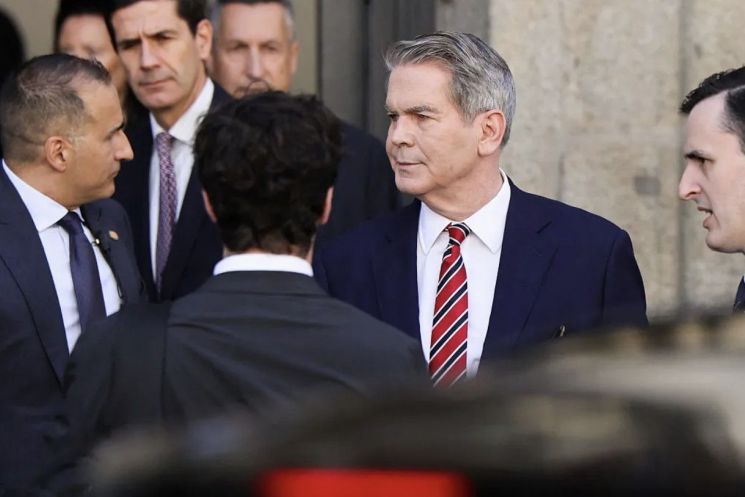
Scott Besant, U.S. Secretary of the Treasury, and Jamison Greer, U.S. Trade Representative, arrived in Madrid that afternoon and began trade talks with He Lifeng, Vice Premier of China’s State Council. The negotiations are scheduled to continue until September 17.
The two sides are discussing trade, economic, and national security issues, as well as the sale of the U.S. operations of TikTok, a Chinese-owned video-sharing platform. This is the first time the issue of TikTok’s sale has been included as an official agenda item in U.S.-China trade talks.
Previously, in April last year, the U.S. Congress passed the so-called “TikTok Ban Act,” requiring parent company ByteDance to sell TikTok’s U.S. operations to an American company. The original deadline for the sale was January 19 this year, but President Donald Trump extended it three times, with the final deadline now approaching on September 17.
The issue of China’s imports of Russian crude oil is also expected to be raised at the negotiating table. On September 13, President Trump urged NATO member countries and others, including China, that import Russian crude oil to face high tariffs as a means to pressure an end to the war in Ukraine.
However, the outlook for the negotiations remains unclear as both sides have engaged in a war of nerves ahead of the high-level trade talks, including reciprocal semiconductor sanctions. On September 12, the U.S. Department of Commerce added 32 semiconductor companies, including 23 Chinese firms, to its export control list. The following day, China’s Ministry of Commerce launched an anti-dumping investigation into analog integrated circuit (IC) chips from the United States.
The two countries have also failed to narrow their differences on the issue of fentanyl, a narcotic painkiller. The United States has stated that it will lower tariffs on Chinese goods if China takes action to eradicate fentanyl distribution, while China insists that tariff reductions must come first before it will take any related measures.
As the United States and China fail to find common ground on these key issues, there are growing doubts about whether a summit between the two countries’ leaders will take place.
Previously, the United States and China held three rounds of high-level trade talks in Geneva, Switzerland in May, London, United Kingdom in June, and Stockholm, Sweden in July. At that time, the two sides agreed to extend the tariff war truce until November 10.
© The Asia Business Daily(www.asiae.co.kr). All rights reserved.
![Clutching a Stolen Dior Bag, Saying "I Hate Being Poor but Real"... The Grotesque Con of a "Human Knockoff" [Slate]](https://cwcontent.asiae.co.kr/asiaresize/183/2026021902243444107_1771435474.jpg)















