Founded in 1702 and Granted Royal Plaque
Notable for King Sukjong's Calligraphy Plaque and Unique Architectural Layout
The Seowon, representing the Seo-in Noron faction, is on the verge of being designated as a Historic Site. On September 8, the Cultural Heritage Administration announced its intention to designate "Sangju Heungam Seowon" in Sangju, North Gyeongsang Province, as a nationally designated cultural heritage Historic Site. Over the next month, public opinions from various sectors will be collected, and the final decision will be made after a review by the Cultural Heritage Committee.
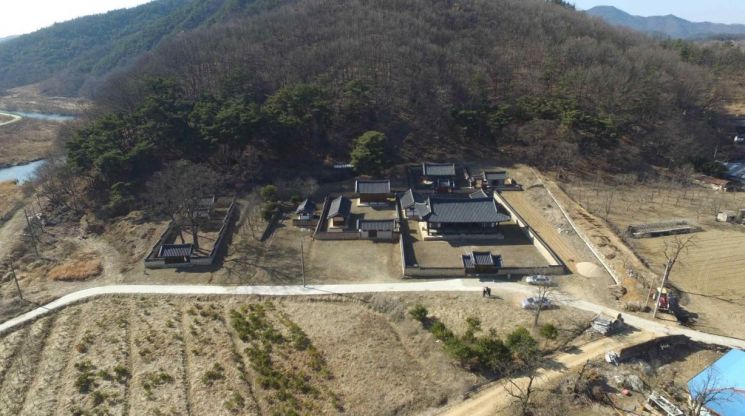
Heungam Seowon is a Noron-affiliated Confucian academy established in the Yeongnam region, where the Southerners (Namin) held significant influence during the late Joseon Dynasty. It enshrines Song Jungil (1606-1672), also known as Dongchundang. Founded in 1702, it received an official plaque from King Sukjong in 1705 and was relocated to its current site in 1762. It is one of only forty-seven Seowon nationwide that retained their royal plaques after the Seowon Abolition Decree issued by Heungseon Daewongun. The original plaque inscribed with "Heungam Seowon" in King Sukjong's own handwriting remains, underscoring its historical significance.
Song Jungil was a scholar of the Silhak (Practical Learning) school, inheriting the legacy of the Giho school from Yi I (Yulgok) and Kim Jangsaeng. Alongside Song Siyol, he is regarded as a spiritual leader of the Noron faction. After marrying into the family of Jeong Gyeongse, a prominent scholar from Sangju, Song Jungil spent over a decade interacting with local figures in the area. This connection led to his enshrinement at Heungam Seowon. The Seowon is considered a rare example where academic reputation, political patronage, and a regional base have all converged.
The architecture is also unique. The arrangement of the lecture hall in front and the shrine at the back is a typical feature of Giho school Seowon. Additionally, Heungam Seowon distinguishes itself by placing the east and west dormitories behind the lecture hall, unlike the Yeongnam style, which places them in front. The large lecture hall, "Jinsudang," features an open front and a rear wall with windows and doors, following the Yeongnam school style. The "Habancheong," an accommodation for lower-ranking students, is a facility rarely found in other Seowon.
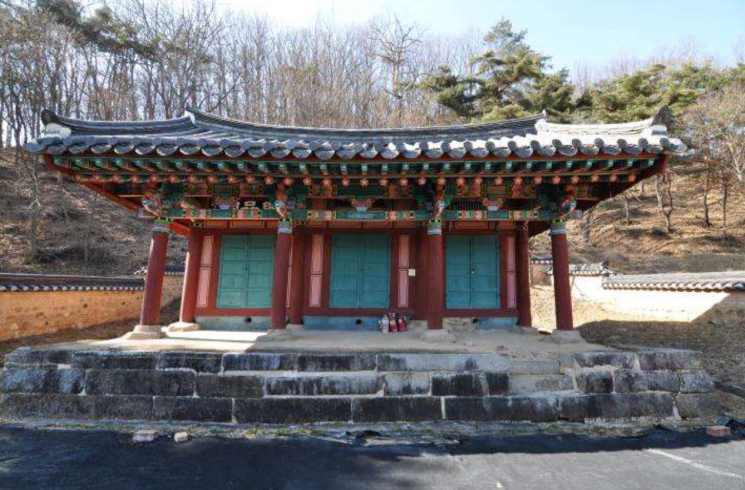
Heungam Seowon continues to hold the "Chunchuhyangsa" memorial rites twice a year, in spring and autumn. It also preserves abundant materials illustrating the distribution of the Noron faction in the Yeongnam region during the late Joseon era, as well as Seowon management and the social foundation of the time. Scholars believe that Heungam Seowon fully merits designation as a nationally designated cultural heritage site, given its comprehensive academic, architectural, and biographical value.
© The Asia Business Daily(www.asiae.co.kr). All rights reserved.
![Clutching a Stolen Dior Bag, Saying "I Hate Being Poor but Real"... The Grotesque Con of a "Human Knockoff" [Slate]](https://cwcontent.asiae.co.kr/asiaresize/183/2026021902243444107_1771435474.jpg)
















