[Hyundai Motor, Over the Mobility] (31)
Faster Development and Lower Costs
Through Separation of Hardware and Software
Fully Realized SDV Launch in 2028
Cumulative Sales Target of 22 Million Units by 2030
Building an Open Vehicle OS Ecosyst
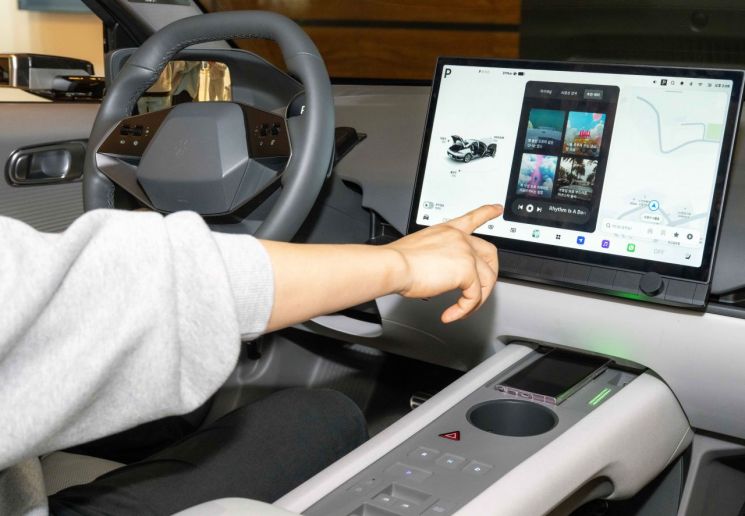 Next-generation infotainment system 'Pleos Connect' under development by Hyundai Motor Group. Photo by Hyundai Motor Group
# 2027, Pangyo, Gyeonggi Province. Mr. A, who commutes daily from Pangyo to Gwanghwamun by car, has purchased a new Hyundai vehicle released this year. Looking at Mr. A's morning commute, there is hardly any stress from driving. First, there is no need to take out a smart key. As he approaches the car with his phone in his pocket, the car recognizes him and the door opens automatically. When he starts the car, it recognizes the driver and automatically adjusts the seat position and settings to those previously saved. When Mr. A says, "Hello Gleo, let's go to Gwanghwamun," the car understands that "Gwanghwamun" is his workplace and automatically sets the navigation destination. Of the entire route, about 80% is marked as autonomous driving sections, while 20% requires Mr. A to drive himself. In the autonomous driving sections, the vehicle recognizes traffic lights, changes lanes, and drives itself toward the destination.
In certain sections, as long as the driver is watching the road, he can even take his hands off the steering wheel. Thanks to this, Mr. A can now have a quick breakfast in the car while on the move. When entering a complex urban area, the vehicle signals him to take over driving. Out of more than an hour of commuting, Mr. A only drives himself for the last 10 minutes or so. The newly released model has further improved convenience by allowing most vehicle controls to be managed by voice. Whereas previous vehicles could only turn the air conditioner on or off by voice command, this model allows voice control over window operations, child lock activation and deactivation, lighting brightness adjustment, and vehicle status checks. Moreover, the car is connected to his home, so he can also control home appliances. For example, about 10 minutes before arriving home after work, if he says, "Hello Gleo, set the air conditioner at home to 22 degrees," he will walk into a cool house with the air conditioner already running.
This scenario is a reconstruction of the future based on the roadmap unveiled at "Pleos 25," a developer conference hosted by Hyundai Motor Group's AVP Division in March. At this event, Hyundai Motor and Kia revealed new vehicle architecture, software operating systems, and autonomous driving and user experience systems utilizing artificial intelligence, all to be introduced sequentially from 2026 onward. At the event, Hyundai Motor Group reiterated its determination to transition from a traditional manufacturing company to a software-centric ICT enterprise. In a recent interview with a U.S. automotive media outlet, Chung Euisun, Chairman of Hyundai Motor Group, stated, "One of the core factors that will define the mobility industry over the next 25 years is the convergence of SDV (Software-Defined Vehicle) and AI technology," adding, "Software is redefining the entire value chain, from product development and vehicle architecture to user interaction and business models."
Hyundai Motor and Kia have been preparing for the massive wave of SDVs since 2019. Now, they are accelerating their transition from traditional manufacturing to becoming future mobility companies based on software. Startups like Tesla and BYD have no legacy systems to contend with. They can start from scratch without worrying about depreciation of development assets and facility investments, workforce structure, or relationships with partners. As a result, the SDV transition for these startups has inevitably been faster than for Hyundai Motor and Kia. If startups are speedboats, Hyundai Motor and Kia are aircraft carriers. Turning an aircraft carrier requires gradual, steady, and meticulous change. Transforming the constitution of a massive global company demands concrete and systematic planning. Let’s take a look at the SDV transition roadmap presented by Hyundai Motor Group last March and imagine what kinds of cars Hyundai Motor and Kia will release within the next five years.
What is an SDV?
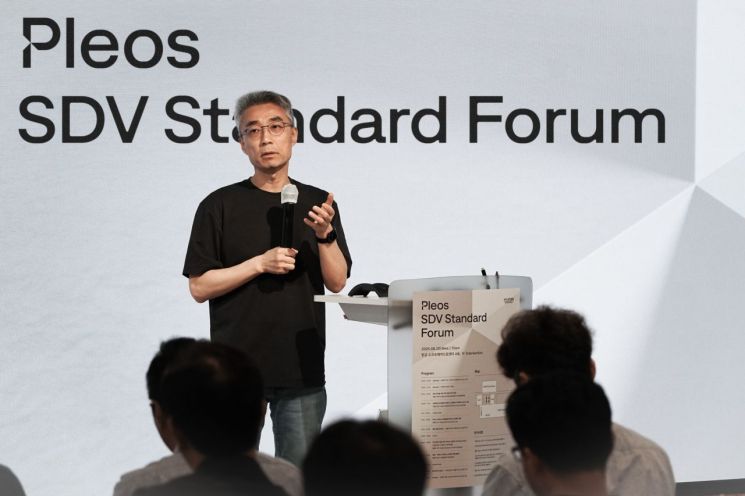 At the Pleos SDV Standard Forum held last August, Song Changhyun, President and Head of AVP Division at Hyundai Motor Company and Kia Corporation, is seen delivering a presentation. Provided by Hyundai Motor Group
At the 2024 CES in Las Vegas, Song Changhyun, then Head of the SDV Division and President at Hyundai Motor and Kia, made his first appearance before the Korean press since joining Hyundai Motor Group. As the background briefing began in a tense atmosphere, all eyes were on him. Sharp questions were expected regarding the core of the SDV strategy, future roadmap, and technical implementation. However, the first question from the press was somewhat unexpected: "What exactly is an SDV? Please explain the concept." Even for automotive journalists who know engine structures, transmission designs, and electric vehicle battery specs inside out, the concept of a "software-defined vehicle" was still unfamiliar. While the abstract idea of "controlling a vehicle with software" was somewhat understood, what it actually meant and how it was implemented remained unclear, even on site.
In response to the question about the concept of SDV, President Song began by explaining the separation of hardware (HW) and software (SW) during development. Traditionally, automotive development involved creating the hardware first and then developing customized software to fit it. If the vehicle model changed, software development had to start over from scratch. Even if additional functions were added to older vehicles via over-the-air (OTA) software updates, the scope was limited. Because hardware and software were closely intertwined, any misalignment in the development sequence made the process more complicated.
However, by adopting the SDV concept and separating hardware and software development, not only does the development speed increase, but costs are also reduced. Hardware is designed as a standardized platform in a modular form, allowing flexible assembly like Lego blocks. Software, on the other hand, is developed independently as applications on top of a vehicle operating system (OS). With this separation, even when a new design or platform is introduced, previously developed software can be combined and reused. Additionally, new functions can be easily added via software updates without additional hardware.
What Benefits Do Consumers Get from SDVs?
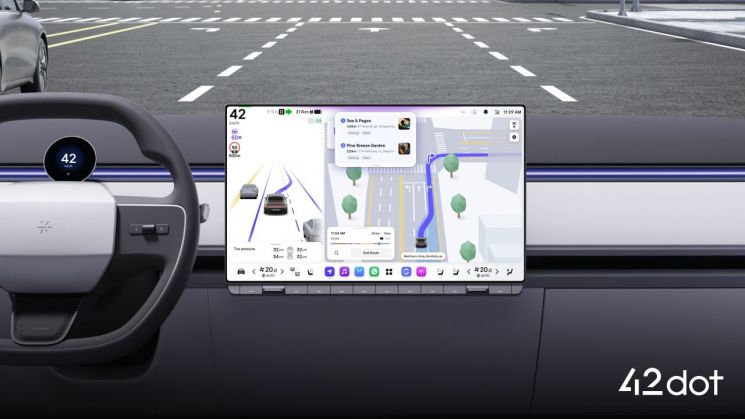 The next-generation infotainment system "Pleos Connect" being developed by Hyundai Motor Group. Provided by FortyTwoDot
What advantages does the separation of hardware and software development offer consumers? First, like a smartphone, the vehicle can be kept up to date through software updates. SDVs allow new features to be added, performance to be improved, and bugs to be fixed quickly via OTA updates, even without purchasing a new car. For example, imagine that the current autonomous driving technology, which assists drivers at a "Level 2+" stage, advances to Level 5 (fully autonomous driving) in a few years. Even if you purchased an SDV at the Level 2+ stage, once Level 5 technology is achieved, you can enjoy the benefits of full autonomous driving through a software update without buying a new car. Furthermore, personalized vehicle operation tailored to the driver's habits and preferences becomes possible, and real-time security software updates enhance vehicle security and safety. Since the vehicle can be kept up to date without hardware replacement, it also helps maintain used car values.
Does HW Development Become Unnecessary in the SDV Era?
If all functions can be updated via software upgrades in an SDV, does that mean there is no longer a need to develop hardware such as chassis, powertrains, electric and electronic devices, or automotive semiconductors? The answer is no. The shift toward software-defined vehicles does not diminish the importance of hardware. In fact, to enable broad software implementation and OTA updates, a hardware platform with high computational power and flexible interfaces is essential. Especially, modularizing and standardizing hardware is crucial for enhancing software reusability and scalability.
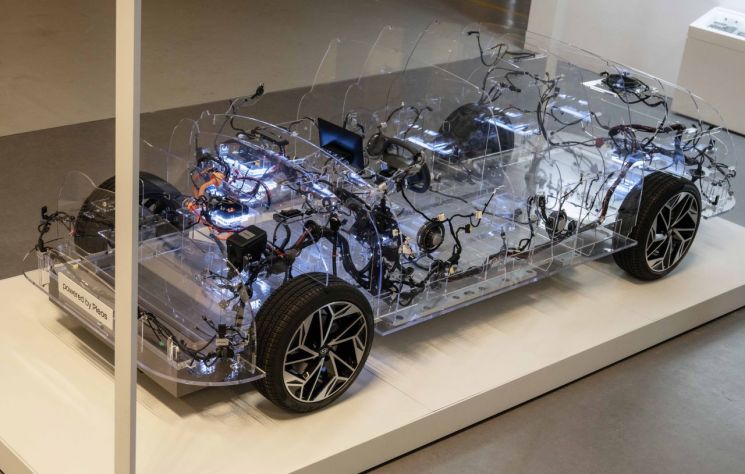 Centralized Electric/Electronic (E/E) Architecture Developed by Hyundai Motor Group. Provided by Hyundai Motor Group
In other words, when hardware is developed, it must be done right the first time to allow various software-driven functions to be layered on top. With a robust, high-performance base platform in place, the rest is about assembling the right combinations. This significantly shortens the development time for individual vehicle models. Currently, Hyundai Motor Group is focusing on developing next-generation hardware equipped with high-performance computers. The core of the new electric and electronic architecture is the introduction of high-performance vehicle computers (HPVCs) and zone controllers, which have drastically reduced the number of controllers required.
As vehicles have rapidly become more electronic, dozens of ECUs (electronic control units) are now required. Currently, controllers for each function-such as powertrain, suspension, infotainment, and ADAS (advanced driver assistance systems)-are installed separately on each component. To use a human analogy, rather than having the central brain control everything and coordinate the limbs, each body part has its own brain, resulting in an abnormal structure. Vehicles designed this way have more components, more complex wiring, and a lot of redundant functionality. Ultimately, this is also a disadvantage in terms of cost.
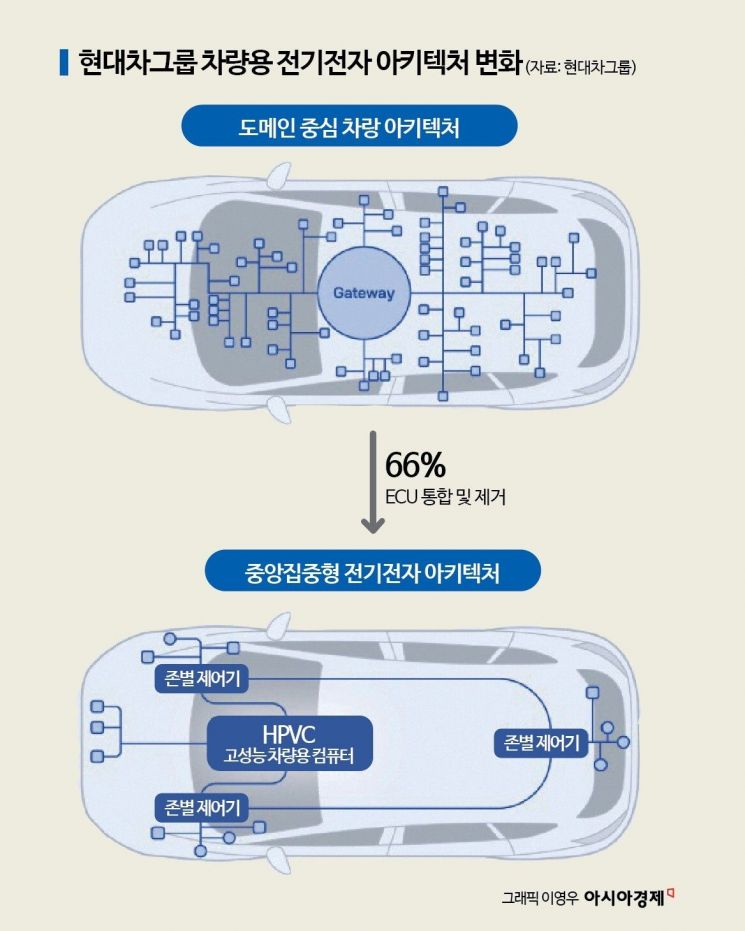
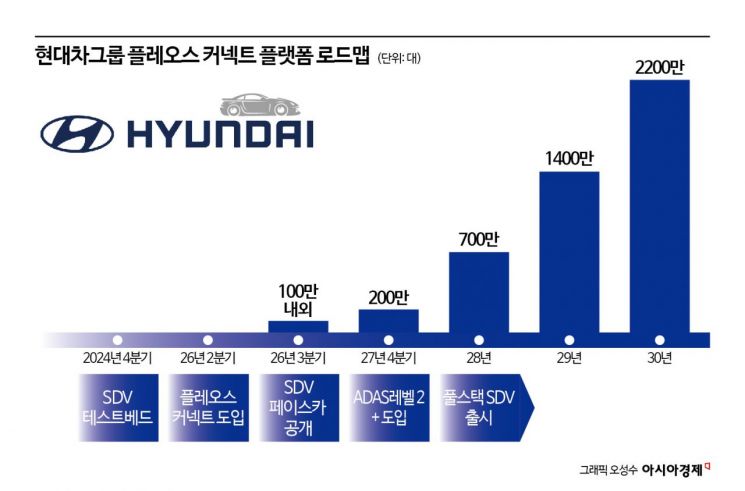
In the rapidly advancing fields of autonomous driving and connectivity, the limitations of the distributed ECU approach have become clear. To overcome this, Hyundai Motor Group has integrated the control of multiple ECUs within the vehicle into a high-performance central computer (HPVC). At the same time, the vehicle is divided into three zones-right, left, and rear-with each area controlled by one of three zone controllers located physically close to their respective zones. By using controllers that are physically close to their areas, the number of components has been reduced from 48 to 16, a 66% decrease, and the number of wiring circuits has been reduced by 22%. Hyundai Motor and Kia vehicles equipped with the HPVC architecture will unveil a pace car in the third quarter of 2026, with mass production expected to begin in the second half of 2027. In 2028, Hyundai Motor Group will launch a fully realized SDV incorporating all the technological capabilities currently under development. Cumulative sales targets are 7 million units in 2028, 14 million in 2029, and 22 million in 2030.
Why Is the Vehicle OS Important in SDVs?
SDVs control every function of the vehicle via software, from basic driving functions (acceleration, braking, steering) to advanced driver assistance systems (ADAS), battery management, infotainment, and climate control. Therefore, the importance of a vehicle operating system (OS) that can manage and control all the distributed control devices and computers within the car as a single unit is greater than ever. The ability to develop a proprietary vehicle OS is a key indicator of a carmaker's SDV development capabilities.
Hyundai Motor Group operates its systems based on its proprietary vehicle OS, "Pleos OS," while ensuring that its infotainment system, "Pleos Connect," is compatible with Google's Android Automotive OS (AAOS). This is an attempt to enhance compatibility with external apps and expand the developer ecosystem.
Looking at competitors, Tesla has a fully integrated, proprietary OS that manages all vehicle functions on a single platform. While this OS boasts a high degree of completeness and reliability, its closed structure limits the ability of external developers to create and install in-vehicle apps via the Tesla OS. In contrast, Hyundai Motor Group and German and Chinese automakers are actively developing open vehicle OS platforms to expand their ecosystems. In particular, Hyundai Motor Group's adoption of Google Android Automotive OS in its infotainment system highlights its emphasis on openness and scalability.
Third-party app developers can use Google's Android Automotive OS development kit and various open-source tools to freely develop apps that run on Hyundai Motor and Kia vehicles. These apps can be registered in Hyundai Motor Group's in-vehicle app market, "Pleos Playground," making it easy for drivers to download and install them. Through this, Hyundai Motor Group envisions building a rich developer ecosystem akin to smartphone app markets.
© The Asia Business Daily(www.asiae.co.kr). All rights reserved.



















