"Nipah Virus Infection" Newly Designated as a Class 1 Statutory Infectious Disease
Korea Disease Control Agency Designates India and Bangladesh as Quarantine Management Regions
Low Risk of Domestic Introduction, But Fatality Rate Reaches 40-75% If I
The Korea Disease Control and Prevention Agency announced on September 8 that it will revise and implement the relevant notification to newly designate "Nipah virus infection," which has been sporadically reported in Asia, including India and Bangladesh, as a Class 1 infectious disease and a quarantinable infectious disease.
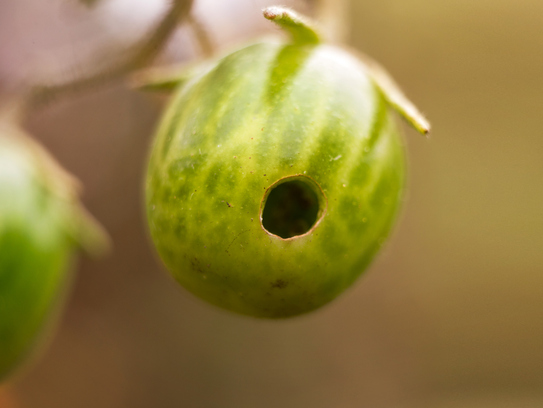 In countries where the Nipah virus has occurred, caution is advised when consuming sap from the sugar palm and fruits with bite marks. If suspicious symptoms such as fever, headache, or sore throat appear within 14 days after traveling, contact the Korea Disease Control and Prevention Agency call center or the local public health center for guidance. Photo by Getty Images
Class 1 infectious diseases are designated for diseases that are either biological terrorism agents, have a high fatality rate, or pose a significant risk of mass outbreaks. These diseases must be reported immediately upon occurrence or epidemic, and require a high level of isolation, such as negative pressure isolation. This measure marks the first time a new Class 1 infectious disease has been designated since the revision of the Infectious Disease Control and Prevention Act and the introduction of the classification system in 2020. From now on, patients diagnosed with Nipah virus infection and suspected cases will be subject to public health management, including reporting, isolation, contact tracing, and epidemiological investigation.
 The Nipah virus can infect both humans and animals, with a fatality rate of 40 to 75% in humans, but there is currently no preventive vaccine or treatment available. Photo by Getty Images
The Nipah virus was first reported at a pig farm in Malaysia in 1998 and was named after the region. It can infect both humans and animals, with a fatality rate of 40 to 75% in humans, but there is currently no preventive vaccine or treatment available. Infection can occur through contact with animals infected with the Nipah virus, such as fruit bats or pigs, or by consuming contaminated foods such as sap from the sugar palm. Human-to-human transmission is also possible through close contact with the bodily fluids of infected patients. To date, sporadic cases have been reported in Asian countries within the habitat range of fruit bats, including Malaysia, Singapore, the Philippines, India, and Bangladesh. In particular, from last year to the present, there have been four deaths in India and eight in Bangladesh.
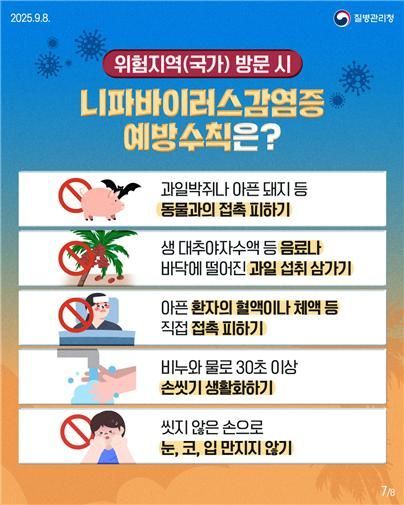
After infection with the Nipah virus, there is an average incubation period of 4 to 14 days. Initial symptoms include fever, headache, and muscle pain. As the disease progresses, it can worsen to neurological symptoms such as dizziness, drowsiness, and decreased consciousness, which can lead to death. In June last year, the World Health Organization (WHO) selected the Nipah virus as one of the candidate pathogens that could cause a future Public Health Emergency of International Concern (PHEIC), emphasizing the importance of proactive response and the development of vaccines and treatments.
Although the likelihood of the virus being introduced into Korea remains low, travelers to areas where Nipah virus infection has occurred, such as India and Bangladesh, should avoid contact with animals such as bats and pigs, and exercise caution when consuming sap from the sugar palm and fruits with bite marks. In addition, if suspicious symptoms such as fever, headache, or sore throat appear within 14 days after traveling to a country where Nipah virus infection has occurred, they should contact the Korea Disease Control and Prevention Agency call center or the local public health center for guidance.
The Korea Disease Control and Prevention Agency has already established a diagnostic testing system for the Nipah virus, enabling diagnosis through nucleic acid detection testing (RT-PCR) in the event of domestic introduction. India and Bangladesh have been designated as quarantine management areas, and travelers entering Korea from these countries who exhibit symptoms such as fever or headache are required to report their health status to quarantine officers in advance through the Q-CODE (Quarantine Information Pre-entry System) or a health status questionnaire. Frontline medical institutions must immediately report suspected cases of Nipah virus infection to the local public health center and the Korea Disease Control and Prevention Agency (Integrated Disease Surveillance System), and implement isolation measures if necessary.
Im Seungkwan, Commissioner of the Korea Disease Control and Prevention Agency, stated, "The designation of Nipah virus infection as a Class 1 infectious disease is a preemptive measure to prepare for the risk of infectious diseases occurring overseas entering Korea." He emphasized, "As the importance of responding to emerging infectious diseases has increased through our experience with COVID-19, we will continue to closely monitor global developments and further strengthen Korea's infectious disease management system."
© The Asia Business Daily(www.asiae.co.kr). All rights reserved.
![Clutching a Stolen Dior Bag, Saying "I Hate Being Poor but Real"... The Grotesque Con of a "Human Knockoff" [Slate]](https://cwcontent.asiae.co.kr/asiaresize/183/2026021902243444107_1771435474.jpg)

















