Statement Issued Opposing Government Reorganization on September 8
"Public Protection and Market Stability Must Come Before Politics"
The labor union of the Financial Supervisory Service issued a statement on September 8 opposing the government's organizational reform plan to separate the Financial Consumer Protection Bureau from within the Financial Supervisory Service and establish a new Financial Consumer Protection Agency.
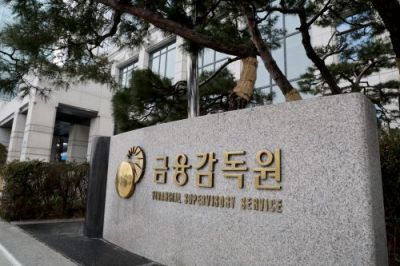 Financial Supervisory Service Headquarters, Yeouido, Yeongdeungpo-gu, Seoul. Financial Supervisory Service
The union released a statement titled, "Establishing a Separate Financial Consumer Protection Agency Is a Step Backward for Consumer Protection for the People!" and criticized the plan accordingly.
Previously, in July, the union and 1,539 employees of the Financial Supervisory Service expressed their opposition to the creation of the new agency by submitting an "Appeal from Working-Level Employees of the Financial Supervisory Service Regarding the Separation of the Financial Consumer Protection Bureau" to the National Planning Committee. The latest statement reiterates the same stance.
The union cited four reasons for opposing the establishment of the Financial Consumer Protection Agency and the re-designation of the Financial Supervisory Service and the new agency as public institutions.
First, they argued that rather than strengthening consumer protection, the move is more likely to undermine it.
The union stated, "If the prudential supervision of financial companies and consumer protection functions are mechanically separated, there will inevitably be conflicts between supervisory functions, the collapse of 'one-stop' services that link supervision, inspection, and consumer protection work, and confusion from overlapping inspections and sanctions."
They also believed that the organizational reform could provide an excuse for organizational self-interest.
The union said, "Splitting the Financial Supervisory Service is not a reform for the people, but a reorganization focused on dividing positions," adding, "Most of the Financial Supervisory Service, the industry, and experts have already opposed the creation of the new agency, and the National Assembly Research Service has also recommended careful consideration."
They expressed concern that re-designating a private organization as a public institution would reduce supervisory independence.
The union pointed out, "The reason the Financial Supervisory Service's designation as a public institution was lifted in 2009 was to guarantee the independence and autonomy of supervisory work," and warned, "If it is re-designated as a public institution, it will become vulnerable to political influence and external pressure, raising concerns that the interests of the administration, rather than those of financial consumers and the public, will take precedence."
They also predicted significant side effects, such as strong market backlash and reduced work efficiency.
The union criticized, "We are concerned about the typical negative consequences of splitting the organization, such as the dispersion of supervisory human resources, internal conflict, decreased employee morale, increased inspection burdens on financial companies, rising administrative costs, duplicated work, and evasion of responsibility," and emphasized, "The stability of the public, consumers, and the financial market must be prioritized over political interests."
© The Asia Business Daily(www.asiae.co.kr). All rights reserved.
![Clutching a Stolen Dior Bag, Saying "I Hate Being Poor but Real"... The Grotesque Con of a "Human Knockoff" [Slate]](https://cwcontent.asiae.co.kr/asiaresize/183/2026021902243444107_1771435474.jpg)















