Concerns are growing that the Trump administration’s crackdown at the construction site of the Hyundai Motor Company and LG Energy Solution battery plant in Georgia, which has seen large-scale investment, could dampen corporate sentiment for investment in the United States. There are also worries that such raids, like the one at the Hyundai plant, could have a counterproductive effect on efforts to expand investment and revive manufacturing in the U.S.
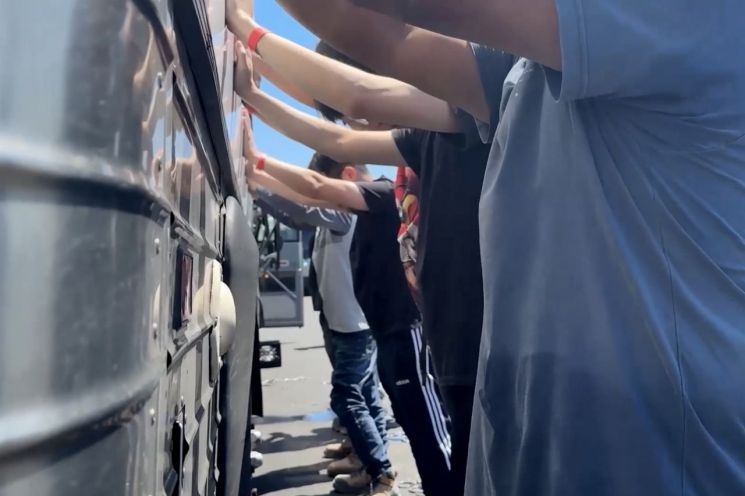
The New York Times reported on September 7 that “tensions are emerging as the expansion of manufacturing in the United States accelerates and immigration crackdowns intensify.” The Wall Street Journal also pointed out that “this incident has become a new risk factor for foreign companies that have been pursuing U.S. investment in line with President Trump’s trade demands.”
In recent years, Georgia has become a symbol of the “U.S. manufacturing renaissance” by attracting large-scale investments, particularly from Korean companies. More than 110 Korean companies, including Samsung, SK, LG, and Hanwha, have already established a presence there. Notably, Hyundai Motor Company plans to expand the production capacity of Hyundai Motor Group Metaplant America (HMGMA) from 300,000 to 500,000 vehicles.
However, the site continues to face labor shortages. Tens of thousands of construction workers are needed to complete the plant in a short period, but a nationwide construction boom in semiconductor manufacturing and artificial intelligence (AI) data centers has led to a shortage of skilled workers. Despite these circumstances, the Trump administration has effectively blocked immigration through the southern border, and with the recent intensification of site crackdowns, there are growing concerns that the labor shortage could worsen further.
This crackdown is increasing uncertainty not only for Korean companies but also for global firms considering investment in the U.S., raising concerns that future investment may be scaled back or approached more cautiously. The Associated Press noted that “this large-scale immigration crackdown could negatively impact not only the regional economy but also foreign companies’ decisions to enter the U.S. market,” emphasizing that while visas are a legal requirement, they can also pose a potential risk in terms of flexible deployment of on-site personnel.
While the Trump administration emphasizes the revival of U.S. manufacturing and the expansion of investment, its policies restricting the legal inflow of skilled workers needed on the ground and intensifying crackdowns on illegal employment have been criticized as contradictory. Didi Caldwell, CEO of the site development consulting firm Global Location Strategies (GLS), said, “In a reality where there is a nationwide shortage of construction workers, such crackdowns further dampen the investment environment,” adding that this situation runs counter to the U.S. government’s promise to make it easier to build factories in America.
Some observers warn that the intensified immigration crackdown by U.S. authorities could escalate conflicts beyond labor market imbalances and lead to diplomatic and economic risks. Companies from allied nations friendly to the U.S. have been strengthening supply chain cooperation through expanding investment in America, but continued site crackdowns like this could prompt a reassessment of their investment strategies.
Experts pointed out that conducting crackdowns while foreign companies are making large-scale investments undermines trust in the investment environment. Mark Kim, president of the Korea Economic Institute of America, said, “Raiding a plant that has received the largest investment in history is not the way to treat foreign investment.”
© The Asia Business Daily(www.asiae.co.kr). All rights reserved.

















