Biggest Impact of LTV Regulation Felt by High-Income, Low-Asset Households
Environment Favors Cash-Rich Buyers
Mortgage Loans Banned for Home Sales and Rental Business Operators
Concerns Over Shrinking Supply in the Rental Market
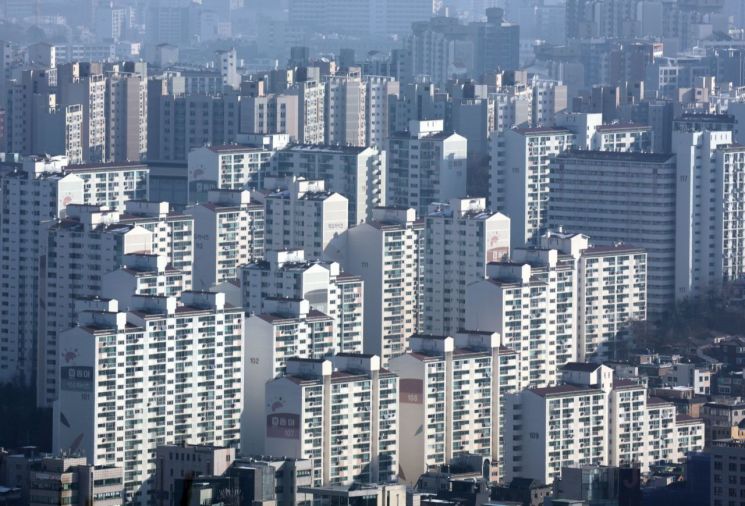
There are growing concerns that the government's decision to lower the loan-to-value (LTV) ratio cap for home mortgage loans to 40% for non-homeowners in regulated areas (such as the three Gangnam districts and Yongsan District) could further intensify polarization in the Seoul real estate market. In particular, analysts point out that so-called 'high-income dirt spoon' households-those with high incomes but limited assets-will face even greater restrictions when trying to purchase a home. Conversely, wealthy individuals with substantial cash reserves are expected to have an advantage in property purchases, potentially widening the asset gap.
According to the Financial Services Commission's "Additional Measures for Managing Loan Demand" released on September 8, the LTV ratio for non-homeowners and conditional one-homeowners in regulated areas has been tightened from the current 50% to 40%. In non-regulated areas, the previous cap of 70% remains unchanged. Furthermore, the mortgage loan limit was previously capped at 600 million won through the June 27 loan regulations, making it even more difficult to purchase apartments in Seoul.
For example, based on the average sale price of apartments in Seoul as of last April (1.35543 billion won), loans are only available up to a maximum of 600 million won. Under the previous 50% LTV standard, buyers needed about 750 million won in cash, but with the new regulation, the required cash amount rises to approximately 813 million won.
The issue is that these changes disproportionately disadvantage certain groups, thereby exacerbating real estate inequality. According to a Bank of Korea report titled "Macroeconomic Effects of Policy Finance for Low-Income Households," if the LTV limit for households in the top 50% income bracket is reduced from 70% to 40%, the homeownership rate drops sharply by 9.93 percentage points. Meanwhile, the Gini coefficient for housing assets, which measures the degree of inequality, soars by 16.37 percentage points, indicating worsening inequality.
The report stated, "While tightening LTV regulations for high-income households can effectively curb household debt, it also blocks households with high incomes but insufficient assets from entering the housing market, resulting in a sharp decline in homeownership rates and a severe increase in housing asset inequality. This suggests that stricter loan regulations for high-income earners could create an environment where only so-called cash-rich, high-asset individuals can easily purchase homes, thereby intensifying the inequality in the distribution of housing assets."
Byunghoon Seok, a professor of economics at Ewha Womans University, commented, "The group most affected by the LTV regulation consists of high-income but low-asset households, who are unable to secure enough loans to purchase a home and are thus excluded from the housing market. Ultimately, the LTV regulation reorganizes market participants based not on their 'income-generating capacity' but on their 'existing asset holdings.'"
Another potential side effect is likely to emerge in the rental market. The government has now completely banned mortgage loans for home purchases and rental businesses in regulated areas. Rental business operators have previously expanded rental supply by acquiring new properties, but if their access to loans is blocked, the supply of rental homes could shrink in the long term, leading to increased upward pressure on rental prices.
© The Asia Business Daily(www.asiae.co.kr). All rights reserved.
![Clutching a Stolen Dior Bag, Saying "I Hate Being Poor but Real"... The Grotesque Con of a "Human Knockoff" [Slate]](https://cwcontent.asiae.co.kr/asiaresize/183/2026021902243444107_1771435474.jpg)















