Largest Supplementary Budget Increase of 258.7 Billion Won
Permanent Wildfire Restoration and Community Rebuilding Take Center Stage
Andong City in Gyeongbuk has submitted its third supplementary budget proposal for 2025 to the Andong City Council’s special session, increasing the budget by 258.7 billion won. While the second supplementary budget focused on wildfire damage compensation and emergency restoration, this new proposal places emphasis on permanent restoration and regional reconstruction.
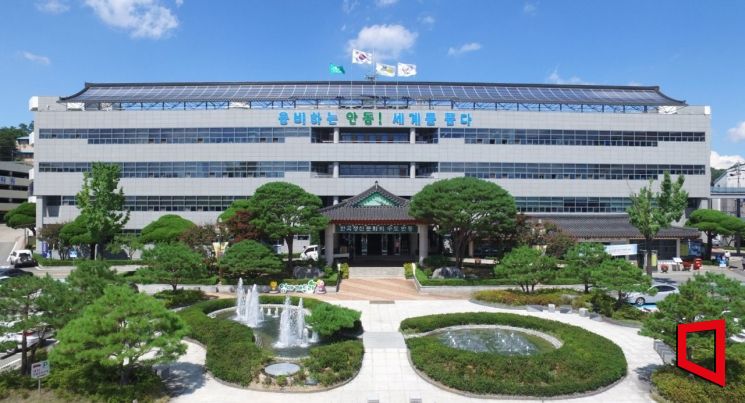
◆ Largest Budget Ever... Moving Beyond Disaster Toward Reconstruction
With this supplementary budget, the general account has increased by 260 billion won to reach 2.171 trillion won, while the special account has been reduced by 1.3 billion won to 174 billion won. As a result, Andong City’s total budget for this year amounts to 2.345 trillion won, the largest in the city’s history.
Notably, 204.3 billion won, or 78.6% of the increase in the general account, will be allocated to permanent wildfire restoration. With the inclusion of special disaster relief grants and national and provincial disaster response funds, the city will replenish costs previously covered by municipal funds in the first half of the year and reallocate contingency reserves.
◆ Focus on Permanent Wildfire Restoration and Community Recovery
The budget includes 24.5 billion won for livelihood stabilization support, 44.9 billion won for landslide prevention and emergency logging, 33 billion won for temporary modular housing support, and 2.8 billion won for auxiliary warehouse support. Additionally, 13.4 billion won will be invested in village infrastructure improvement and 5.4 billion won in village-level restoration and regeneration to accelerate community recovery.
◆ Tailored Support for Livelihood and Agricultural Recovery
To rebuild the local economy, 1.3 billion won has been allocated for supporting manufacturing innovation and process automation using robots for wildfire-affected businesses, 600 million won for job creation for affected residents, and 7.5 billion won for cultivating alternative crops to pine mushrooms. The budget also includes 50 billion won for consumer coupons and 18.2 billion won for issuing local currency gift certificates to revitalize the stagnant local economy.
In the agricultural sector, support will be expanded not only to wildfire-affected farms but also to general farms, with 1.8 billion won for replacing aging agricultural machinery, 1 billion won for supporting small and medium-sized agricultural equipment, 1.3 billion won for recovering from abnormal cold damage, and 900 million won for modernizing fruit facilities.
◆ Thorough Reflection of Key Projects and Living Expenses
The budget also includes 7 billion won for land acquisition for the relocation of the Seogudong Administrative Welfare Center, 1.8 billion won for creating a streamside recreational space, and 1 billion won for facility renovations in preparation for the Gyeongbuk Provincial Sports Festival.
Furthermore, 2.5 billion won has been allocated for compensation for losses from non-profitable routes, 1.2 billion won for covering losses from free rides for seniors, and 1.7 billion won for supporting childcare fees, ensuring meticulous support for areas directly affecting citizens’ daily lives.
Mayor Kwon Kichang: "A Leap Forward Together with the Great Citizens of Andong"
Kwon Kichang, Mayor of Andong, stated, "This supplementary budget is not limited to permanent wildfire restoration but lays the foundation for Andong’s new leap forward," emphasizing, "I will ensure that every citizen can feel proud to be a 'great citizen of Andong' and turn this crisis into an opportunity for a hopeful leap forward."
Characteristics and Ripple Effects of Andong’s Fiscal Management
This supplementary budget is interpreted as a ‘strategic turning point in fiscal management’ that goes beyond simple disaster recovery. Nearly 80% of the total increase is allocated to permanent wildfire restoration, aiming to overcome disaster and restore the community simultaneously.
Additionally, by allocating substantial funds to consumer coupons, local gift certificates, and agricultural machinery support, the city has designed a structure that delivers an ‘immediate tangible effect’ to the local economy, which has been dampened by disaster. This two-track fiscal operation, considering both short-term recovery and long-term reconstruction, is being highlighted as a model case for local government finance.
However, following this large-scale fiscal injection, the speed and efficiency of execution are expected to be key. Experts point out, "For disaster response funds to lead to genuine regional recovery, it is essential to ensure balance and sustainability among projects," adding, "How Andong City manages this will determine the future outcomes."
© The Asia Business Daily(www.asiae.co.kr). All rights reserved.

















