Urgent Care Network Tailored to the Unique Needs of Pediatric Patients
Within the pediatric medical community, there have been calls to establish a "pediatric urgent care system" that can effectively treat a greater number of mild and moderate cases at lower costs and with fewer personnel than emergency rooms, as a solution to the pediatric emergency care crisis.
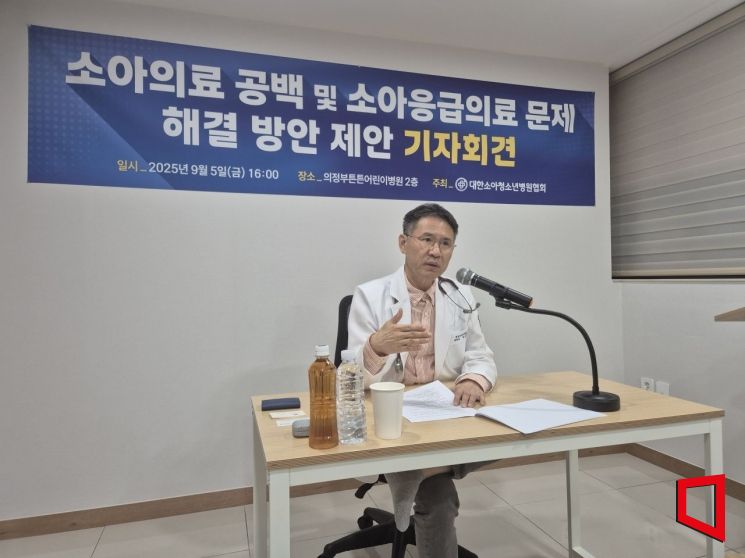
Choi Yongjae, President of the Korean Pediatric Hospital Association, held a press conference on September 5 at Tuntun Children's Hospital in Uijeongbu, Gyeonggi Province, under the theme "Measures to Resolve Pediatric Emergency Medical Issues." He stated, "To ensure that sick children can receive medical care and treatment with peace of mind, we must promptly establish and institutionalize a pediatric urgent care system through thorough discussion."
He continued, "The pediatric urgent care system is highly cost-effective because it can handle more mild and moderate cases with fewer costs and personnel than emergency rooms," adding, "Through this, pediatric emergency rooms can maintain their core function of treating severe cases, and the country can achieve more efficient allocation of resources."
The pediatric urgent care system proposed by the association is a dedicated urgent care network for children that reflects the unique characteristics of pediatric patients, such as differences in diagnosis and treatment by age, the need for guardian accompaniment, and specialized personnel and facilities. The system maximizes cost-effectiveness by categorizing pediatric hospitals into Type 1 and Type 2. Type 1 facilities require fewer personnel and infrastructure, resulting in lower installation and maintenance costs, and are widely distributed to improve accessibility. Type 2 facilities are high-cost and high-complexity centers that can handle moderate-to-severe cases within the community, significantly reducing referrals to tertiary hospitals and overall social costs.
President Choi explained, "Type 1 centers will provide rapid first-line response close to home, Type 2 centers will offer short-term inpatient treatment when necessary, and the most severe cases will be transferred to tertiary hospitals, enabling a safe, stepwise care system. The goal is to reform the current structure in which all patients flock to tertiary hospitals, causing mild and moderate cases to consume resources meant for critical care."
Type 2 pediatric hospitals are modeled after regional pediatric urgent care institutions designed to provide "definitive care" for pediatric patients within their local communities. He emphasized that this is necessary to prevent tertiary hospitals from being overwhelmed, as children are prone to sudden mass outbreaks, such as during infectious disease epidemics.
He also explained that this is akin to dividing the currently operating "Dalbit Children's Hospitals," which serve at night and on holidays, into "outpatient-type" Type 1 and "inpatient-type" Type 2 facilities. "The current Dalbit Children's Hospital system does not distinguish between facilities that provide inpatient care and those that only offer outpatient services," he said. "Type 1 centers focus on outpatient pediatric care during nights and holidays, while Type 2 centers not only provide outpatient services but also operate short-term inpatient beds to treat semi-emergency and moderate cases such as febrile seizures, pneumonia, asthma attacks, dehydration, and intussusception."
He added, "Type 1 is an outpatient-based model that improves accessibility, while Type 2 combines an outpatient clinic with an inpatient semi-emergency room, requiring significant investment and specialized expertise."
© The Asia Business Daily(www.asiae.co.kr). All rights reserved.
![Clutching a Stolen Dior Bag, Saying "I Hate Being Poor but Real"... The Grotesque Con of a "Human Knockoff" [Slate]](https://cwcontent.asiae.co.kr/asiaresize/183/2026021902243444107_1771435474.jpg)















