Aging and Declining Number of Male Royals Deepen Succession Concerns
First Imperial Coming-of-Age Ceremony in 40 Years Since 1985
The Japanese imperial family's coming-of-age ceremony will be held on September 6, marking the first time in 40 years. On September 5, Yonhap News, citing Japanese media such as the Sankei Shimbun, reported that the Japanese imperial family will hold its first coming-of-age ceremony in four decades. This ceremony is held when a male royal becomes an adult, with the most recent event taking place in 1985 for Crown Prince Fumihito, who is Emperor Naruhito's younger brother and first in line to the throne.

The central figure of this coming-of-age ceremony, the first in 40 years, is Prince Hisahito, Crown Prince Fumihito's son and second in line to the throne. Prince Hisahito will turn 19 years old on September 6. The reason the Japanese imperial family has not held a coming-of-age ceremony for so long is due to the small number of eligible male royals, as well as the aging of the imperial family. Emperor Naruhito has only one child, Princess Aiko, and Crown Prince Fumihito's only son among his three children is Hisahito.
Prince Hisahito, who will undergo the coming-of-age ceremony this time, entered the School of Life and Environmental Sciences at the University of Tsukuba in April this year through a recommendation-based admissions process. Although he became an adult at 18 last September, the ceremony was postponed due to his university entrance preparations. The newspaper reported, "The Japanese imperial family's coming-of-age ceremony is significant as it demonstrates the eligibility for succession to the throne," adding, "The ceremony, which includes the wearing of a crown symbolizing adulthood, will be held at the Akasaka Imperial Grounds."
The Japanese Imperial Family: The Longest Continuous Dynasty in the World
Meanwhile, the Japanese imperial family has the longest history of any royal family in the world. According to Japan's founding myth, Emperor Jimmu, said to be a direct descendant of the sun goddess, established the nation in 660 BCE. Since then, the imperial lineage has continued unbroken for nearly 2,700 years, from Emperor Jimmu to the current 126th Emperor Naruhito. Of course, not every emperor left descendants, and there have been cases where adopted heirs ascended the throne. While the first to the twenty-fifth emperors are largely shrouded in mythology, historical evidence supports the unbroken imperial lineage from around 500 CE to the present.
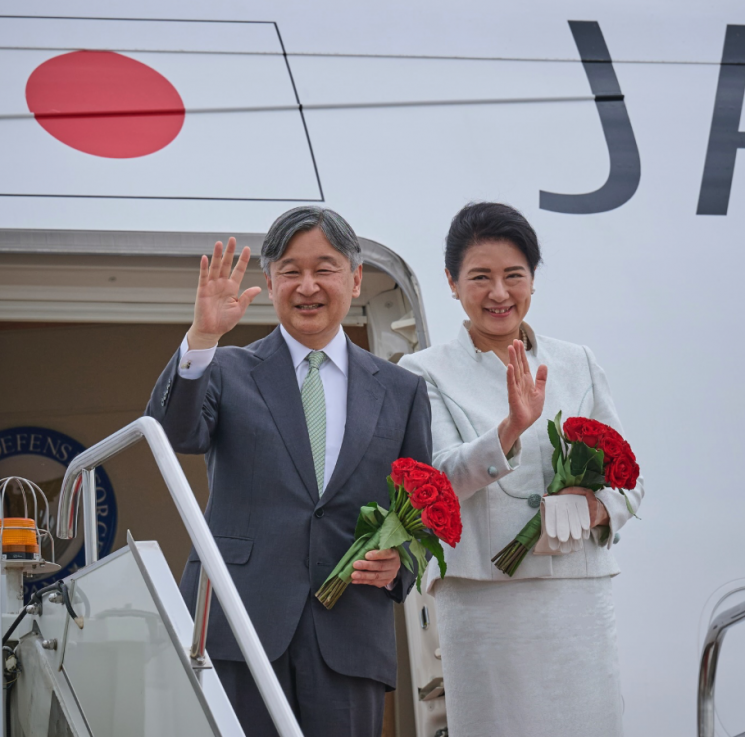
According to the "Imperial Household Law," which stipulates the regulations of the Japanese imperial family, only male descendants in the paternal line are eligible to inherit the throne. Historically, there have been female emperors, but this has occurred only eight times in over 2,000 years. In 2005, there was a parliamentary review to consider amending the law to allow women to ascend the throne, but the plan was dropped after a male heir was born into the imperial family. Currently, Crown Prince Fumihito is first in line to the throne, followed by Prince Hisahito as second. Emperor Naruhito and Empress Masako have only a daughter. The current imperial family resides in a massive palace in the heart of Tokyo, which is among the most expensive pieces of real estate in the world. The chrysanthemum is the symbol of the Japanese imperial family, and its motif is engraved on the imperial flag, crest, and crown decorations.
© The Asia Business Daily(www.asiae.co.kr). All rights reserved.
![Clutching a Stolen Dior Bag, Saying "I Hate Being Poor but Real"... The Grotesque Con of a "Human Knockoff" [Slate]](https://cwcontent.asiae.co.kr/asiaresize/183/2026021902243444107_1771435474.jpg)
















