Chinese Wafers Have Disappeared
Strong U.S. Solar Demand Expected
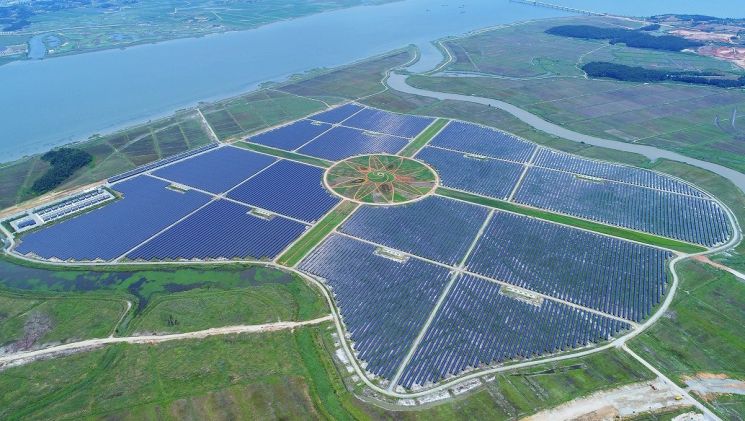
Chinese Wafers Have Disappeared
For a long time, most solar wafers imported into Korea came from China. However, since July, Chinese wafers have largely disappeared, and imports from Vietnam have increased significantly. Kang Dongjin, an analyst at Hyundai Motor Securities, stated, "We believe this is a response to the United States' strengthened controls over Chinese solar materials, specifically polysilicon and wafers." He added, "Although the details are not fully disclosed, it is estimated that companies such as OCI Holdings are importing non-Chinese wafers made from non-Chinese polysilicon into Korea."
The United States is blocking the inflow of Chinese products throughout the entire solar value chain, from polysilicon to ingots/wafers, cells, and modules, using various measures. Raw materials produced in the Xinjiang region, where many Chinese polysilicon companies are concentrated, are being restricted due to concerns over possible forced labor. Regulations requiring proof of the origin of raw materials used in solar modules are also becoming increasingly stringent. In addition, the U.S. International Trade Commission (ITC) is conducting anti-dumping investigations into India, Indonesia, and Southeast Asian countries to prevent Chinese products from entering the U.S. market through indirect routes.
Strong U.S. Solar Demand Expected
Thanks to the swift response of Korean companies, the de-Chinaization of the domestic solar value chain is accelerating. Exports of solar cells from Korea have also been gradually recovering since hitting a low in July, raising expectations for an expanded presence of Korean products in the U.S. market.
Due to the construction of artificial intelligence (AI) data centers and other factors, electricity demand in the United States is surging. Although the Trump administration maintains a conservative stance on renewable energy sources such as solar and wind power, it will be difficult to immediately replace them with gas or nuclear power generation. Therefore, strong demand for solar and energy storage systems (ESS) is anticipated. Hyundai Motor Securities offered a positive outlook for the Korean solar industry and recommended an "Overweight" rating.
© The Asia Business Daily(www.asiae.co.kr). All rights reserved.
![Clutching a Stolen Dior Bag, Saying "I Hate Being Poor but Real"... The Grotesque Con of a "Human Knockoff" [Slate]](https://cwcontent.asiae.co.kr/asiaresize/183/2026021902243444107_1771435474.jpg)















