Long Sleeves and Pants Are Essential for Outdoor Activities
Jeongeup City Launches Intensive Campaign to Prevent Tick-Borne Diseases
With the recent increase in outdoor activities such as hiking, walking in parks, and farming, the Jeongeup City Public Health Center in North Jeolla Province has announced that it will launch an intensive campaign to prevent tick-borne infectious diseases from September 8 to October 31.
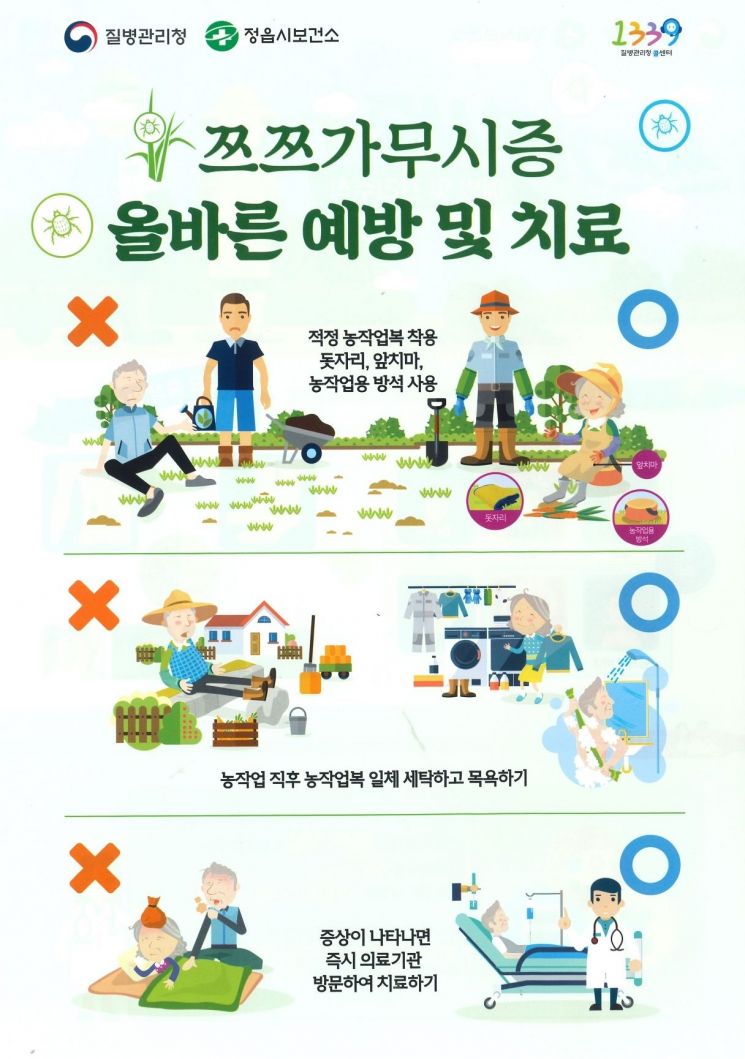
According to the public health center on September 5, the main tick-borne infectious diseases occurring in Korea are Tsutsugamushi disease and Severe Fever with Thrombocytopenia Syndrome (SFTS). SFTS is mainly transmitted by the Haemaphysalis longicornis tick carrying the SFTS virus, and symptoms such as fever, nausea, and vomiting typically occur between April and November.
Tsutsugamushi disease is transmitted through bites from chigger mites, and is characterized by fever, chills, muscle pain, and the appearance of a black scab at the bite site.
For prevention, it is important to wear long sleeves and long pants, as well as boots and a hat, during farming or outdoor activities to minimize skin exposure. Wearing separate clothing for farming and daily life, and using insect repellents, is also recommended.
Additionally, people should avoid lying down on grass or leaving clothes on the ground, and should use a mat or cushion when resting outdoors. After outdoor activities, it is advised to immediately wash your clothes and take a shower.
A public health center official stated, "The early symptoms of tick-borne infectious diseases are similar to those of the common cold, which may delay diagnosis and treatment. If you experience symptoms such as headache, chills, vomiting, or muscle pain after outdoor activities, you must visit a medical institution. We will do our utmost to provide preventive education and raise awareness, especially among the elderly and in areas with frequent cases."
© The Asia Business Daily(www.asiae.co.kr). All rights reserved.
![Clutching a Stolen Dior Bag, Saying "I Hate Being Poor but Real"... The Grotesque Con of a "Human Knockoff" [Slate]](https://cwcontent.asiae.co.kr/asiaresize/183/2026021902243444107_1771435474.jpg)















