Government Decides Not to Attend Sado Mine Memorial Again
Disagreement Over Including "Coercion" in Memorial Address Remains Unresolved
The government has decided not to participate in this year's memorial ceremony for the Sado Mine, hosted by Japan, following its absence last year. Although President Lee Jaemyung and Japanese Prime Minister Shigeru Ishiba have repeatedly expressed their commitment to "future-oriented cooperation" through summit talks, Japan continues to maintain its hardline stance on historical issues.
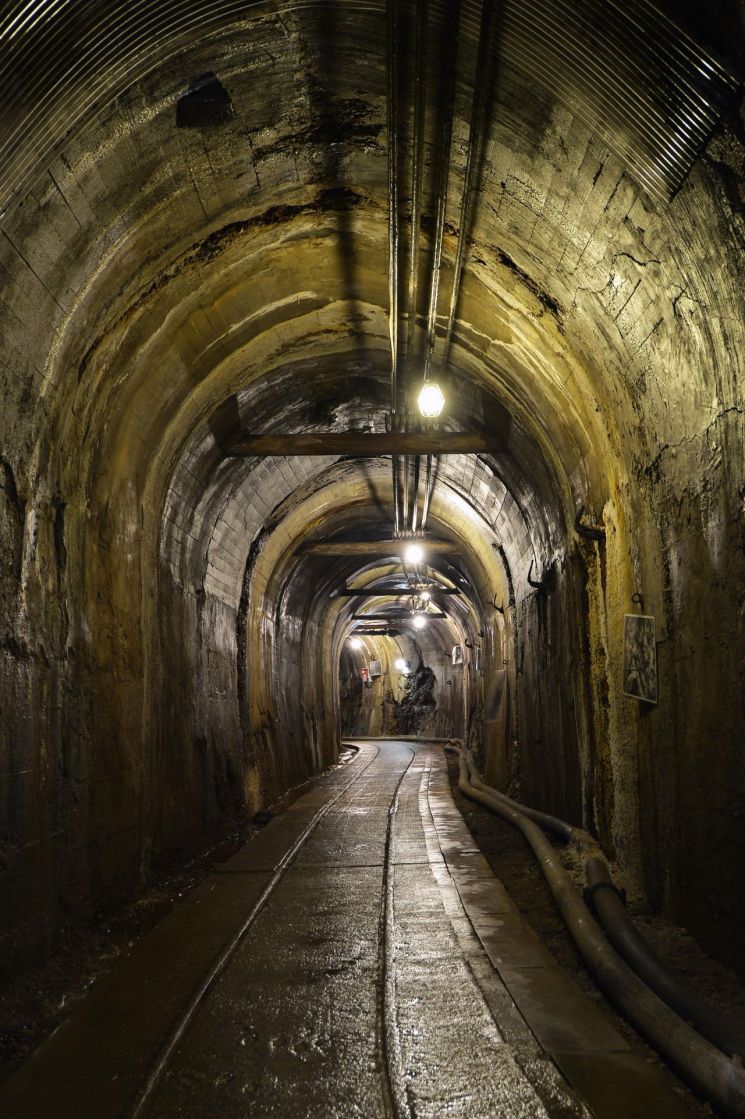 Sado Mine in Niigata Prefecture, Japan, a forced labor site for Koreans during the Japanese colonial period. Photo by Yonhap News Agency
An official from the Ministry of Foreign Affairs told reporters on the 4th, "We have decided not to attend this year's memorial ceremony." The official explained, "Our government actively consulted with the Japanese side to ensure that this year's ceremony would fully honor the spirit of the Korean workers and comfort the bereaved families. However, we were unable to narrow the differences on key issues. As a result, we concluded that it would be difficult to attend this year's ceremony."
The official continued, "The core issue, where the two countries had significant differences, was the expression of 'coercion' in the memorial address. We believe that to properly honor the deceased Korean workers at Sado Mine, the root cause and nature of their suffering-specifically, that the workers were mobilized and forced into labor against their will-must be appropriately acknowledged. However, we were unable to find common ground on the specific wording regarding 'coercion' in the memorial addresses of both sides." The official added, "Given the limited time remaining until the ceremony, we determined it would be difficult to find a satisfactory compromise and secure enough time for the bereaved families and others to prepare for attendance." The Japanese side is reportedly scheduled to hold the Sado Mine memorial ceremony on the afternoon of the 13th.
The government notified the Japanese side of its decision and the reasons for not attending the ceremony earlier that morning, and the Japanese side was said to have listened attentively. In the future, the government plans to hold its own memorial ceremony locally in Japan, with the participation of the bereaved families of the Sado Mine victims.
The official stated, "Although we have decided not to attend this year's ceremony, our government still hopes that the Sado Mine memorial ceremony will be held in a manner that is consistent with its intended purpose and character. Since the ceremony was established as a result of the agreement between South Korea and Japan at the time of Sado Mine's UNESCO World Heritage inscription, we hope the Japanese side will take a more forward-looking stance so that we can participate in the future, and our government will continue to work toward that goal."
Last July, Japan pledged to reflect the entire history of Sado Mine, including the forced labor of Koreans, as it sought to have the mine designated as a World Heritage site. This was in response to the demands of the Korean government. However, while preparing for the first memorial ceremony last year, Japan made statements in the event's name and memorial address that contradicted this pledge. As a result, the Korean government boycotted the ceremony, which ended up being only a "half-hearted" event.
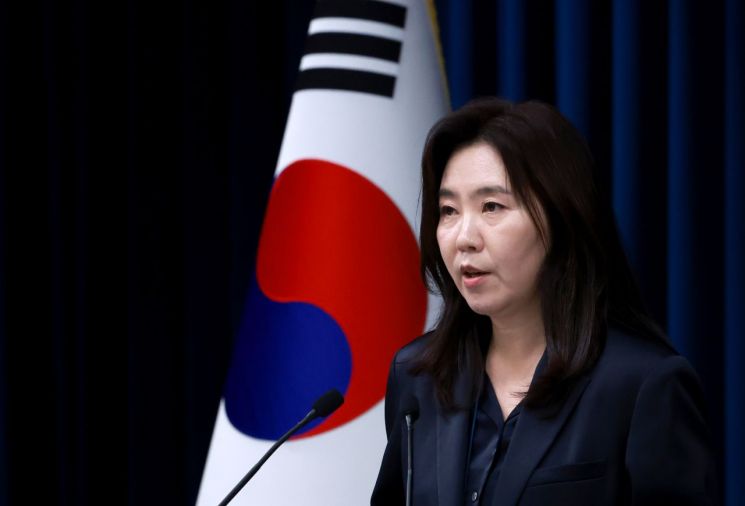
Kang Yujeong, spokesperson for the Presidential Office, commented, "The term 'coercion' is not new; even 15 years ago, Japan acknowledged it. The fact that the Japanese side says it cannot include this in the memorial address suggests that both sides need to make further efforts in the future of Korea-Japan relations." She added, "There is certainly some disappointment. Ultimately, I suspect that Japan's domestic political issues may significantly influence its diplomacy."
© The Asia Business Daily(www.asiae.co.kr). All rights reserved.


















