Andong and Imha Dams Enter Drought "Caution" Stage
Flood Season Rainfall Only 53% of Average in Upper Nakdong River Basin
Andong Dam and Imha Dam, which are key water resource suppliers in the upper reaches of the Nakdong River, have entered the "caution" stage for drought. It is unusual for a drought warning to be issued during the flood season (June 21 to September 20).
The Ministry of Environment announced on September 4 that, as of 6 p.m. on September 3, it would implement emergency measures to conserve water in response to declining reservoir levels at Andong Dam and Imha Dam.
Andong Dam and Imha Dam, located in Andong, North Gyeongsang Province, are multipurpose dams in the Nakdong River basin. They are operated as a single supply system in the upper Nakdong River. Drought stages are determined based on the combined storage volume of the two dams. As of now, the combined storage is 854.9 million tons, which is 85% of the average for this time of year.
This year, rainfall in the Andong and Imha Dam basins has fallen far short of the annual average. From January 1 to September 3, cumulative rainfall was only 610 mm, which is 71% of the usual 861 mm. Notably, during the flood season-when water storage is most critical-rainfall reached only 293 mm. This is just 53% of the average 551 mm for the period, less than half the usual amount.
The flood season is a critical period for water resource management in South Korea. Typically, heavy rains during this time significantly increase dam reservoir levels. However, weather conditions have changed this year. Although there were some localized downpours due to the expansion of the North Pacific high-pressure system and shifts in the paths of tropical cyclones, the upper Nakdong River basin did not experience significant rainfall. As a result, reservoir levels did not recover sufficiently, and the dams have now entered the drought stage.
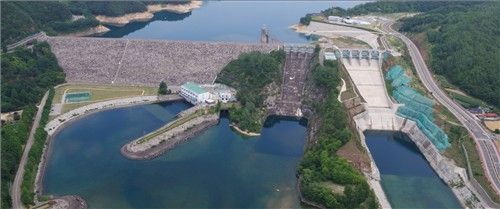
Even before the official declaration of the drought stage, the Ministry of Environment had already been implementing alternative supply measures by linking Andong and Imha Dams with other dams such as Hapcheon Dam and Namgang Dam to conserve water. With the "caution" stage now in effect, more stringent reduction measures are being applied.
First, the daily supply of river maintenance water from Andong Dam and Imha Dam will be reduced to a maximum of 484,000 tons and 650,000 tons, respectively. Agricultural water from Andong Dam will be cut by up to 760,000 tons per day, based on actual monthly usage. Water supplied from Imha Dam to Geumho River via Yeongcheon Dam for water quality improvement will also be reduced in stages, with a maximum daily reduction of 219,000 tons planned.
The Ministry of Environment plans to strengthen water management measures to ensure that these actions are not just temporary responses but can be sustained until the next flood season. The ministry will develop long-term plans to ensure stable supplies of domestic, agricultural, and industrial water even if additional rainfall during the remaining flood season is insufficient.
Son Okjoo, Director of Water Management Policy at the Ministry of Environment, stated, "This year, some regions have seen less rainfall than usual, raising the risk of drought spreading. We will do our utmost to ensure stable water supply by thoroughly implementing dam water conservation measures in cooperation with relevant agencies."
© The Asia Business Daily(www.asiae.co.kr). All rights reserved.

















