AI Makes Complex and Costly Heart Failure Diagnosis Simple and Accessible
Artificial intelligence (AI) has provided a solution for diagnosing heart failure with preserved ejection fraction (HFpEF), a condition that could not be distinguished using only simple symptoms and ejection fraction tests.
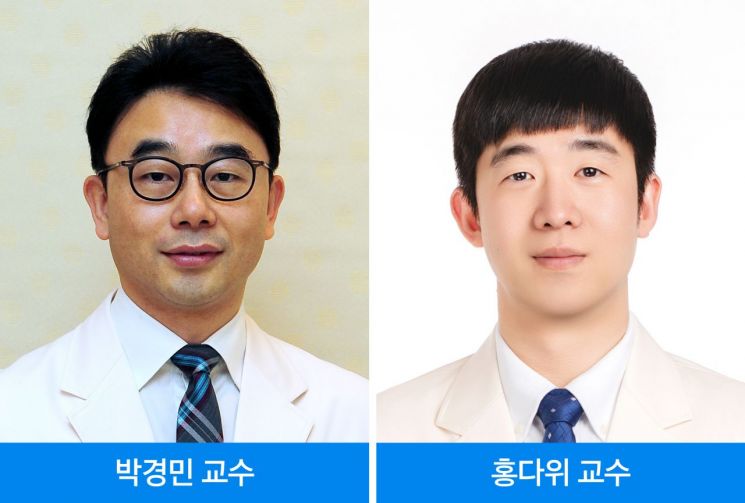
The research team led by Professors Park Kyungmin and Hong Dawui from the Division of Cardiology at Samsung Medical Center announced on September 4 that they have published a model in the latest issue of the European Heart Journal - Digital Health (IF 4.4) that can predict heart failure with preserved systolic function using AI.
Heart failure with preserved ejection fraction is a disease that occurs due to impaired diastolic function and structural changes in the heart, even though the left ventricular ejection fraction remains normal (50% or higher). It is known to account for more than half of heart failure cases both domestically and internationally.
Heart failure is characterized by non-specific symptoms such as shortness of breath, fatigue, and discomfort during physical activity. It is often confused with various chronic conditions such as advanced age, obesity, and hypertension, making a definitive diagnosis extremely difficult. Even when the disease is suspected, a comprehensive analysis of various detailed indicators from echocardiography is required for diagnosis, so many patients frequently do not receive timely and accurate diagnoses.
To address the challenge of diagnosing heart failure with preserved cardiac output, Professor Park Kyungmin's team developed an AI model that enables diagnosis using only the results of the widely used 12-lead electrocardiogram (ECG) test, without the need for complex examinations.
The research team analyzed 13,081 individuals who underwent echocardiography, NT-proBNP, and 12-lead ECG tests at Samsung Medical Center between 2016 and 2022. According to the European Society of Cardiology’s HFA-PEFF criteria, patients were divided into a heart failure with preserved output group and a control group based on their risk levels.
For these subjects, the team used a DenseNet-121-based deep learning (1D CNN) approach to train the AI model on ECG data, enabling it to detect even subtle electrical signal patterns.
They further integrated clinical, imaging, and blood data for each patient, and split the dataset into training, validation, and test sets (7:1:2 ratio) to evaluate the AI’s predictive power under conditions close to real-world clinical practice. Data collected over up to five years (median of four years) was included in the comprehensive analysis.
As a result, the research team reported that the AI ECG prediction model achieved a performance (AUC) of 0.81. Notably, the model’s performance remained stable at 0.78 to 0.83 even among major high-risk groups such as the elderly, obese individuals, diabetics, and those with hypertension.
Furthermore, the team found that patients predicted as 'positive' by the AI had a tenfold higher risk of cardiac death and a fivefold higher risk of hospitalization due to heart failure within five years compared to the negative group, indicating the model’s potential utility in clinical practice.
The research team stated, "This is the first study in Korea to predict the possibility of heart failure with preserved output using an AI-based ECG model. While there have been global attempts to predict diastolic dysfunction or increased left ventricular filling pressure, this is the first study to train and evaluate a model based on the HFA-PEFF score."
Professor Park Kyungmin commented, "The ability to suspect heart failure with preserved output at an early stage using only a simple ECG test, even in patients without prior echocardiography or blood tests, is significant in reducing diagnostic blind spots. We plan to continue research by collaborating with other institutions for further external validation."
© The Asia Business Daily(www.asiae.co.kr). All rights reserved.
![Clutching a Stolen Dior Bag, Saying "I Hate Being Poor but Real"... The Grotesque Con of a "Human Knockoff" [Slate]](https://cwcontent.asiae.co.kr/asiaresize/183/2026021902243444107_1771435474.jpg)















