"K-Content, a New Key to Economic Advancement"
Abolishing Outdated Regulations on Advertising and Programming Amid Reverse Discrimination Controversy
On September 3, President Lee Jaemyung stated, "We will carefully monitor the broadcasting industry to ensure that our valuable content infrastructure does not become a subcontracting base for global media companies."
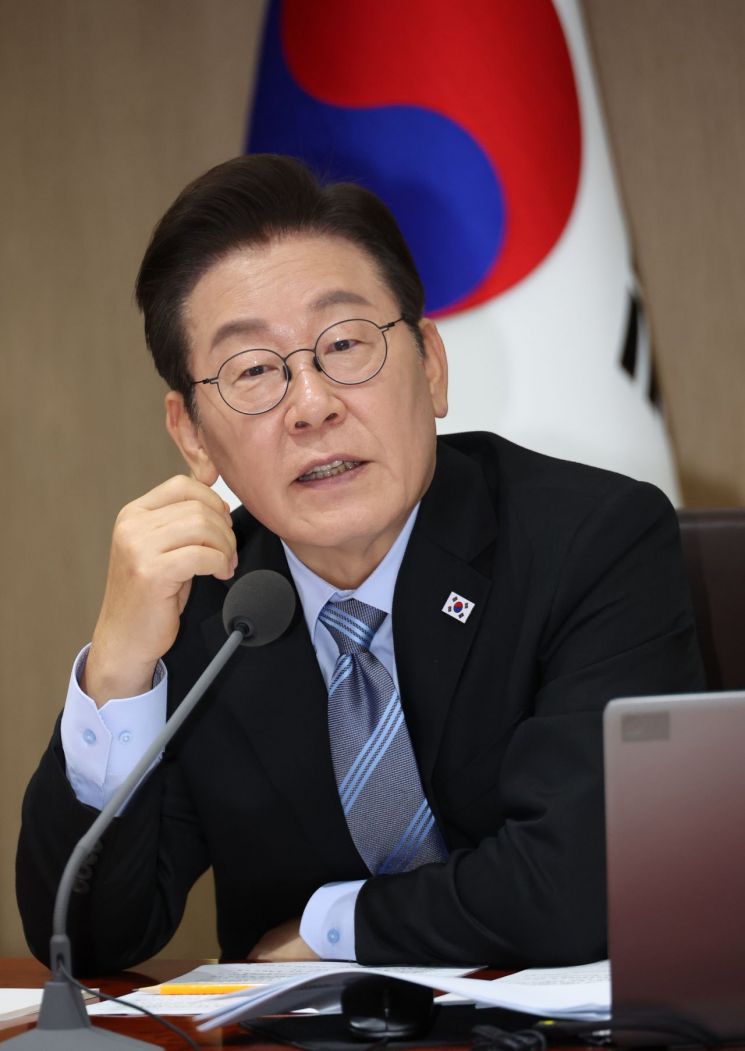
In a video message delivered at the ceremony for the 62nd Broadcasting Day held on this day, President Lee said, "If broadcasters take the lead as capable frontrunners on the path to becoming one of the world’s top five cultural powerhouses, I am confident that K-Content will become a new key to the advancement of Korea’s economy. The government will also work together with the National Assembly to provide institutional and financial support so that our broadcasters can fulfill their mission."
President Lee added, "We will shift outdated regulations, such as those on advertising and programming that have led to reverse discrimination controversies, to a negative regulatory approach. We will seek and implement ways for our broadcasters to compete with creativity in a fair environment."
In a video congratulatory address, National Assembly Speaker Woo Wonshik stated, "As the status of K-Content continues to rise, the domestic broadcasting industry is facing rapid changes. The National Assembly will do its utmost to establish a healthy media ecosystem where new attempts can continue in a fair competitive environment."
Bang Moonshin, Chairman of the Korea Broadcasters Association, called on the government and the National Assembly to work together to promptly implement the broadcasting advertising regulation easing measures announced as a national policy task by the National Policy Planning Committee.
Chairman Bang pointed out, "Although global media companies have become the dominant players in the media content market, domestic broadcasters are still trapped by regulations created during the era of terrestrial broadcasting monopolies. As a result, most broadcasters are stuck in a deficit structure, and the domestic media ecosystem is falling into a vicious cycle."
He continued, "Unreasonable discriminatory regulations, regulations unique to our country, and regulations that have outlived their usefulness in the 21st century must now be abolished." He appealed for the prompt implementation of national policy tasks announced last month by the National Policy Planning Committee, such as 'establishing rational legislation encompassing both new and traditional media' and 'easing regulations on broadcasting advertising and programming, including the introduction of a negative advertising system.'
Meanwhile, at the event, awards were presented to individuals who contributed to the financial stability of broadcasters and the development of broadcasting culture. The late Lee Sangsool, former Deputy Director of MBC, who played a major role in establishing the order of terrestrial retransmission transactions, Seong Hoeyong, former Director of SBS Media Business Division, and Lee Jonghyun, Deputy Manager at KBS, received achievement awards.
Broadcasting Day commemorates the day Korea was granted its own independent call sign, 'HL', by the International Telecommunication Union (ITU) on September 3, 1947, thereby gaining independent sovereignty over broadcasting.
© The Asia Business Daily(www.asiae.co.kr). All rights reserved.
![Clutching a Stolen Dior Bag, Saying "I Hate Being Poor but Real"... The Grotesque Con of a "Human Knockoff" [Slate]](https://cwcontent.asiae.co.kr/asiaresize/183/2026021902243444107_1771435474.jpg)















