Joint Inspection of 473 School Cafeterias with the Office of Education
Kitchen Hygiene Management and Food Ingredient Storage Standards
The Seoul Metropolitan Government will conduct a comprehensive hygiene inspection of school cafeterias throughout the city. Although the number of food poisoning cases is decreasing, the inspection aims to prevent potential outbreaks in advance during the autumn season, when hygiene management may be neglected as the heat subsides.
On September 3, the Seoul Metropolitan Government announced that it will conduct a joint hygiene inspection of 473 school cafeterias in collaboration with the Seoul Metropolitan Office of Education.
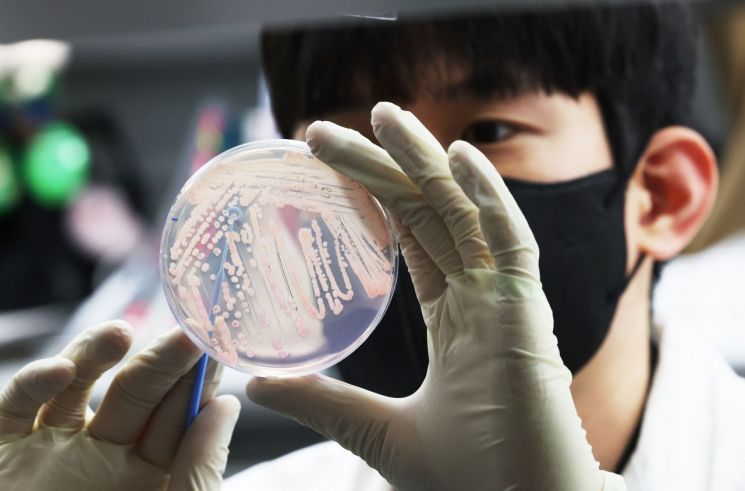 Recently, with the increasing risk of food poisoning, a research institute in the Seoul metropolitan area is conducting food poisoning bacteria culture isolation work. Yonhap News
The hygiene inspection will be carried out until September 11 as a public-private partnership involving the city’s Office of Education, 25 district offices, 11 education support offices, and consumer food hygiene monitors. The inspection will cover a total of 473 schools, including 254 elementary schools, 131 middle schools, and 88 high schools, excluding those that were already inspected during the spring semester. In the first half of the year, the city completed inspections at 780 locations and found no violations of the Food Sanitation Act.
The inspection teams will consist of approximately 80 people, organized into 25 teams. The main inspection items include kitchen hygiene and cleanliness, health checkups for staff, personal hygiene such as hand washing, expiration dates of food ingredients, and compliance with hygiene management standards such as storage requirements.
Fifty samples of food ingredients and prepared foods will be collected and sent to the Seoul Institute of Health and Environment for testing for food poisoning bacteria such as Salmonella, Clostridium perfringens, and norovirus. If violations of the Food Sanitation Act are found, a fine of up to 10 million won will be imposed in accordance with Article 67 of the Enforcement Decree of the same law.
The city plans to ensure that any violations are promptly corrected to eliminate potential risks in school meal operations. In fact, last year, an elementary school was found to have stored products past their expiration date in the kitchen. Thanks to the inspection and corrective measures, this did not lead to a food poisoning incident.
Meanwhile, while both the number of food poisoning outbreaks and patients decreased last year compared to the previous year, cases of Salmonella food poisoning, which is affected by hygiene, have increased. Last year, there were 265 cases of food poisoning with 7,624 patients, representing a decrease of 26% and 13%, respectively, from the previous year. Of the food poisoning cases last year, 39% of outbreaks and 50% of patients occurred between July and September, the period of heat waves and heavy rain, and more than 10 cases occurred every month except February. The main causative agents were Salmonella with 58 cases (32%), norovirus with 37 cases (20%), and pathogenic Escherichia coli with 24 cases (13%). Sixty-six percent of Salmonella food poisoning cases occurred in restaurants, while 35% of norovirus and 50% of pathogenic Escherichia coli food poisoning cases occurred in group meal facilities.
© The Asia Business Daily(www.asiae.co.kr). All rights reserved.
![Clutching a Stolen Dior Bag, Saying "I Hate Being Poor but Real"... The Grotesque Con of a "Human Knockoff" [Slate]](https://cwcontent.asiae.co.kr/asiaresize/183/2026021902243444107_1771435474.jpg)















