12 Finalists Selected from Over 100 Applicants Nationwide
To Be Elected on the 19th Through Party Member and Jury Voting
Hopes Rise for Addressing the Absence of Supreme Council Members from Honam Region
The Democratic Party of Korea has finalized the list of 12 candidates advancing to the finals for the Supreme Council member position, which will be elected by ordinary party members for the first time in its history. In the Gwangju and Jeonnam regions, Seungse Cha, Director of the Citizens' School at the Gwangju Regional Committee of the Roh Moo-hyun Foundation, was the only candidate to make the list.
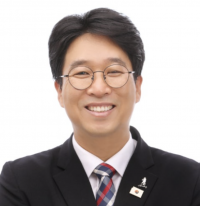 Seungse Cha, Director of the Citizens' School at the Gwangju Regional Committee of the Roh Moo-hyun Foundation.
On September 2, the Democratic Party’s Preparatory Committee for the Election of Supreme Council Members by Ordinary Members confirmed and announced the 12 finalists for the “Supreme Council Member Election by Ordinary Members.” Out of more than 100 applicants nationwide, the finalists were selected through document screening and interviews. Eight candidates from the Seoul metropolitan area (two from Seoul and six from Gyeonggi Province) advanced to the finals, while one candidate each was selected from Gangwon, Jeonbuk, Chungcheong, and Gwangju. Jeonnam did not have any finalists.
The pool of candidates includes a diverse range of backgrounds: a 24-year-old former intern at a Democratic Party lawmaker’s office born in 2001, a 28-year-old apartment building representative born in 1997, an obstetrics and gynecology department head, a lawyer, and a citizens' school director.
The Supreme Council member by ordinary members will be chosen through a vote by party members and a jury, with the final selection taking place at the party’s founding anniversary event at KINTEX in Ilsan on September 19. This election method is part of Representative Jeong Cheongrae’s pledge to realize “a party that upholds the sovereignty of its members,” and any registered party member is eligible to run. However, candidates must not have run for party or public office during their period of party membership.
The local political community expects that this new system could be a pathway to address the absence of Supreme Council members elected from the Honam region. However, in Gwangju, only Seungse Cha advanced to the finals, and in Jeonnam, not a single candidate made it through, leading to some disappointment.
A source in the local political scene commented, “Although opportunities opened up for Gwangju and Jeonnam to join the party leadership, it is regrettable that only one person made it to the finals. Nevertheless, the upcoming election process and results are likely to draw significant attention.”
© The Asia Business Daily(www.asiae.co.kr). All rights reserved.
![Clutching a Stolen Dior Bag, Saying "I Hate Being Poor but Real"... The Grotesque Con of a "Human Knockoff" [Slate]](https://cwcontent.asiae.co.kr/asiaresize/183/2026021902243444107_1771435474.jpg)














